

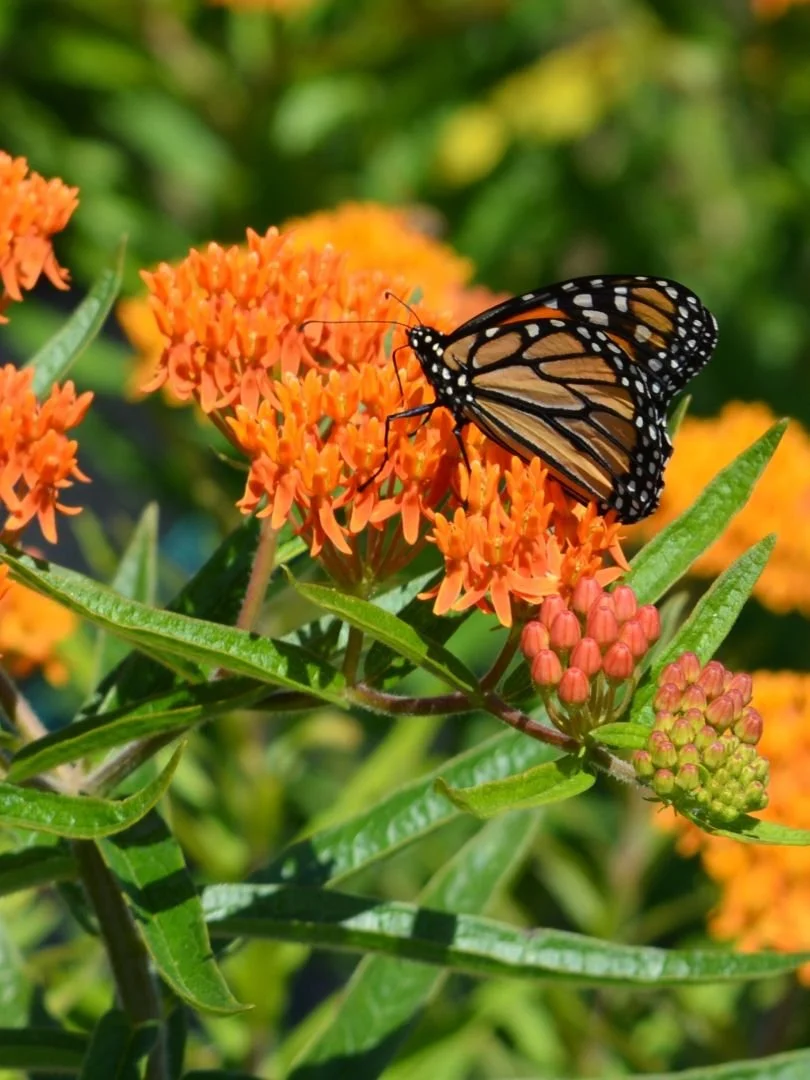
Butterfly weed is one of the most recognizable native wildflowers you’ll come across in Washington County once you know what to look for. It naturally shows up in dry, open areas like old fields, roadside banks, and rocky slopes where the soil is well-drained and often a little rough.
That’s exactly where it performs best. This isn’t a plant for rich, heavily amended beds. It thrives in the kind of conditions you’ll find across much of the county’s limestone-based soils and exposed slopes, where water moves through quickly and other plants struggle to hold on.
When it blooms, those bright orange flowers don’t sit idle. They stay active with pollinators throughout the day, especially native bees and butterflies. More importantly, this is one of the key host plants for monarch butterflies, meaning it supports their entire life cycle right here on the landscape.
It stays relatively compact, usually around 1–2 feet tall, and develops a deep taproot that makes it extremely resilient once established. Because of that, it prefers not to be disturbed after planting.
This is a strong choice for dry meadow plantings, slopes, and restoration work where you need something that can handle Washington County’s tougher soils while still contributing real ecological value.
Light: Full sun
Soil: Dry to medium; well-drained, rocky or limestone-based soils
Height: 1–2 ft
Bloom: Early to mid summer
Wildlife: Monarch butterflies (host plant), native bees, other pollinators
Growth: Deep taproot; drought-tolerant once established; does not like transplanting
Now Open!!!
Laurel Field Co. Native Plant Nursery
We grow native plants for Western Maryland, with species selected for our region’s mountains, valleys, plateaus, and surrounding Appalachian landscapes, while prioritizing local ecotypes when available.
Our inventory includes perennials, grasses, and select trees and shrubs, including a growing selection of native edible plants for habitat, home landscapes, and food-orchard plantings. Plants are produced in plugs, quarts, and gallon containers, with availability changing throughout the season as crops become ready.
Spring availability is primarily flowers and grasses beginning around mid-May. Trees and shrubs are typically available year-round.
Purchasing & Fulfillment
Local delivery is available within 25 miles of Hagerstown.
Shipping is offered on select items when available.
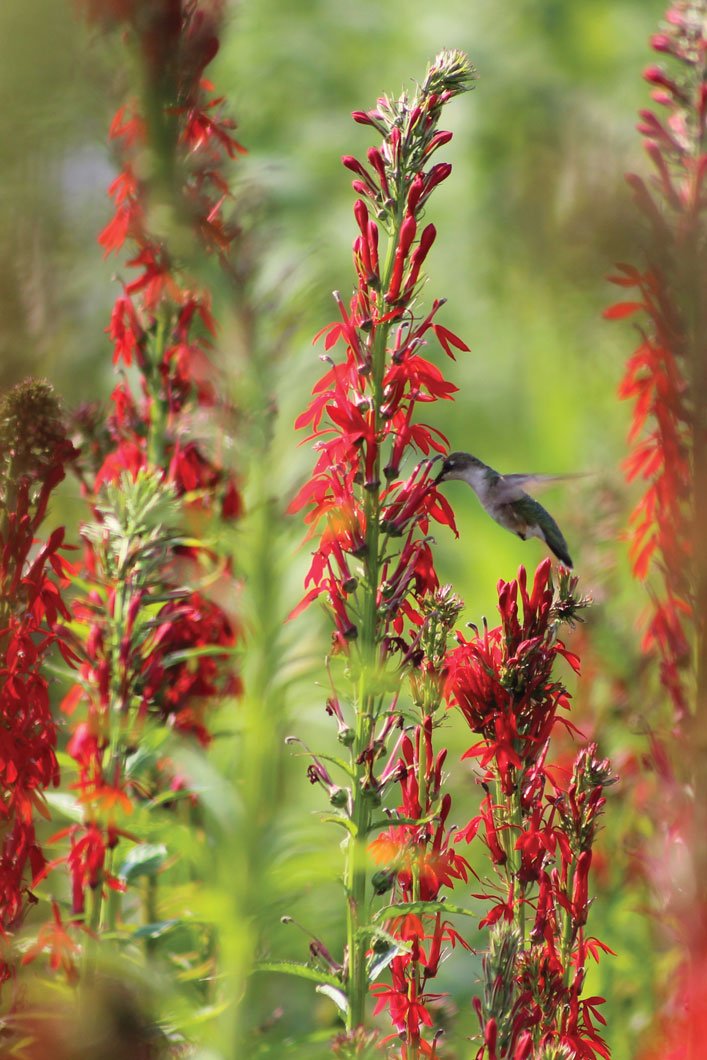
Cardinal flower shows up in wet meadows, streambanks, seeps, and low areas throughout Washington County where the soil stays consistently moist or periodically saturated during the growing season.
You’ll often find it along creeks, shaded drainage lines, and marshy edges where competition from taller, aggressive plants is limited. It prefers reliable moisture and does not tolerate drying out well for long periods.
The plant grows as an upright perennial with strong stems and lance-shaped leaves. In mid to late summer, it produces striking spikes of vivid red tubular flowers that stand out sharply against surrounding vegetation.
It typically reaches 2–4 feet tall and has a clean, vertical habit that works well in naturalistic plantings. Each flower spike blooms from the bottom upward, extending the display over several weeks.
The blooms are highly attractive to hummingbirds, which are the primary pollinators, along with occasional visits from long-tongued native bees and butterflies.
It can be short-lived in some sites but often persists through self-seeding in suitable wet conditions. It performs best where soil moisture is consistent and competition is not too intense.
This is a standout choice for rain gardens, wet meadows, and riparian plantings where you want strong color, wildlife value, and a true native wetland presence.
Light: Full sun to part shade
Soil: Wet to medium-wet; requires consistently moist soils
Height: 2–4 ft
Bloom: Mid to late summer
Wildlife: Hummingbirds, native bees, butterflies
Growth: Herbaceous perennial; often short-lived but may self-seed in ideal conditions
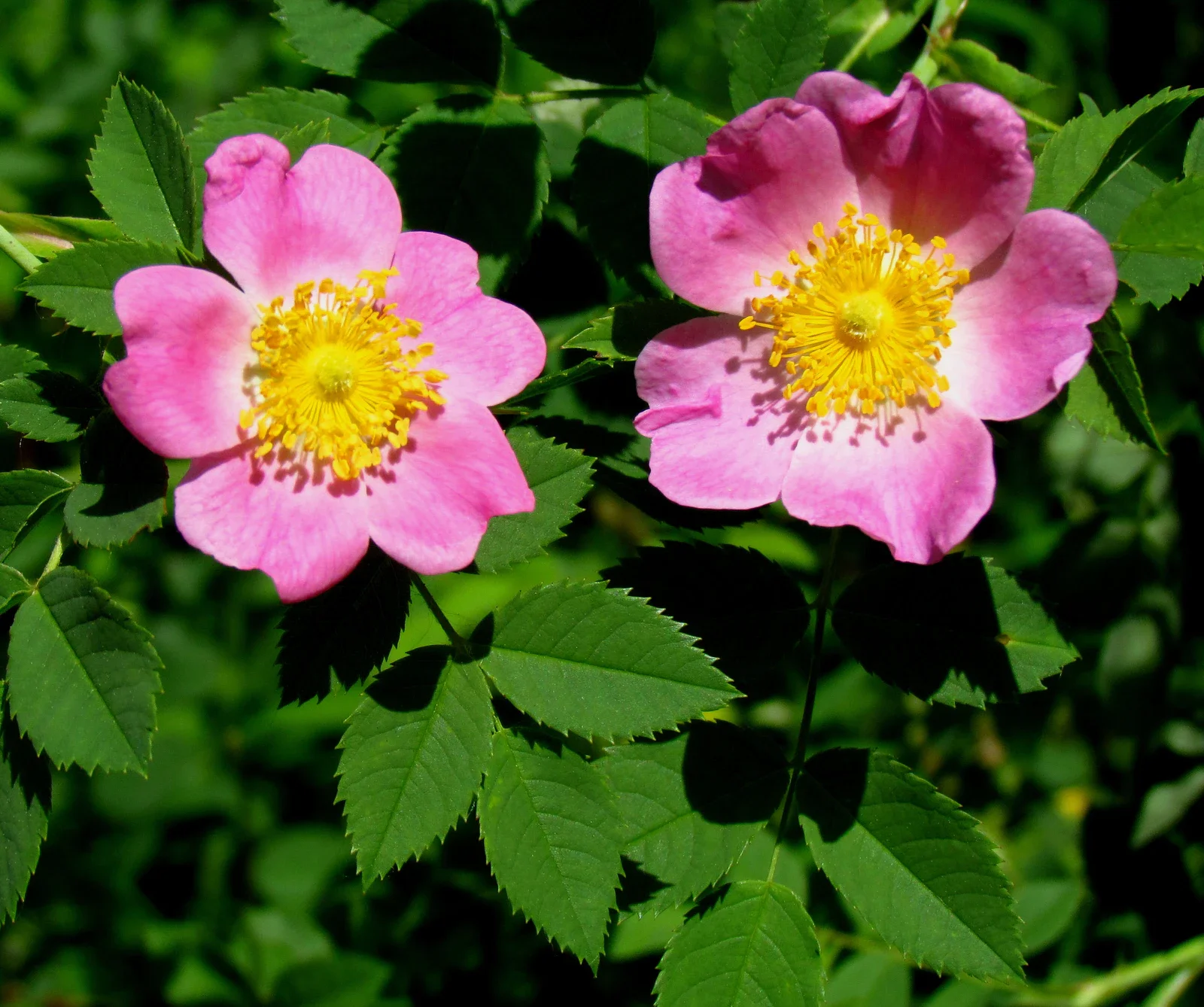
Carolina rose shows up in meadows, old fields, woodland edges, and stream corridors throughout Washington County. It’s most common in open, sunny areas with well-drained soils, though it can also persist in light shade along thickets and forest margins.
You’ll often find it in prairies and disturbed ground that stays moderately moist in spring but dries out through summer. Once established, it handles drought, heat, and poor soils with ease.
The plant grows as a low to medium shrub, usually reaching 3–6 feet tall and forming loose colonies over time. In late spring to early summer, it produces clusters of soft pink to rose-colored flowers that attract a wide range of pollinators, including native bees and butterflies.
After flowering, it develops small red rose hips that persist into fall and winter, providing an important food source for birds and other wildlife. The foliage is compound and finely textured, giving it a lighter, more open appearance than many other native shrubs.
It spreads gradually by suckering but is generally easy to manage and works well in naturalistic plantings. It can be used for erosion control, hedgerows, and wildlife plantings where a native rose with dependable performance is needed.
This is a strong choice for sunny edges and meadow-style plantings where you want seasonal flowers, wildlife value, and long-term structure without heavy maintenance.
Light: Full sun to part shade
Soil: Dry to medium; prefers well-drained soils but adaptable
Height: 3–6 ft
Bloom: Late spring to early summer
Wildlife: Native bees, butterflies, birds (hips provide winter food)
Growth: Colony-forming deciduous shrub; spreads by suckers, moderately vigorous but manageable
NATIVE PLANTS
NATIVE PLANTS
Filters
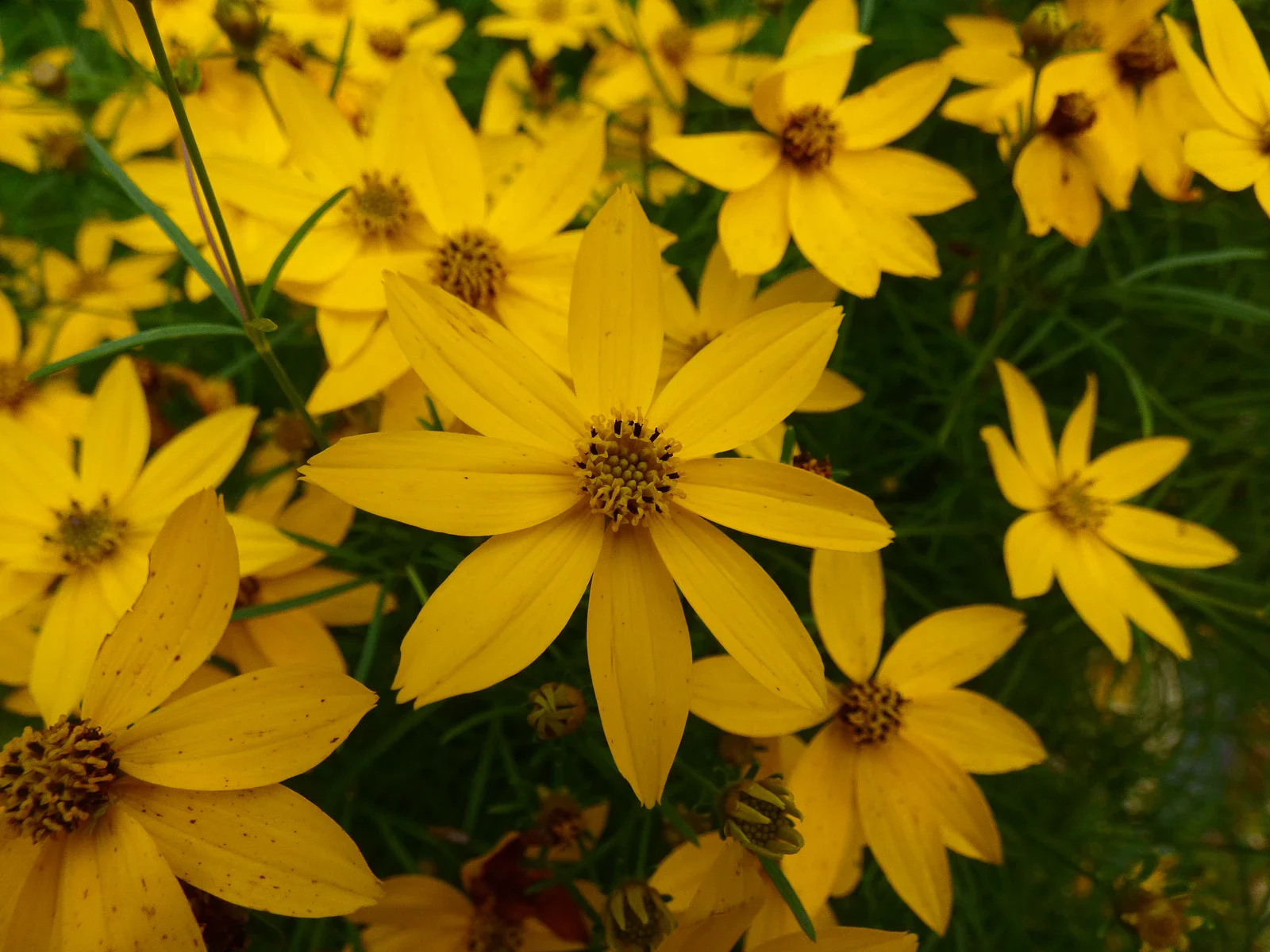
Whorled tickseed is one of those native plants that tends to fly under the radar until it starts blooming. While it's not as common across Washington County as some meadow species, it naturally occurs in open grasslands, roadsides, woodland edges, and dry meadows where sunlight is plentiful and competition is low.
This is a plant that prefers to keep its feet relatively dry. Once established, it handles drought surprisingly well and thrives in lean soils that many garden plants would struggle in. In fact, overly rich soils can cause it to become floppy.
From early summer into late summer, whorled tickseed produces a cloud of bright yellow flowers that seem to hover above the fine, thread-like foliage. The foliage itself gives the plant a soft, airy texture that contrasts beautifully with broader-leaved species in a planting.
Most plants stay around 2–3 feet tall and form tidy clumps that slowly expand over time. Because of its long bloom period and abundant flowers, it becomes a valuable resource for native bees, butterflies, and other pollinators throughout the growing season.
Whorled tickseed is an excellent choice for sunny native gardens, pollinator plantings, meadow restorations, and difficult dry areas where dependable color is needed without constant watering.
Light: Full sun
Soil: Dry to medium moisture; well-drained soils preferred
Height: 2–3 ft
Bloom: Early summer through late summer
Wildlife: Native bees, butterflies, and other pollinators
Growth: Clump-forming perennial; drought tolerant once established; dies back in winter and returns each spring
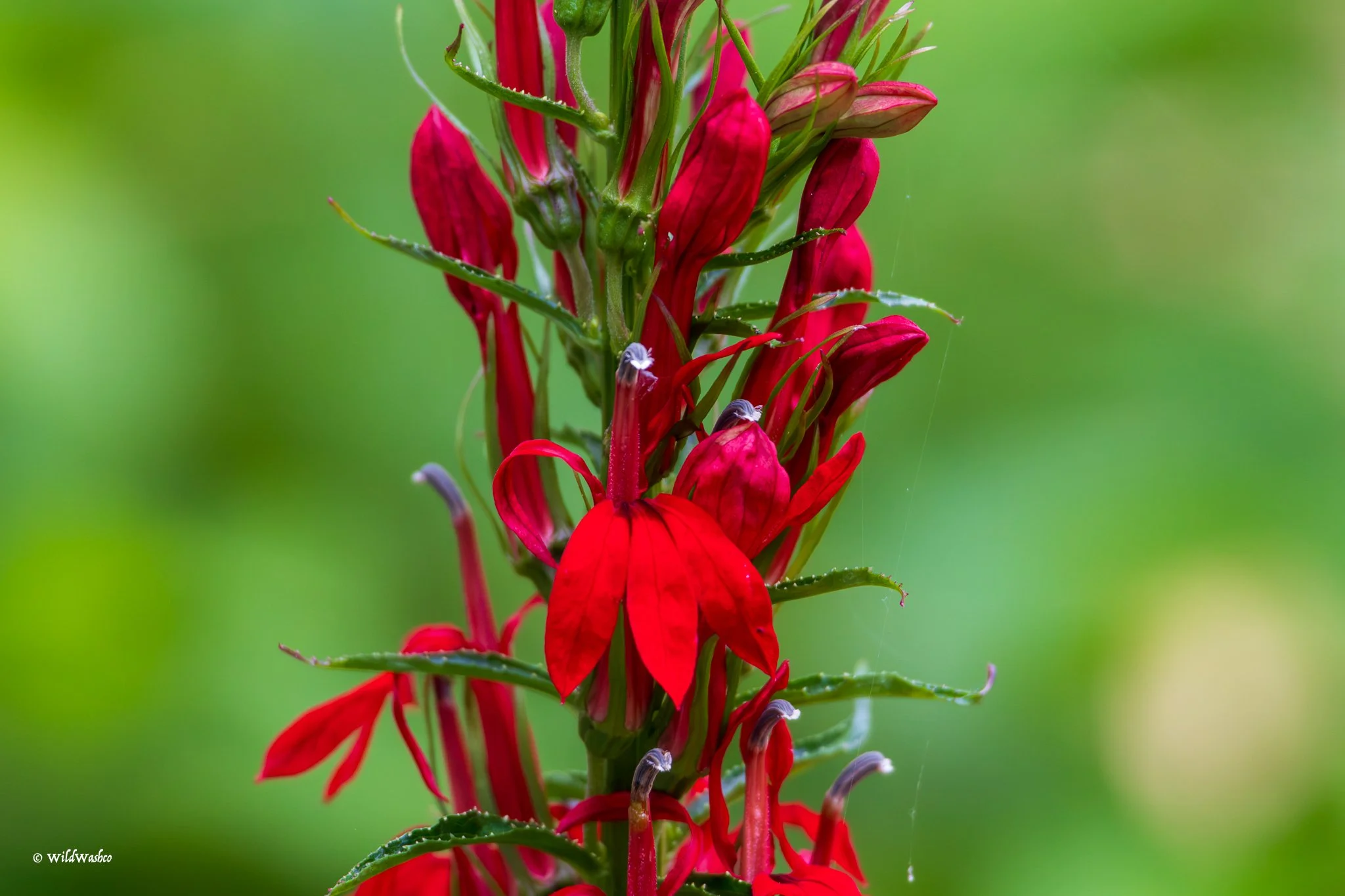
Cardinal flower shows up in wet meadows, streambanks, seeps, and low areas throughout Washington County where the soil stays consistently moist or periodically saturated during the growing season.
You’ll often find it along creeks, shaded drainage lines, and marshy edges where competition from taller, aggressive plants is limited. It prefers reliable moisture and does not tolerate drying out well for long periods.
The plant grows as an upright perennial with strong stems and lance-shaped leaves. In mid to late summer, it produces striking spikes of vivid red tubular flowers that stand out sharply against surrounding vegetation.
It typically reaches 2–4 feet tall and has a clean, vertical habit that works well in naturalistic plantings. Each flower spike blooms from the bottom upward, extending the display over several weeks.
The blooms are highly attractive to hummingbirds, which are the primary pollinators, along with occasional visits from long-tongued native bees and butterflies.
It can be short-lived in some sites but often persists through self-seeding in suitable wet conditions. It performs best where soil moisture is consistent and competition is not too intense.
This is a standout choice for rain gardens, wet meadows, and riparian plantings where you want strong color, wildlife value, and a true native wetland presence.
Light: Full sun to part shade
Soil: Wet to medium-wet; requires consistently moist soils
Height: 2–4 ft
Bloom: Mid to late summer
Wildlife: Hummingbirds, native bees, butterflies
Growth: Herbaceous perennial; often short-lived but may self-seed in ideal conditions
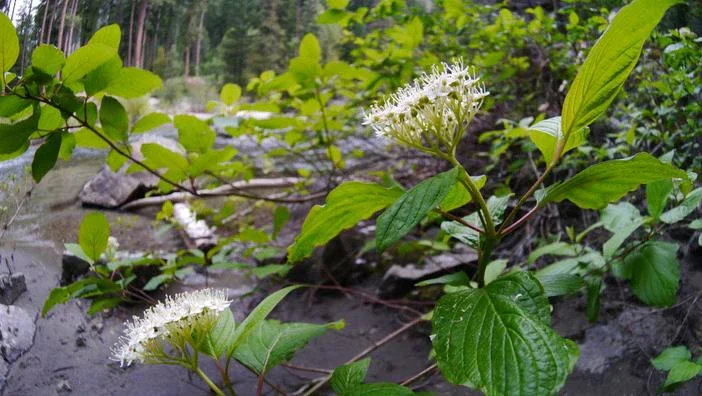
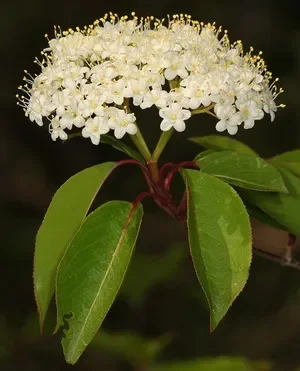
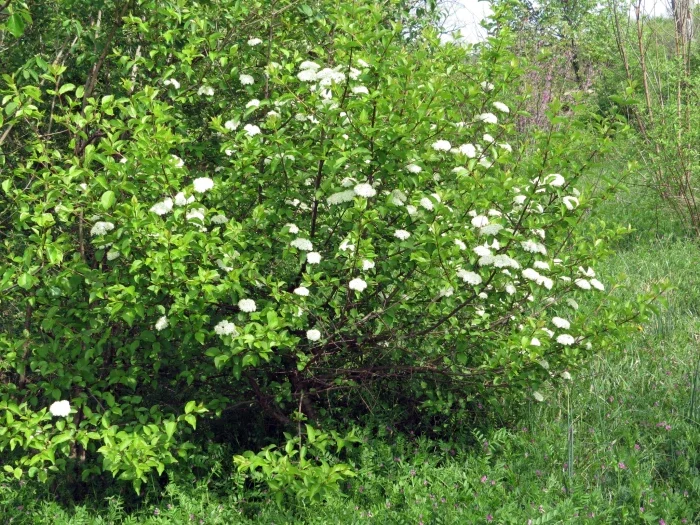
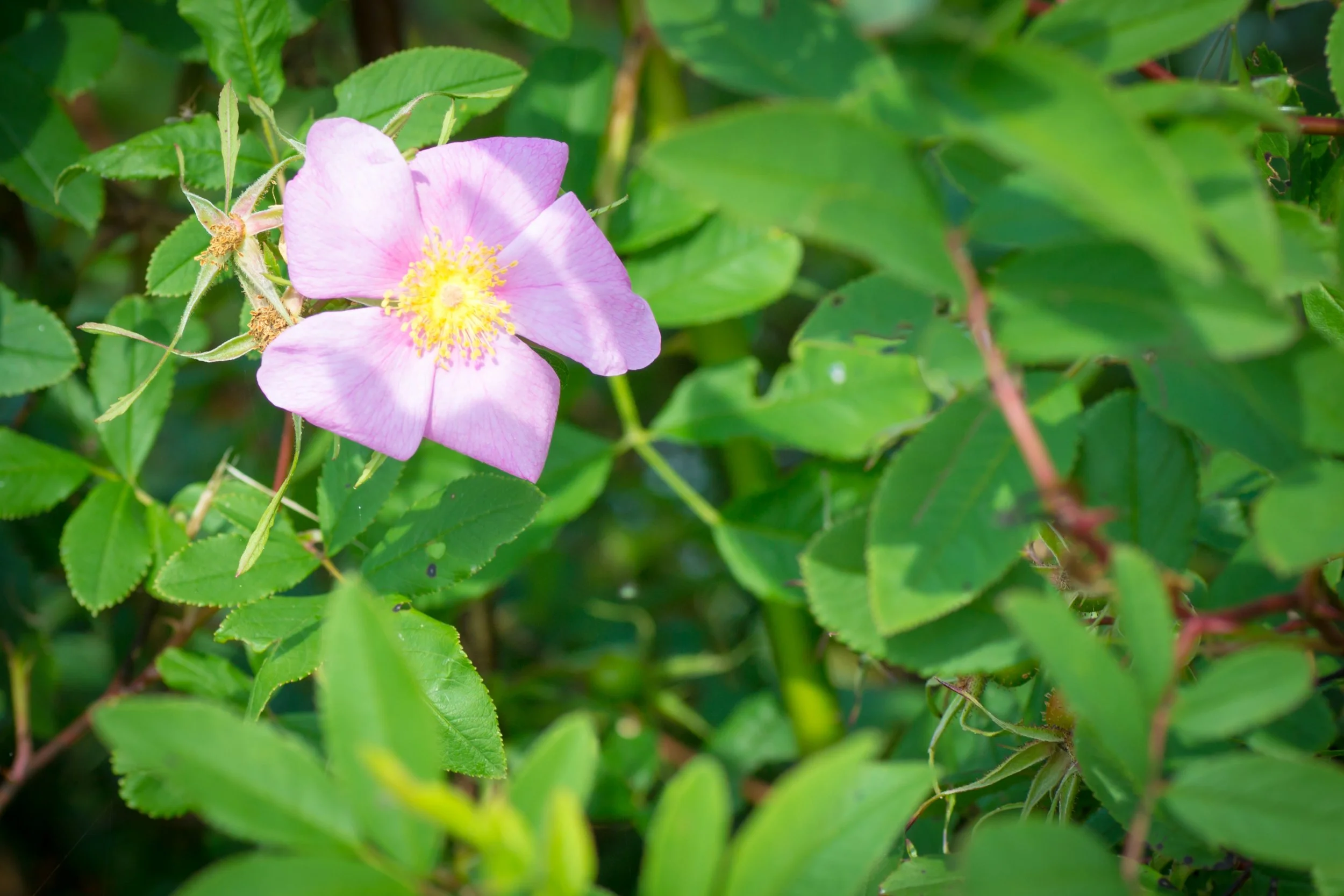
Carolina rose shows up in meadows, old fields, woodland edges, and stream corridors throughout Washington County. It’s most common in open, sunny areas with well-drained soils, though it can also persist in light shade along thickets and forest margins.
You’ll often find it in prairies and disturbed ground that stays moderately moist in spring but dries out through summer. Once established, it handles drought, heat, and poor soils with ease.
The plant grows as a low to medium shrub, usually reaching 3–6 feet tall and forming loose colonies over time. In late spring to early summer, it produces clusters of soft pink to rose-colored flowers that attract a wide range of pollinators, including native bees and butterflies.
After flowering, it develops small red rose hips that persist into fall and winter, providing an important food source for birds and other wildlife. The foliage is compound and finely textured, giving it a lighter, more open appearance than many other native shrubs.
It spreads gradually by suckering but is generally easy to manage and works well in naturalistic plantings. It can be used for erosion control, hedgerows, and wildlife plantings where a native rose with dependable performance is needed.
This is a strong choice for sunny edges and meadow-style plantings where you want seasonal flowers, wildlife value, and long-term structure without heavy maintenance.
Light: Full sun to part shade
Soil: Dry to medium; prefers well-drained soils but adaptable
Height: 3–6 ft
Bloom: Late spring to early summer
Wildlife: Native bees, butterflies, birds (hips provide winter food)
Growth: Colony-forming deciduous shrub; spreads by suckers, moderately vigorous but manageable
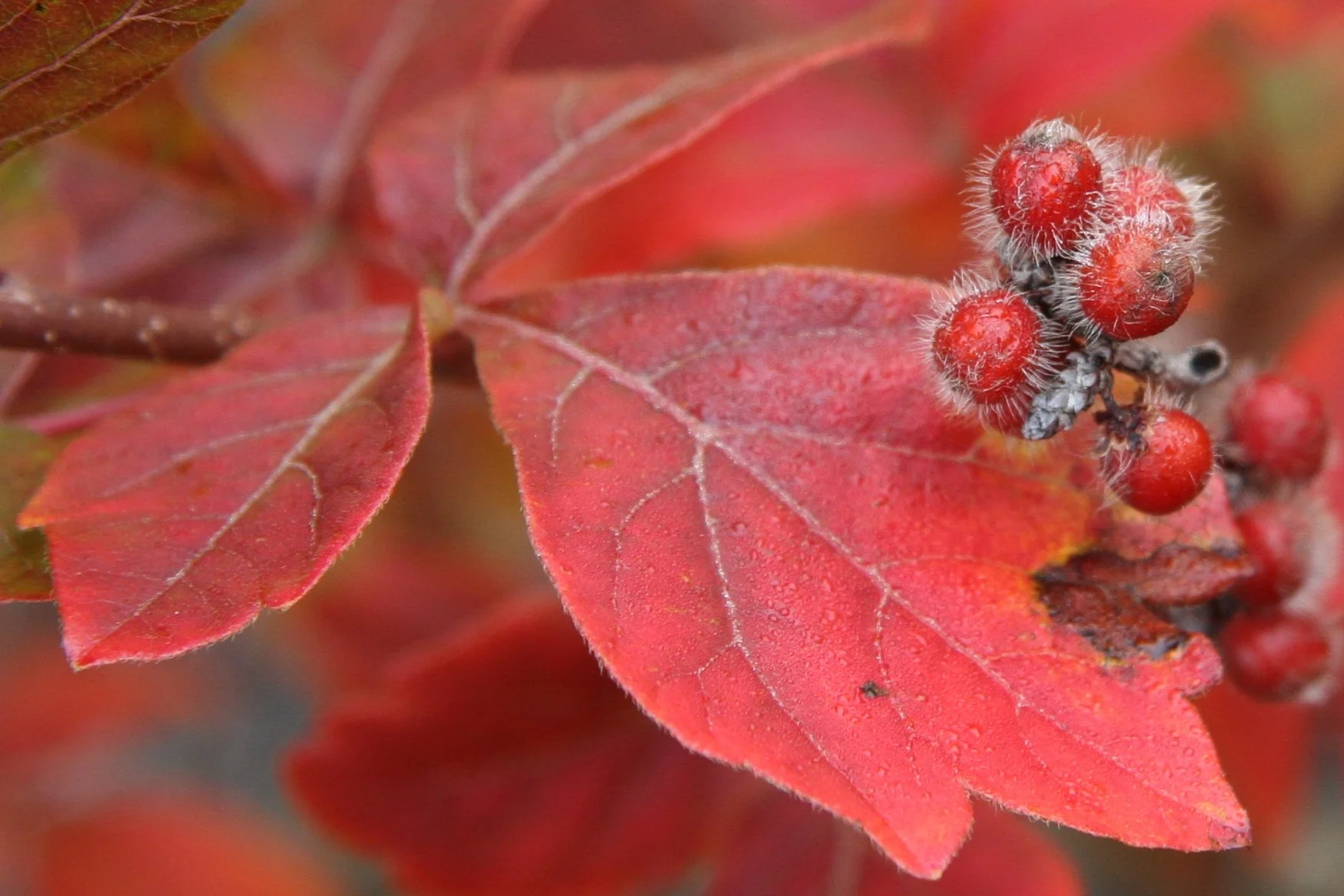
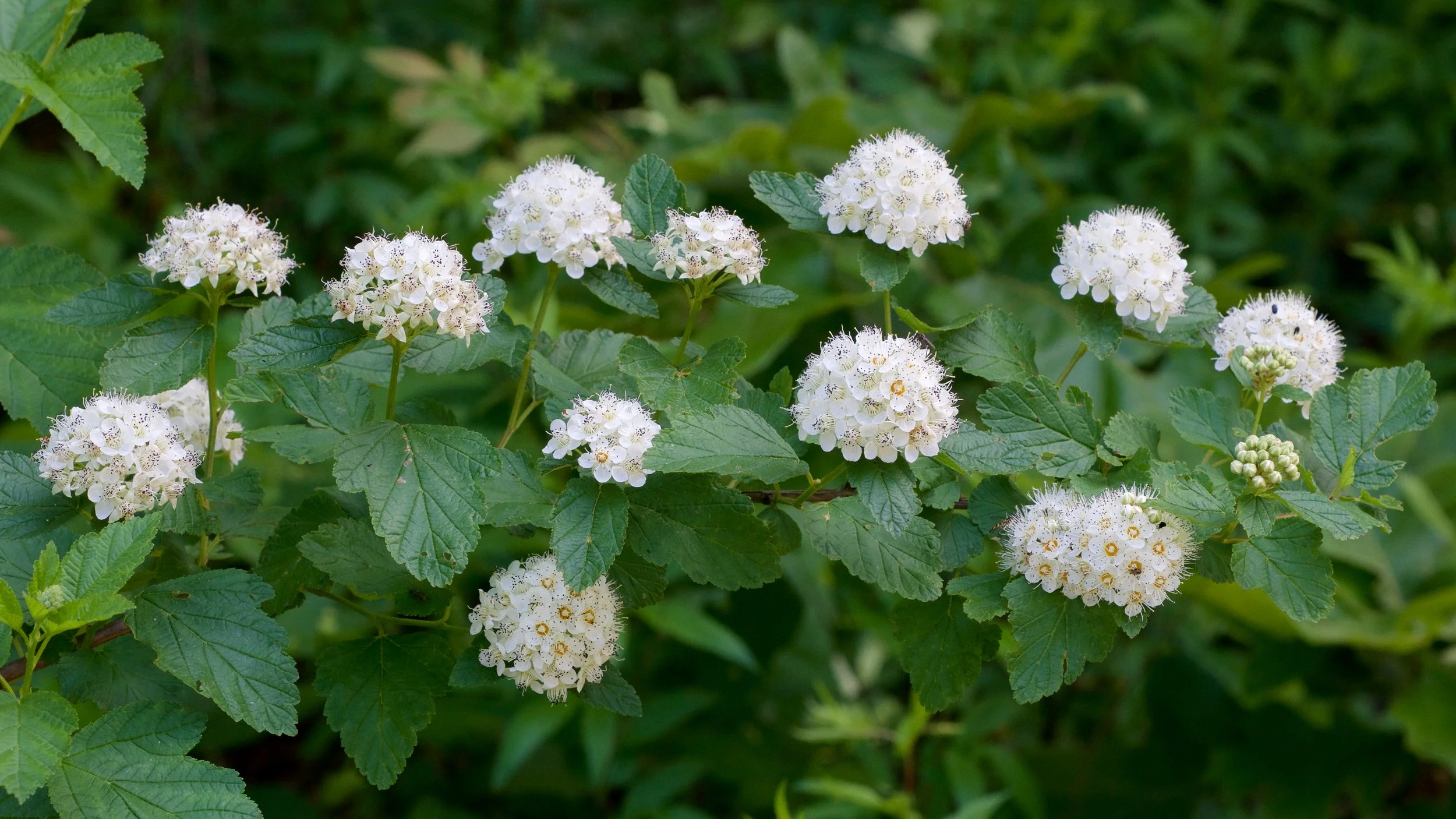
Common ninebark shows up along streambanks, woodland edges, thickets, and open slopes throughout Washington County. It’s a highly adaptable native shrub that grows in a wide range of conditions, from moist bottomlands to drier upland sites.
You'll often find it in areas with full sun to partial shade, growing in everything from rocky limestone soils to richer woodland soils. Once established, it handles drought, heat, and occasional flooding with little trouble.
The shrub develops arching branches and dense growth, typically reaching 5–10 feet tall and wide. In late spring, clusters of small white to pale pink flowers cover the branches, attracting a variety of pollinators. As the season progresses, the flowers give way to clusters of seed capsules that provide additional visual interest.
One of its most distinctive features is its peeling bark, which sheds in thin layers and gives the plant year-round character, especially during winter. The dense branching also provides excellent cover and nesting habitat for birds and other wildlife.
It responds well to pruning but generally maintains an attractive natural form on its own. Its adaptability makes it useful in both formal landscapes and naturalized plantings.
This is a dependable shrub for hedgerows, wildlife plantings, stream buffers, and native landscapes where you want structure, seasonal interest, and habitat value without a lot of maintenance.
Light: Full sun to part shade
Soil: Dry to moist; adaptable to rocky, clay, and limestone soils
Height: 5–10 ft
Bloom: Late spring to early summer
Wildlife: Native bees, butterflies, birds, and other wildlife
Growth: Multi-stemmed deciduous shrub; moderately fast-growing, forms dense thickets over time
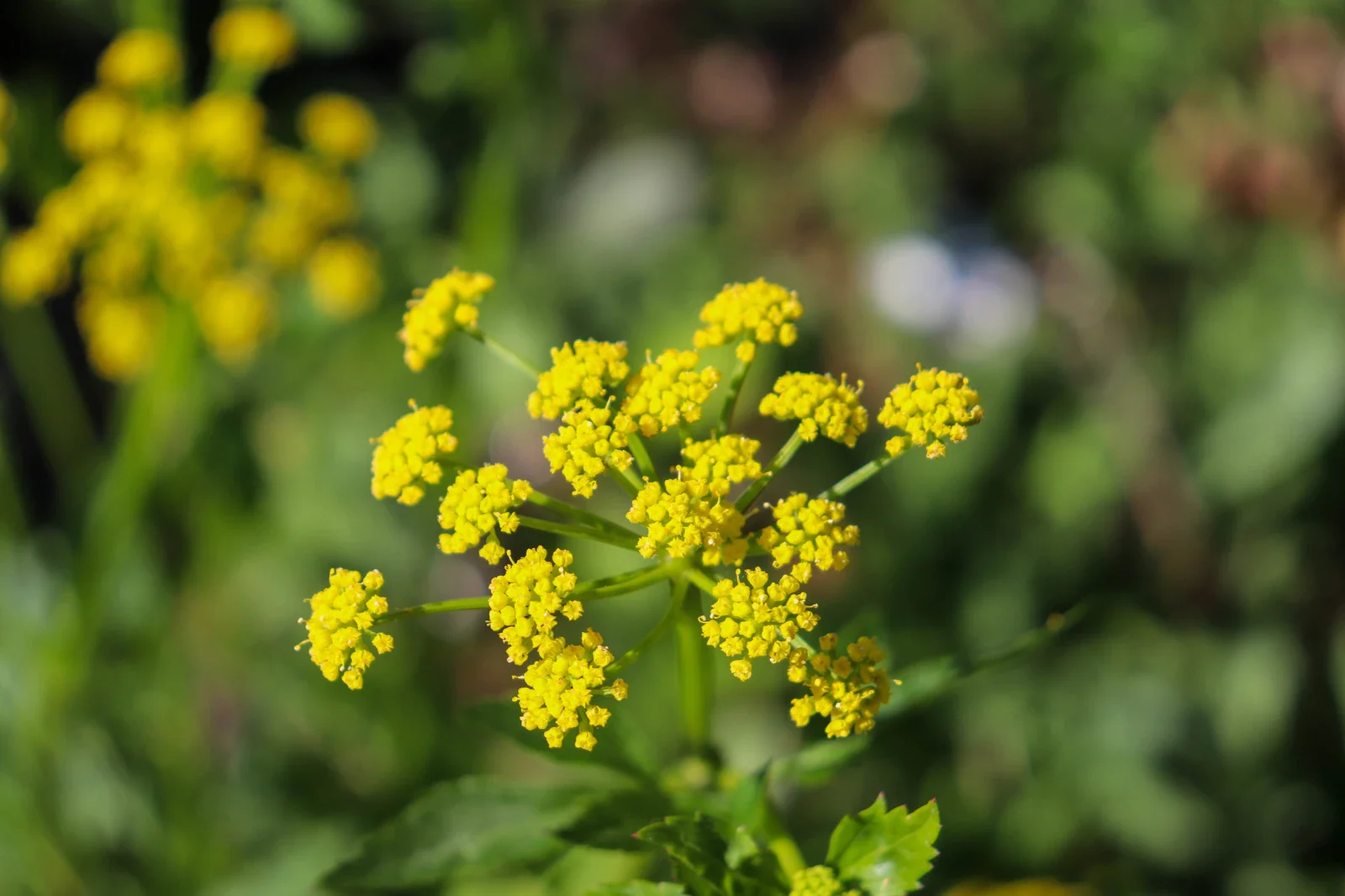
Golden alexanders shows up in prairies, open woodlands, woodland edges, and moist meadows around Washington County. It’s most common in areas with medium moisture and good sunlight, though it also adapts well to light shade.
You’ll often find it growing in deeper soils that hold some moisture through spring but don’t stay wet for extended periods. Once established, it handles a range of conditions and fits well into both meadow and garden plantings.
The plant forms upright clumps of attractive foliage and produces clusters of bright yellow flowers in late spring. The blooms resemble small, flattened umbrellas and provide an important nectar source at a time when many pollinators are becoming active.
It typically reaches 1–3 feet tall and blends easily with other native species. After flowering, the seed heads add interest and provide food for wildlife while the foliage remains attractive through much of the growing season.
The flowers attract a wide variety of native bees, beneficial insects, and butterflies, including serving as a host plant for black swallowtail butterflies.
This is a dependable choice for native gardens, pollinator plantings, and meadow restorations where you want early-season color and strong ecological value.
Light: Full sun to part shade
Soil: Medium to moist; adaptable to a variety of well-drained soils
Height: 1–3 ft
Bloom: Late spring to early summer
Wildlife: Native bees, butterflies, beneficial insects; host plant for black swallowtail butterflies
Growth: Clump-forming perennial; readily self-seeds in favorable conditions, dies back in winter and returns in spring
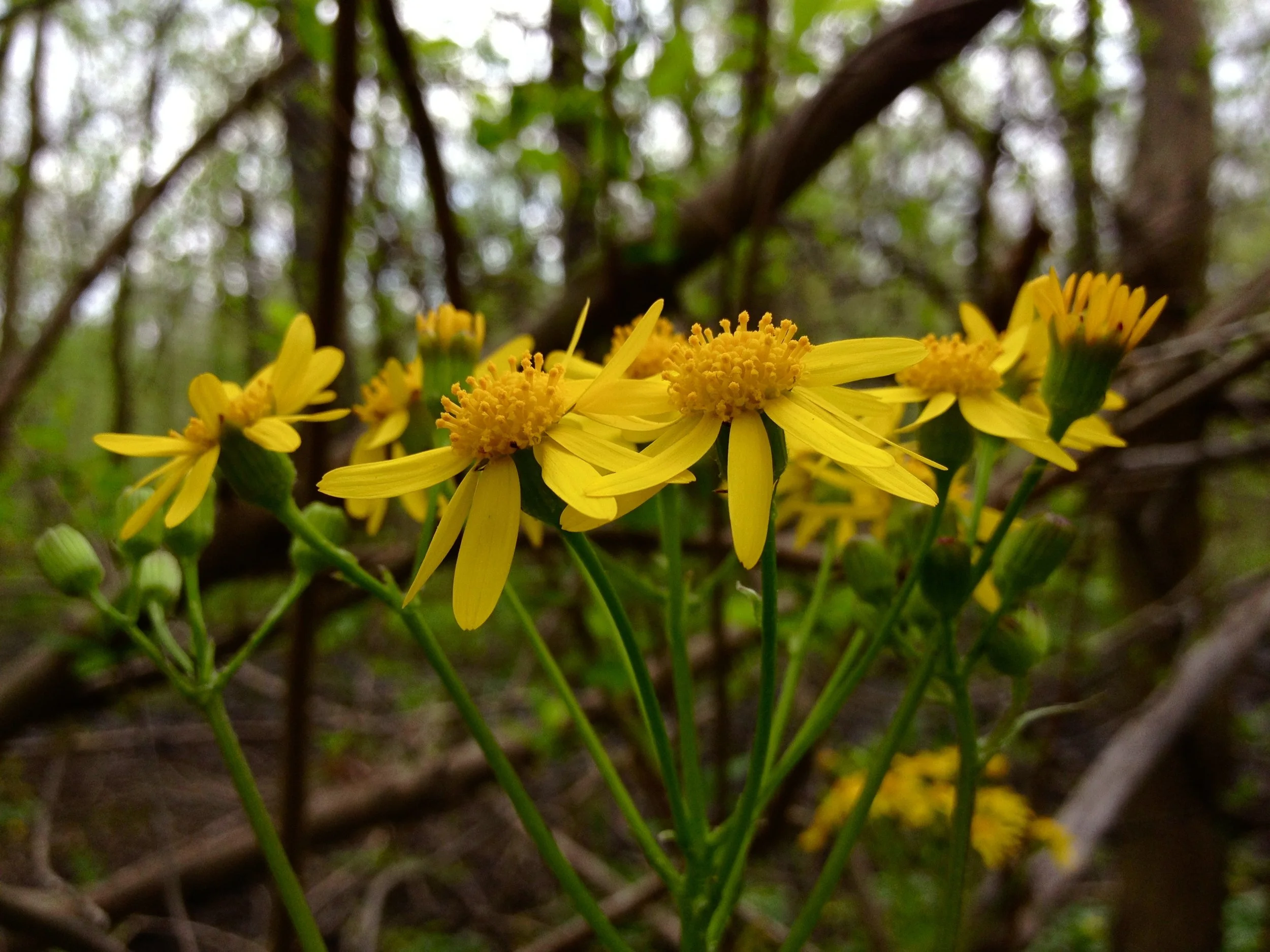
Golden ragwort shows up in moist woodlands, woodland edges, stream corridors, and low meadows around Washington County. It’s most common in areas where the soil stays consistently moist, though it can adapt to average garden conditions once established.
You’ll often find it growing in partial shade beneath open tree canopies or along the edges of wetlands and forests. It spreads gradually through underground rhizomes, forming attractive colonies that help cover the ground and suppress weeds.
The plant stays fairly low for most of the year, producing glossy, evergreen to semi-evergreen basal foliage. In spring, clusters of bright yellow flowers rise above the leaves, providing one of the earlier bursts of color in native plantings.
It typically reaches 1–3 feet tall when in bloom and works well in woodland gardens, shaded rain gardens, and naturalized areas. The flowers attract a variety of native bees, butterflies, and other beneficial insects emerging early in the season.
Once established, it forms a durable ground layer that helps fill gaps between larger plants without becoming difficult to manage.
This is a strong choice for moist, partly shaded areas where you need dependable spring color, wildlife value, and long-term ground coverage.
Light: Part shade to full sun
Soil: Medium to wet; prefers consistent moisture
Height: 1–3 ft
Bloom: Spring to early summer
Wildlife: Native bees, butterflies, and other pollinators
Growth: Colony-forming perennial; spreads gradually by rhizomes, semi-evergreen in mild winters
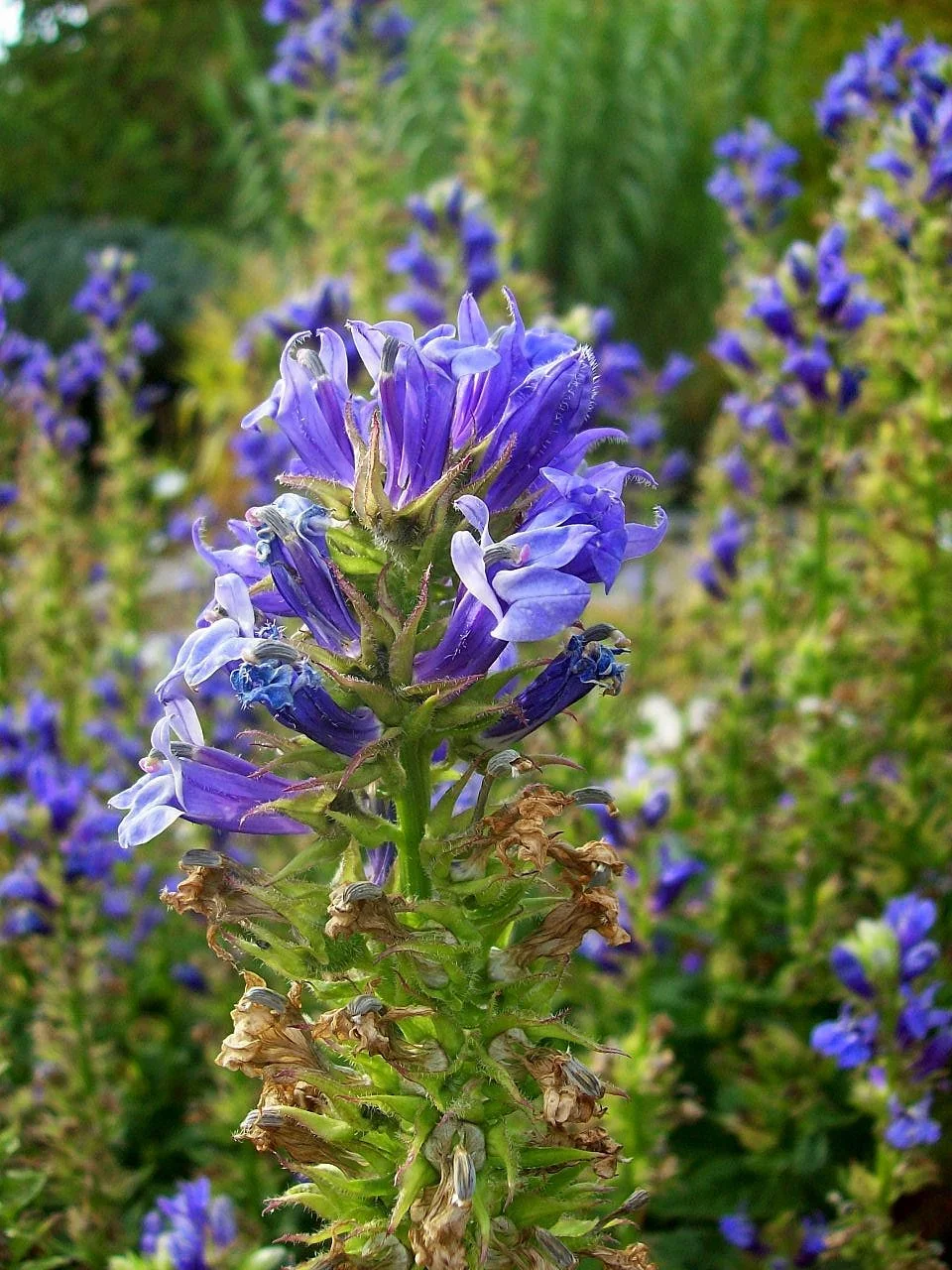
Great blue lobelia shows up in moist meadows, stream corridors, woodland edges, and low ground around Washington County. It’s most common in areas where the soil stays consistently moist through the growing season but doesn’t remain flooded for long periods.
You’ll usually find it in rich soils with reliable moisture, often growing alongside other wetland and meadow species. It performs best where it doesn’t dry out completely during the heat of summer.
The plant grows upright with sturdy stems topped by spikes of deep blue flowers that bloom from late summer into early fall. The flowers are especially attractive to bumblebees and stand out at a time when many other native plants are beginning to fade.
It typically reaches 2–4 feet tall and forms upright clumps that blend well into rain gardens, meadow plantings, and naturalized landscapes. It may self-seed in favorable conditions but generally stays easy to manage.
The late-season blooms provide an important nectar source for pollinators and add a strong splash of blue to plantings dominated by yellows and purples later in the season.
This is a dependable choice for rain gardens, wet meadow plantings, and other areas with consistent moisture where you want long-lasting color and strong wildlife value.
Light: Full sun to part shade
Soil: Medium to wet; prefers consistent moisture
Height: 2–4 ft
Bloom: Late summer into early fall
Wildlife: Bumblebees, butterflies, and other pollinators
Growth: Clump-forming perennial; may self-seed lightly, dies back in winter and returns in spring
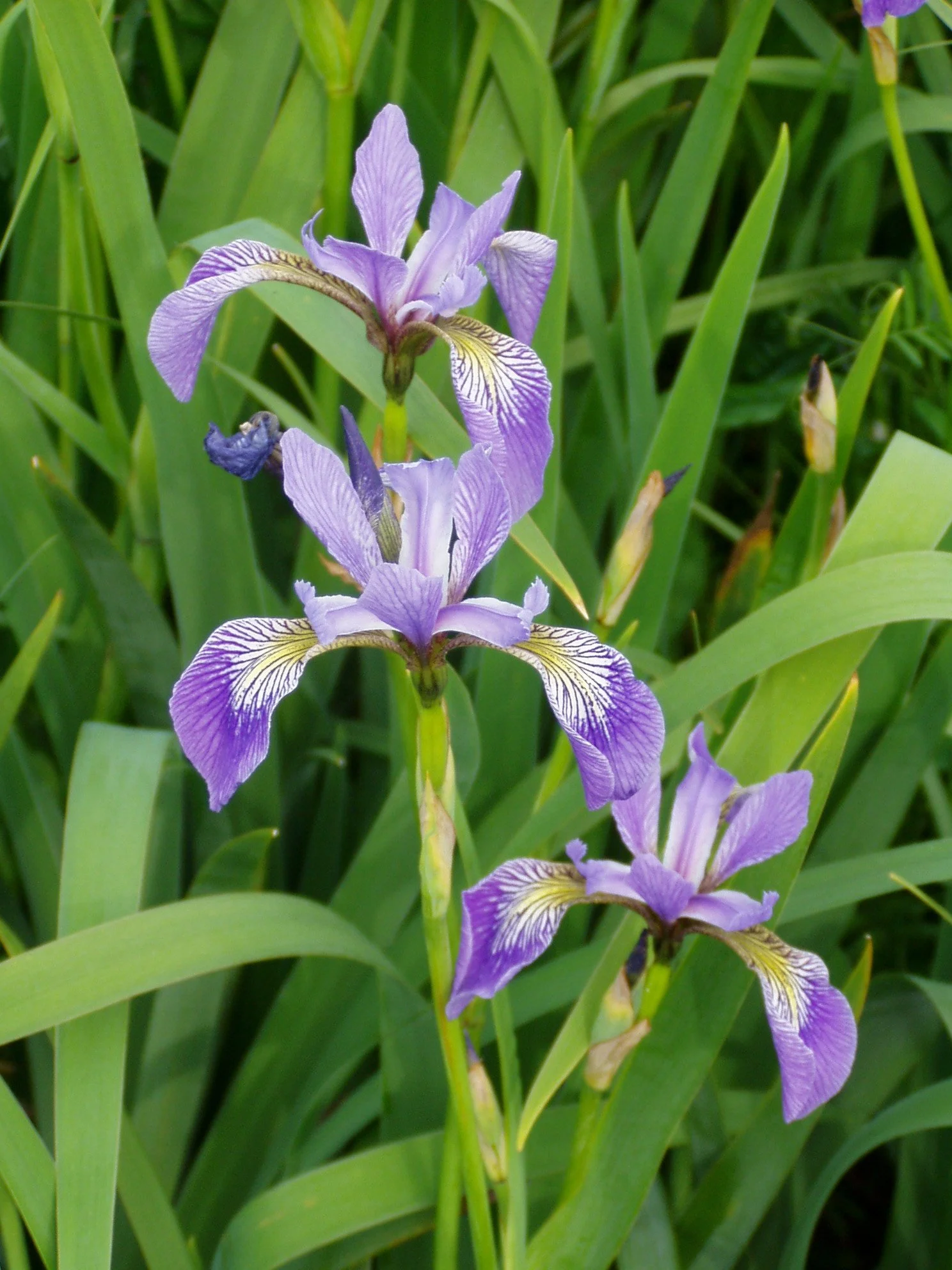
Northern blue flag iris shows up in low, wet ground around Washington County, especially along streams, pond edges, wetlands, and other areas that stay moist through much of the growing season. It does best where the soil holds consistent moisture and rarely dries out completely.
You'll usually find it in rich soils near water, though it can also grow in heavier ground that stays damp. Once established, it handles seasonal flooding well and helps stabilize wet areas with its dense root system.
The flowers are hard to miss in late spring, with blue to violet blooms held above tall, sword-like foliage. Each flower only lasts a short time, but the display can continue for weeks as new blooms open. The flowers attract a variety of pollinators, including native bees and butterflies.
It grows in upright clumps that gradually expand over time, providing strong texture even after flowering has finished. The foliage stays attractive through much of the season before dying back in winter.
This is a dependable choice for rain gardens, pond margins, wetlands, and other moisture-rich plantings. It adds color early in the season and brings structure to areas where many garden plants struggle.
Light: Full sun to part sun
Soil: Wet to moist; tolerates heavy, moisture-retentive soils
Height: 2–4 ft
Bloom: Late spring to early summer
Wildlife: Native bees, butterflies, and other pollinators
Growth: Clump-forming perennial; slowly expands, dies back in winter and returns in spring
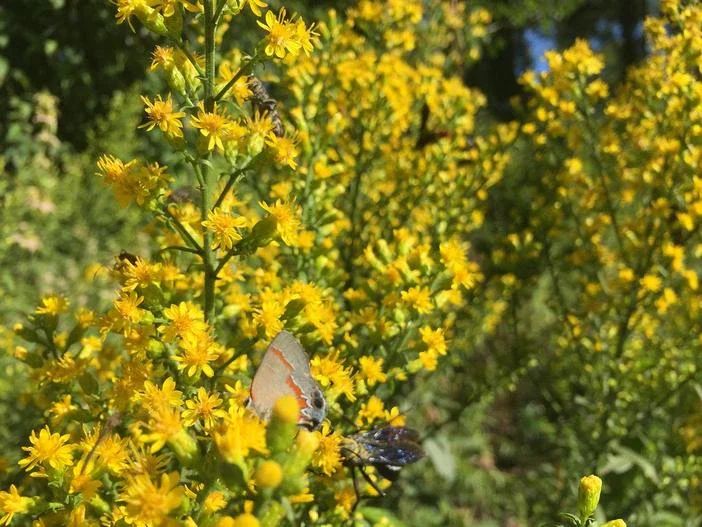
This one shows up in Washington County in open woods, glades, prairies, and field edges where the soil stays fairly dry and drains well. You'll often find it on rocky hillsides and in limestone-based soils that don't hold much moisture.
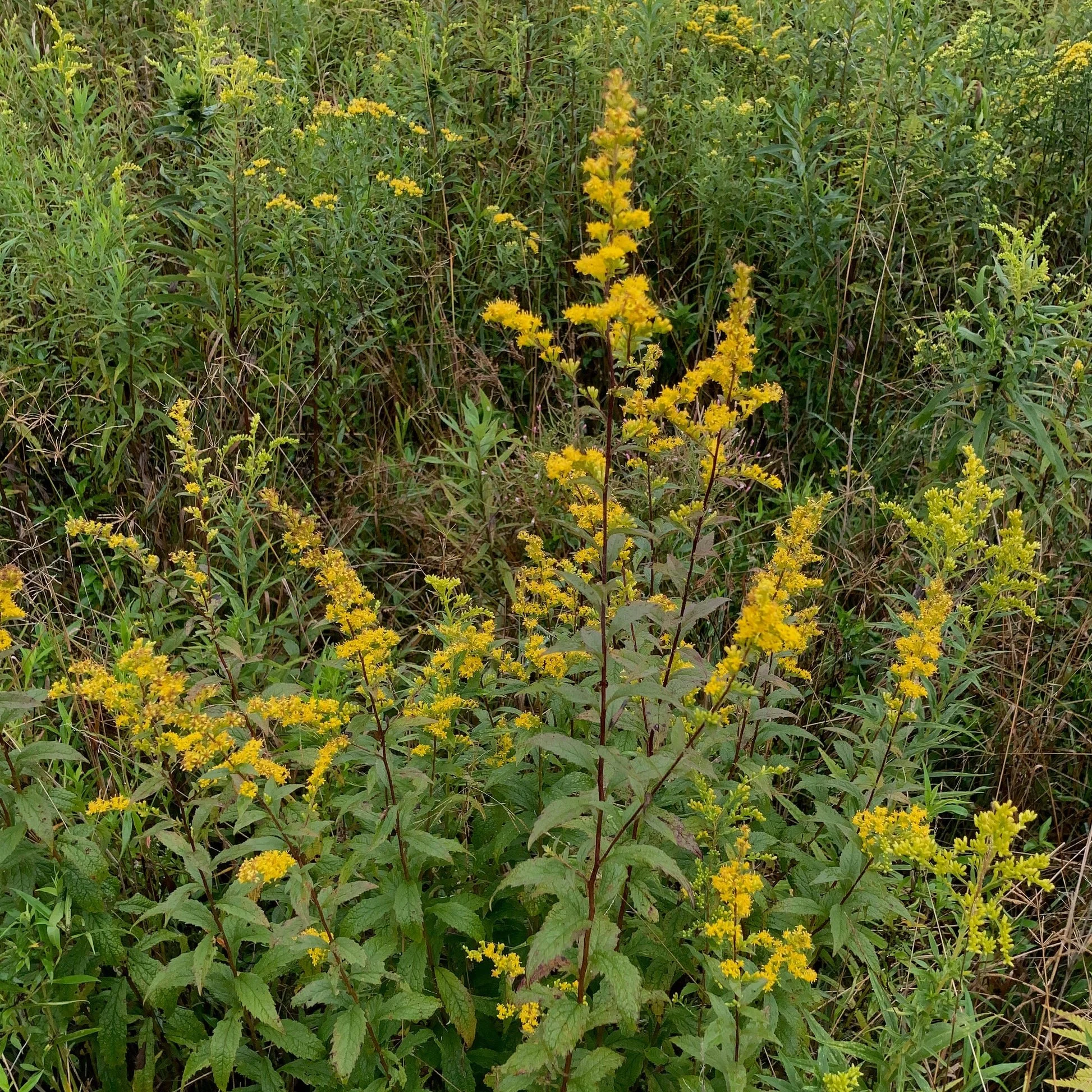
It grows upright, usually reaching 2–5 feet tall, with sturdy stems that rarely need support. By late summer and into fall, it produces dense spikes of bright golden-yellow flowers that stand above the foliage and remain showy for weeks.
It tolerates heat, drought, and lean soils once established, making it a reliable choice for naturalized plantings and native gardens. Unlike some goldenrods, it tends to stay in a defined clump rather than spreading aggressively, allowing it to mix well with neighboring plants.
The flowers attract a wide range of pollinators, including native bees, butterflies, and beneficial insects, providing an important late-season nectar source.
This is one of those plants that brings strong color and structure to a planting just when many summer blooms are fading. Easy to grow, long-lived, and dependable year after year.
Light: Full sun to part shade
Soil: Dry to medium; well-drained, tolerates rocky and limestone soils
Height: 2–5 ft
Bloom: Late summer into fall
Wildlife: Native bees, butterflies, and other pollinators
Growth: Clump-forming perennial; drought tolerant, dies back in winter and returns in spring
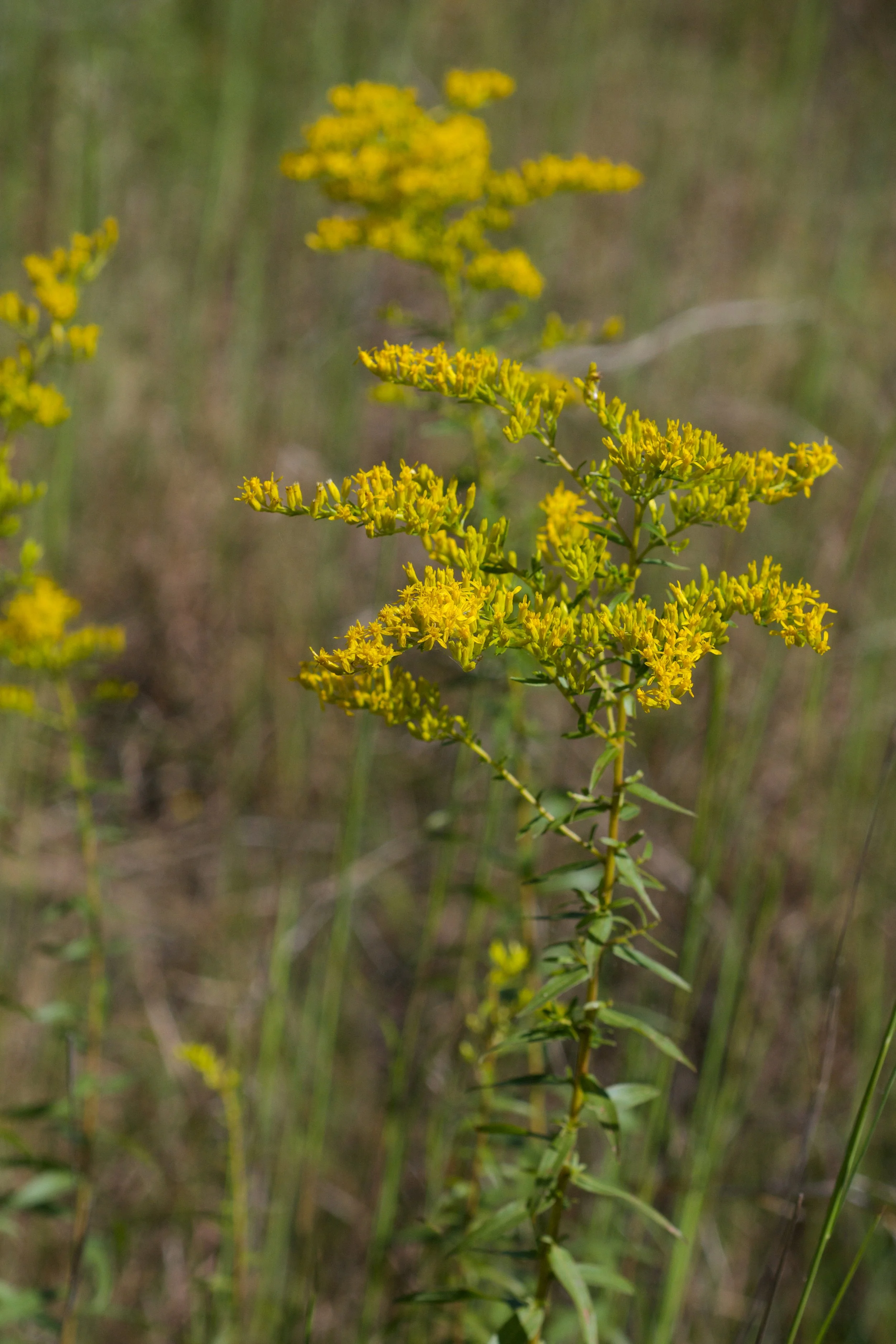
This one shows up in Washington County along woodland edges, glades, open woods, and dry fields where the soil drains well. You'll often find it on rocky slopes and in limestone soils that stay on the drier side.
It grows upright, usually reaching 2–4 feet tall, with narrow leaves that give off a sweet anise scent when crushed. By late summer, it sends up clusters of bright yellow flowers that stand out when many other native plants have already finished blooming.
It handles heat, drought, and poor soils without much trouble, making it a dependable choice for native plantings and meadow-style gardens. It stays fairly well-behaved and mixes easily with other species instead of taking over.
The late-season blooms draw in native bees, butterflies, and other pollinators when floral resources are becoming harder to find.
This is one of those plants that quietly does a lot of work in a planting—adding fall color, supporting wildlife, and holding its place without demanding much attention.
Light: Full sun to part shade
Soil: Dry to medium; well-drained, tolerates rocky and limestone soils
Height: 2–4 ft
Bloom: Late summer into fall
Wildlife: Native bees, butterflies, and other pollinators
Growth: Clump-forming perennial; drought tolerant, dies back in winter and returns in spring
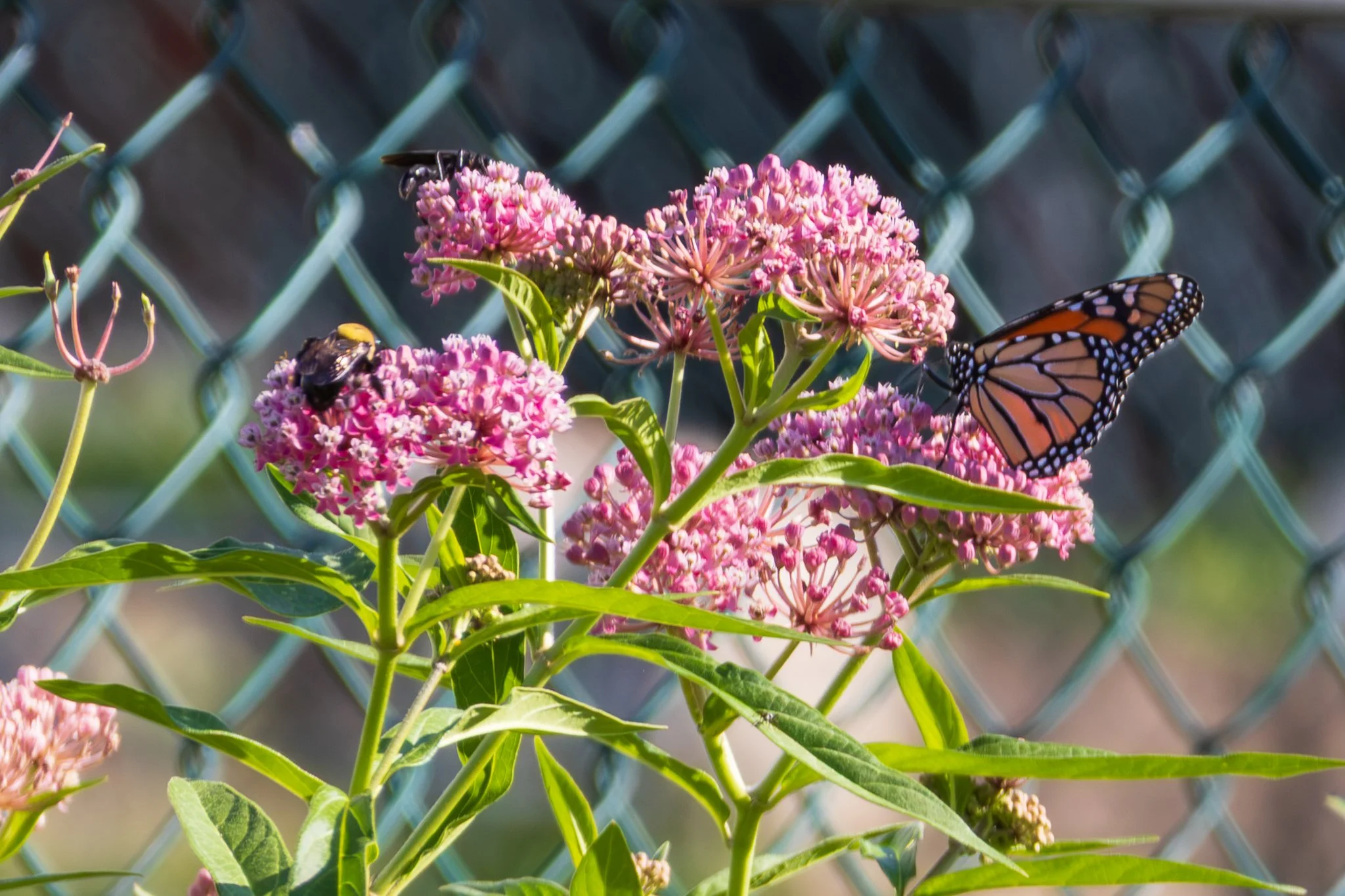
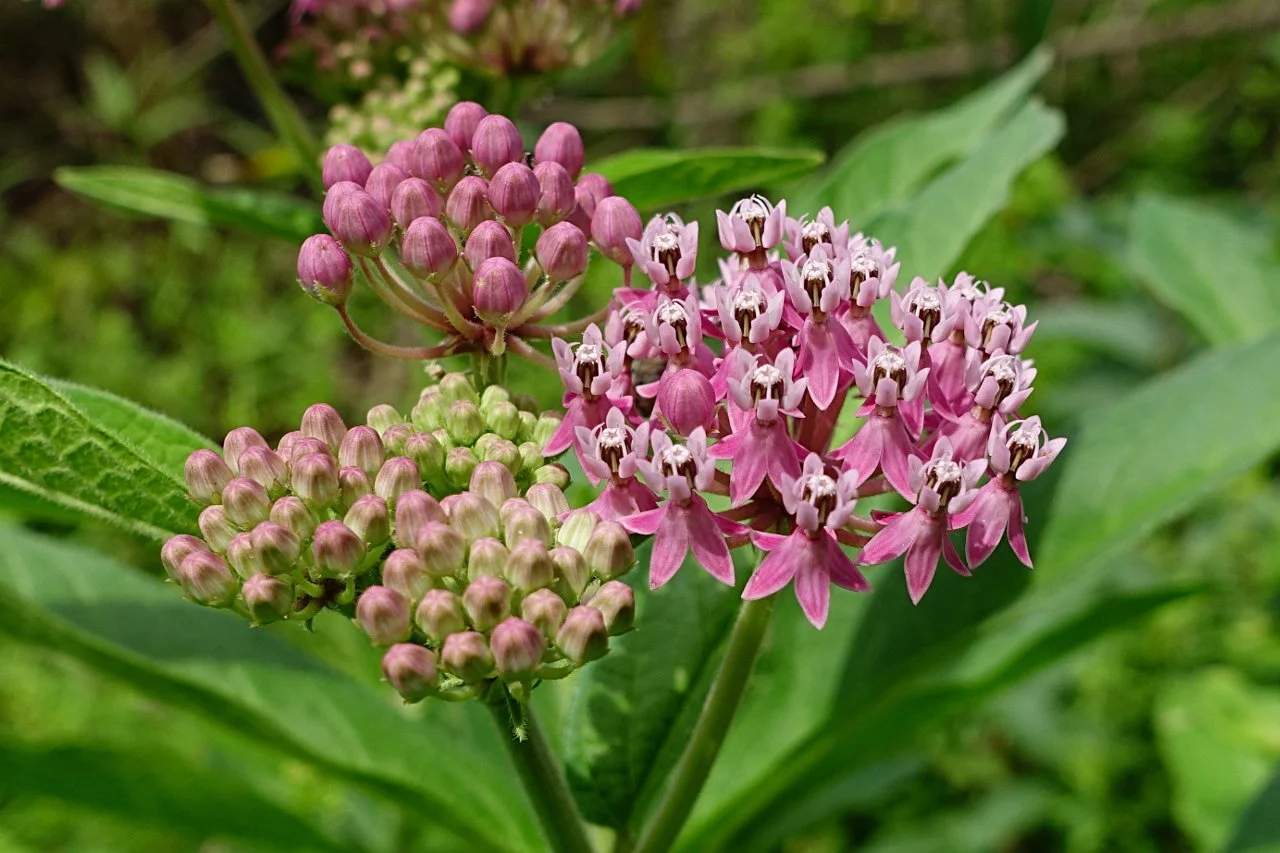
Swamp milkweed is a native wetland and wet meadow perennial found in marsh edges, floodplains, streambanks, ditches, and low areas where the soil stays consistently moist. In Washington County gardens, it is one of the better milkweeds for rain gardens, pond edges, and heavier soils that do not dry out too quickly.
Unlike common milkweed, swamp milkweed usually grows as an upright clump rather than spreading by wide underground colonies. It has narrow, opposite leaves, smooth stems, and clusters of pink to rose colored flowers held at the top of the plant in summer.
It prefers full sun with steady moisture, but it can handle average garden soil if watered during dry periods. It does not need to be planted directly in standing water. The best spot is moist soil with good light, especially where runoff collects or the soil stays cool longer into summer.
Swamp milkweed is one of the most useful host plants for monarch caterpillars. The flowers also support a wide range of native bees, butterflies, wasps, beetles, and other nectar feeding insects. After flowering, it forms narrow seed pods that split open and release wind carried seeds with silky hairs.
Plants usually reach around 3–5 feet tall. It can self seed in suitable open soil, but it is not usually aggressive. In cleaner garden beds, seedlings can be moved or thinned easily.
This is a strong fit for rain gardens, wet meadow plantings, pond margins, moist pollinator beds, and residential native gardens where you want high ecological value without a plant that runs heavily.
Light: Full sun to part sun
Soil: Medium to wet; tolerates clay and seasonally saturated soil
Height: 3–5 ft
Bloom: Mid summer
Wildlife: Monarch host plant; strong nectar source for butterflies, native bees, wasps, beetles, and other insects
Growth: Upright clump-forming perennial; may self seed in open moist soil, but not aggressively
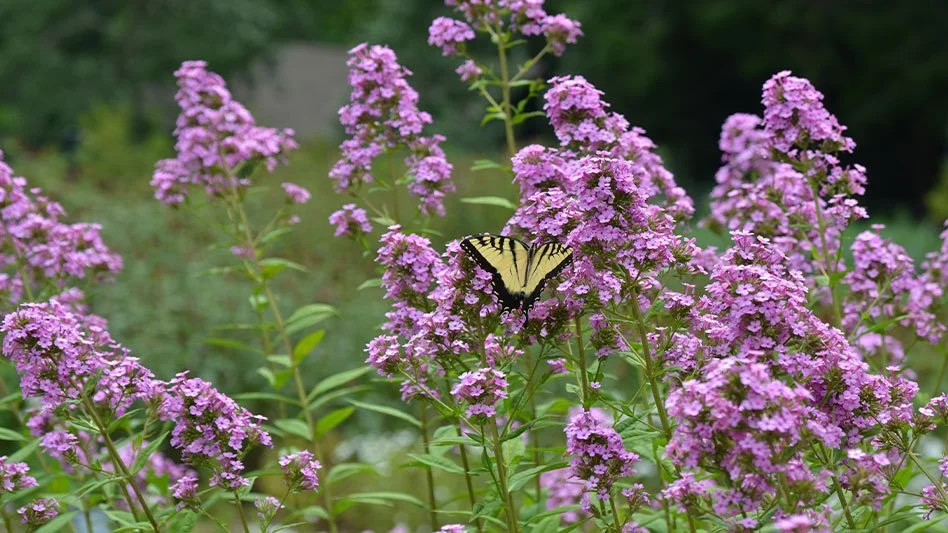
Garden phlox is a native perennial found in rich woods, thickets, stream edges, and open woodland margins through much of the eastern United States. In gardens, it performs best where the soil has decent organic matter and does not dry out completely in summer.
‘Jeana’ is a selected cultivar of Phlox paniculata, not a wild straight-species form. It is mainly valued for its strong mildew resistance, tall upright habit, long bloom period, and smaller lavender pink flowers held in loose clusters.
Compared to many garden phlox cultivars, ‘Jeana’ has a finer flower texture. The individual flowers are smaller, but the plant produces many of them over a long period. This makes it especially useful in pollinator plantings where steady nectar availability matters more than oversized flower heads.
It grows best in full sun to part sun with consistent moisture and good airflow. In hot, dry, exposed sites, the foliage can stress, especially if the soil is thin or compacted. It is a better fit for richer garden beds, meadow edges, moist borders, and planted areas that receive some summer moisture.
Plants usually reach around 3–5 feet tall and grow as upright clumps. It slowly expands from the crown but is not an aggressive spreader. Cutting back spent flowers can keep the plant cleaner, while leaving some stems later in the season can provide structure and habitat.
Because ‘Jeana’ is a cultivar, it works well in designed native gardens, pollinator beds, and residential landscapes, but it should be treated differently than local ecotype seed-grown Phlox paniculata for restoration work.
Light: Full sun to part sun
Soil: Medium to moist; fertile, well-drained soil with organic matter
Height: 3–5 ft
Bloom: Mid summer to early fall
Wildlife: Strong nectar source for butterflies, skippers, moths, hummingbird moths, and some bees
Growth: Upright clump-forming perennial; slowly expanding, non-aggressive
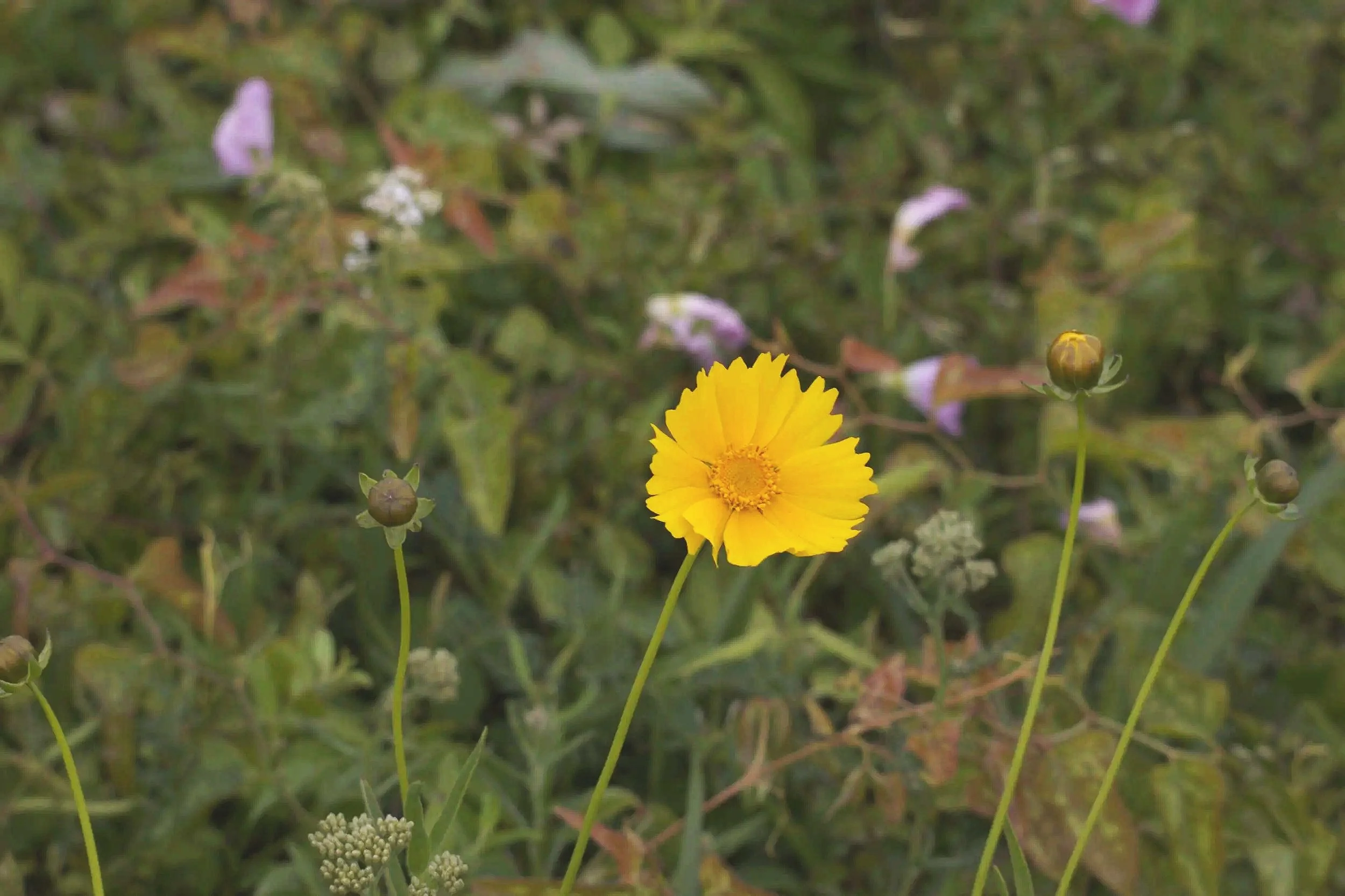
Lanceleaf coreopsis is one of those native wildflowers that looks cheerful, but it is tougher than people expect. Around Washington County, it fits naturally into sunny, open places like dry meadows, roadside edges, slopes, and thinner soils where heavy garden plants might struggle.
This is a strong plant for lean, well-drained ground. It does not need rich soil or constant attention to perform well. In fact, it usually does better when it is not overfed. That makes it a great match for rocky, dry, open areas, especially places where you want quick color without building a high-maintenance flower bed.
When it blooms, the bright yellow flowers bring a clean, classic meadow look. It usually starts flowering in late spring into early summer, which helps bridge the gap before a lot of the mid and late summer native flowers take over. Pollinators use the blooms heavily, especially native bees, small butterflies, and other beneficial insects.
Lanceleaf coreopsis usually stays around 1–2 feet tall, making it easy to work into the front or middle of a planting. It has a looser, natural look, but it can still feel intentional when planted in groups. It also spreads by seed over time, which can be helpful in meadow plantings, slope work, and restoration areas where you want plants to fill in naturally.
This is a great choice for sunny native gardens, dry slopes, meadow edges, and early-season pollinator plantings where you want dependable color and ecological value without needing perfect soil.
Light: Full sun
Soil: Dry to medium; well-drained, rocky, sandy, or lean soils
Height: 1–2 ft
Bloom: Late spring to early summer
Wildlife: Native bees, butterflies, beneficial insects, seed-eating birds
Growth: Short-lived perennial; clump-forming; can self-seed naturally in open soil
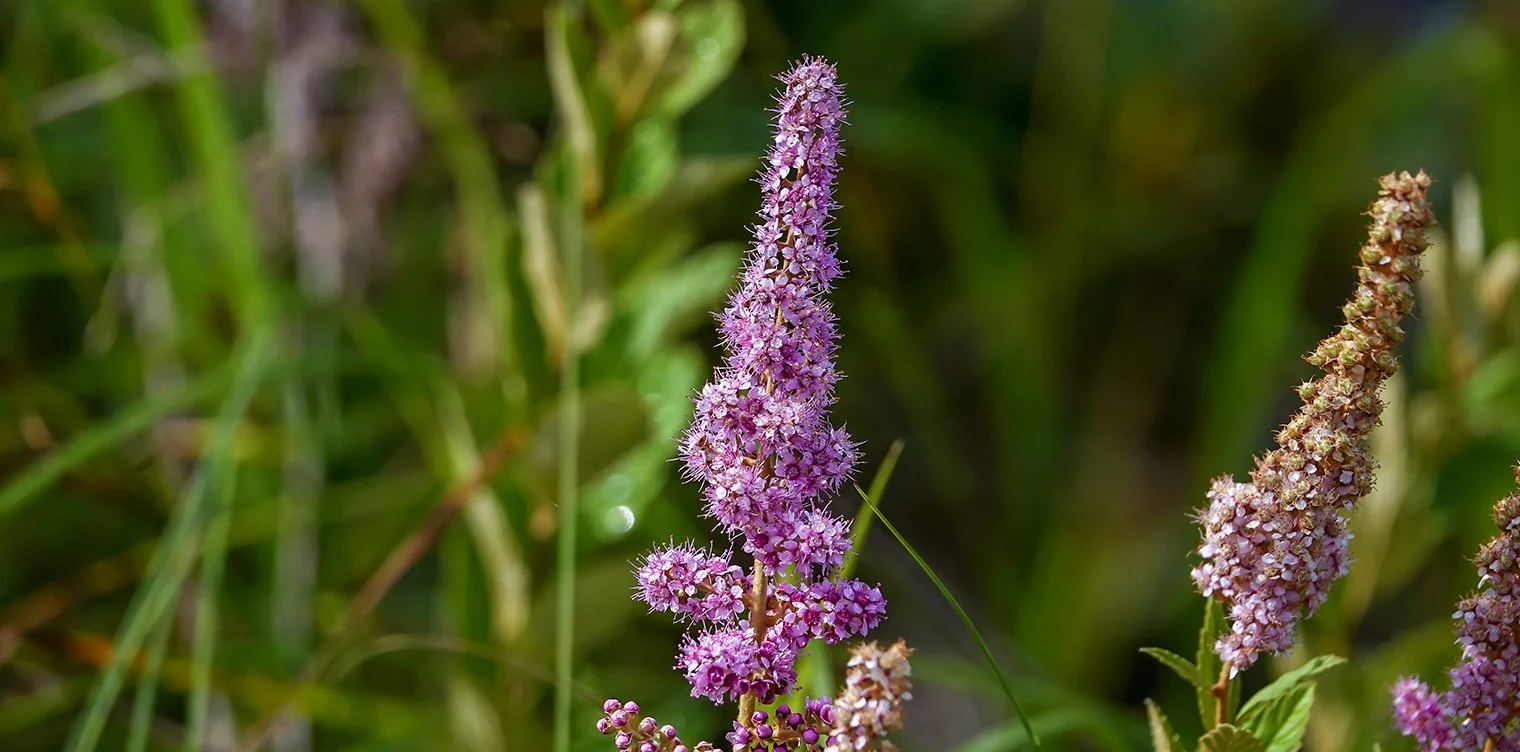
Steeplebush shows up in wet meadows, old fields, and low ground around Washington County, especially in areas that stay damp and get full sun. It’s more common in rough, open sites where the soil holds moisture and competition is lower.
You’ll find it in medium to wet soils, including spots that stay soggy through parts of the season. It handles those conditions well and tends to establish where other shrubs don’t hold as consistently.
The flowers form dense, upright pink spikes through mid to late summer. They stand above the foliage and bring in a steady mix of pollinators without being overly showy.
It usually grows 3–5 feet tall and spreads by underground stems, forming thicker patches over time. It can fill in space faster than some other shrubs, especially in wet, open conditions.
This is a strong choice for wet slopes, meadow plantings, and low areas where you need something that can hold ground and compete. It works best in full sun with consistent moisture.
Light: Full sun to part sun
Soil: Medium to wet; tolerates soggy conditions
Height: 3–6 ft
Bloom: Mid to late summer
Wildlife: Pollinators, especially bees
Growth: Spreading shrub; forms dense colonies over time
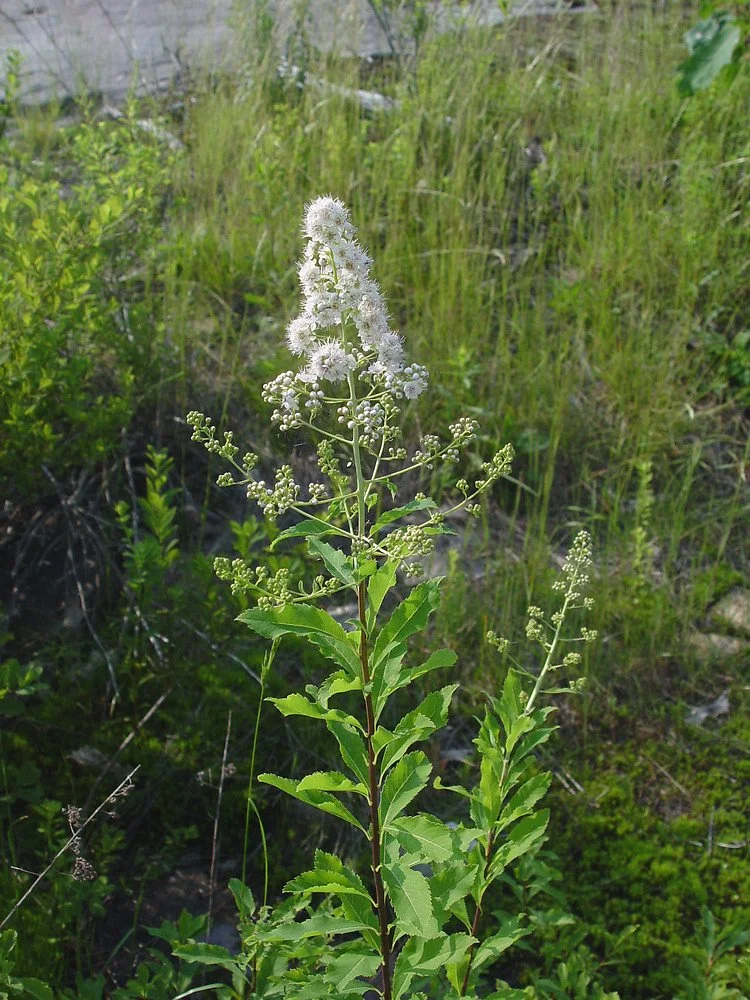
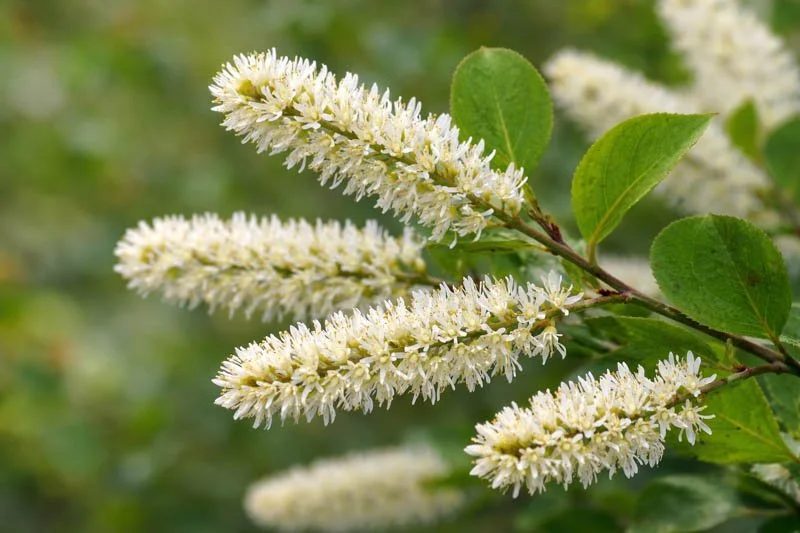
Virginia sweetspire shows up along streambanks, wet woods, and low ground around Washington County. It’s common in areas where soil stays consistently moist and water moves through the landscape.
You’ll find it in medium to wet soils, including spots that flood occasionally or stay damp through the season. It handles those conditions without issue and is one of the more reliable shrubs for stabilizing ground in wetter areas.
It grows as a low, spreading shrub, usually around 3–5 feet tall, and expands outward by underground stems. Over time, it forms dense patches that help hold soil in place.
In early summer, it produces drooping white flower clusters that stand out against the foliage and bring in pollinators. As the season shifts, the leaves take on deep red and purple tones in fall.
This is a strong choice for slopes, drainage areas, and woodland edges where you need something that can handle moisture and gradually fill in space.
Light: Full sun to shade
Soil: Medium to wet; tolerates seasonal flooding
Height: 3–6 ft
Bloom: Late spring to early summer
Wildlife: Pollinators, especially bees
Growth: Spreading shrub; forms colonies and stabilizes soil
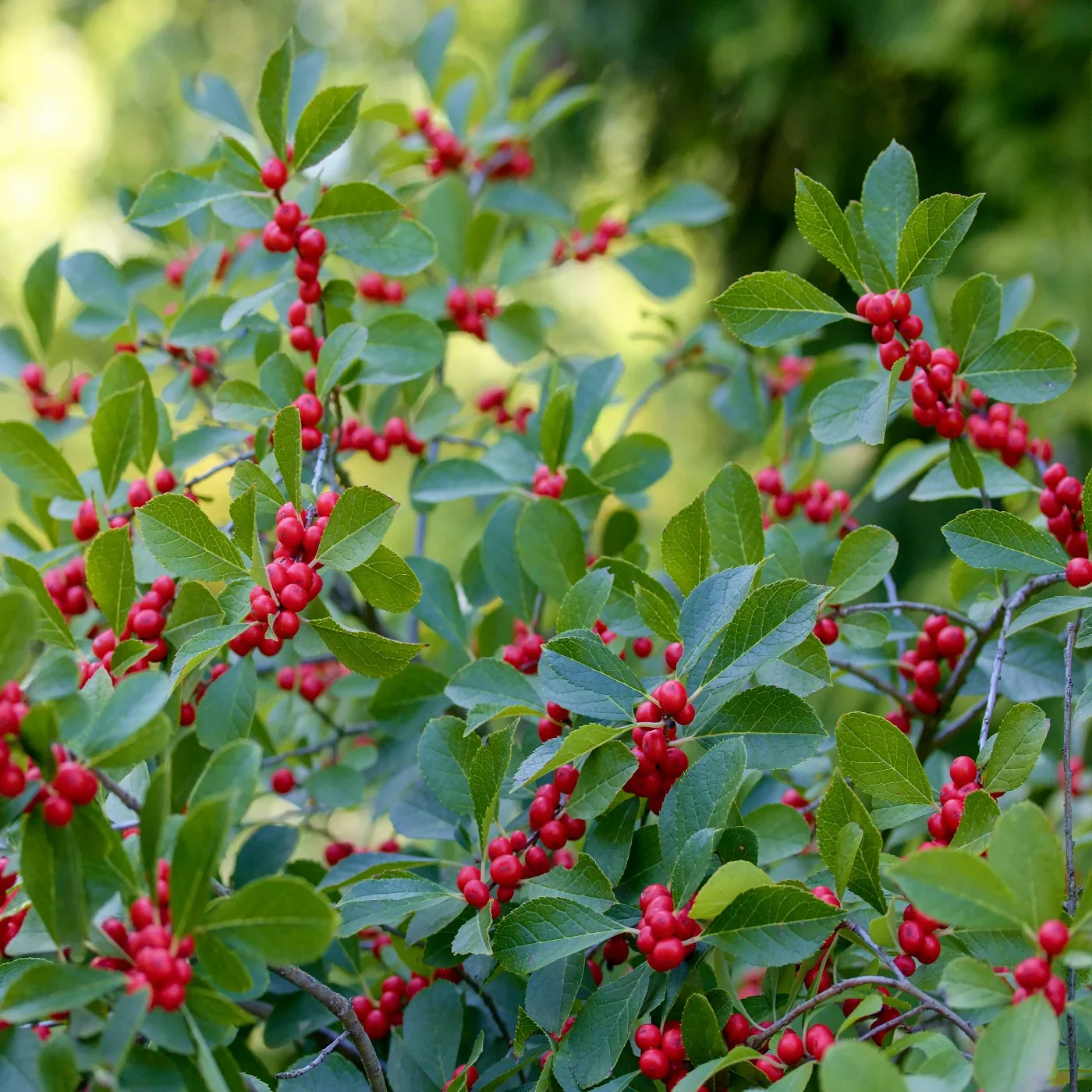
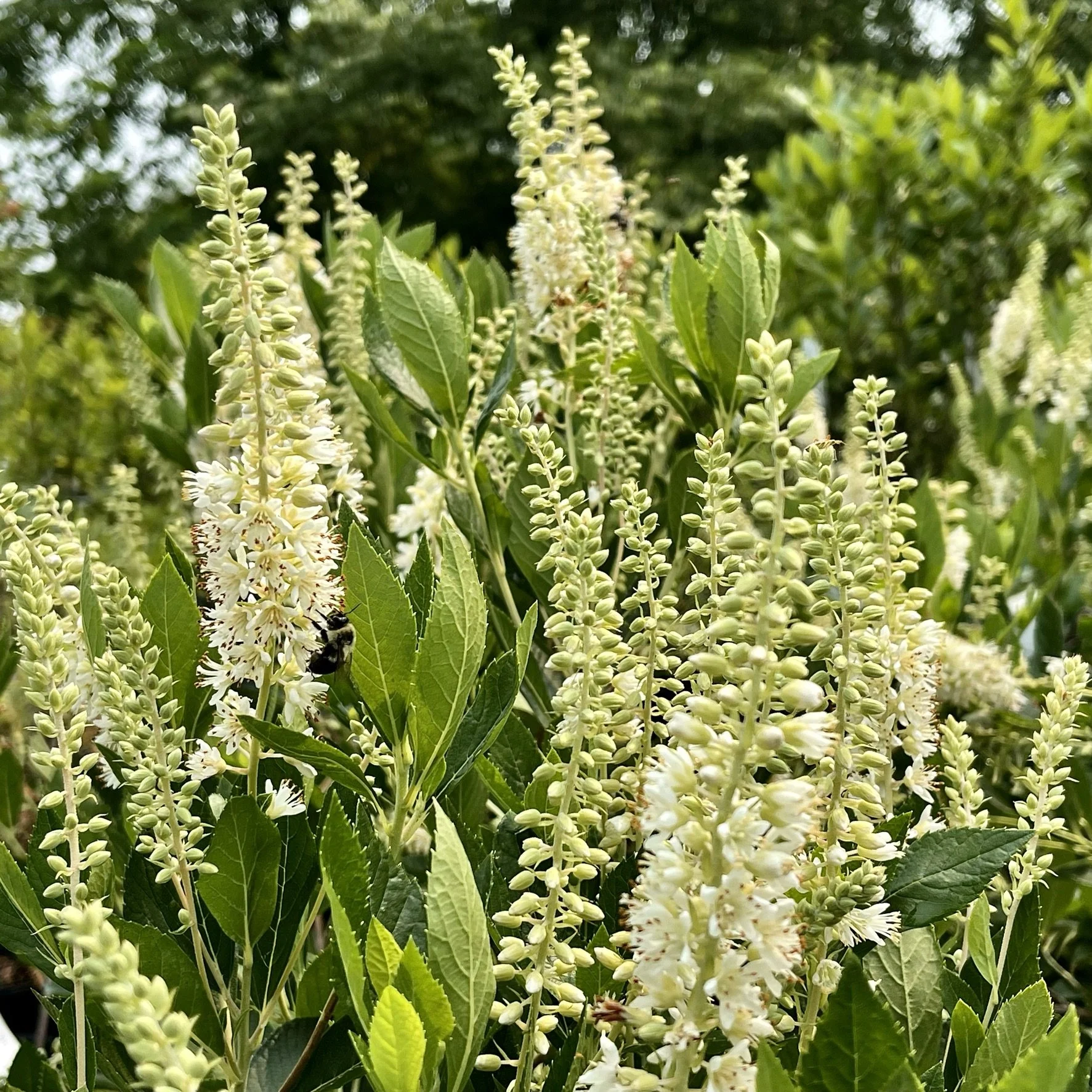
Sweet pepperbush shows up in moist woods, stream edges, and shaded low areas around Washington County. It’s one of the few shrubs that handles both shade and consistent moisture without falling apart.
You’ll usually find it in soils that stay on the damp side, especially in woodland settings or along drainage paths. It does well where water moves through the soil but doesn’t stay fully saturated.
The flowers bloom in mid-summer as upright white spikes with a strong fragrance. They stand out in shaded areas where not much else is blooming at that time, and they pull in a steady flow of pollinators.
It usually grows 4–6 feet tall and spreads slowly by suckers, forming loose colonies over time. It’s not aggressive, but it will fill in space if conditions are right.
This is a strong choice for shaded borders, rain gardens, and areas where you need a shrub that can handle moisture without needing full sun. It also works well along woodland edges where light shifts throughout the day.
Light: Full sun to shade
Soil: Medium to wet; prefers consistent moisture
Height: 3–6 ft
Bloom: Mid-summer
Wildlife: Pollinators, especially bees
Growth: Suckering shrub; forms colonies over time
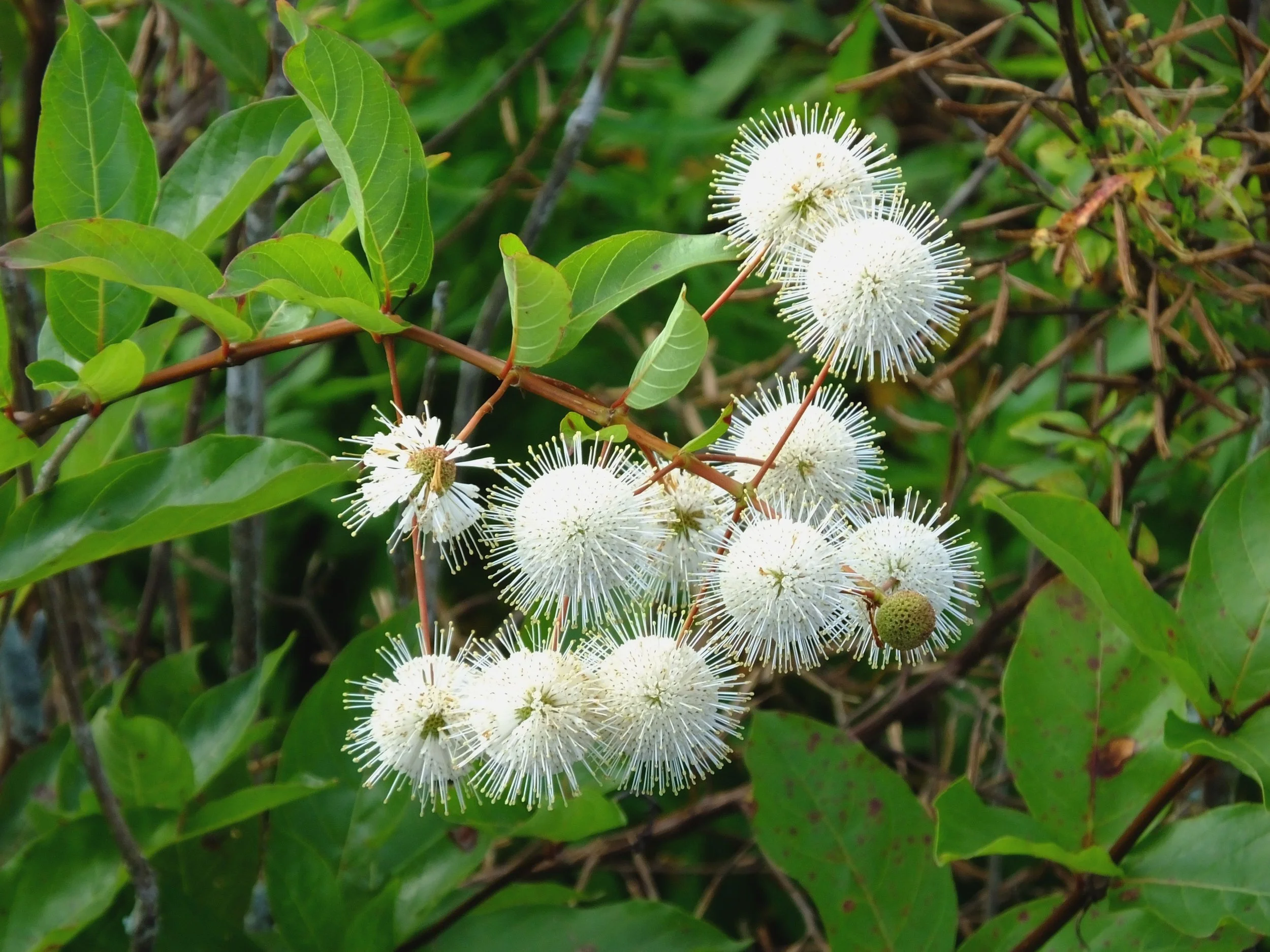
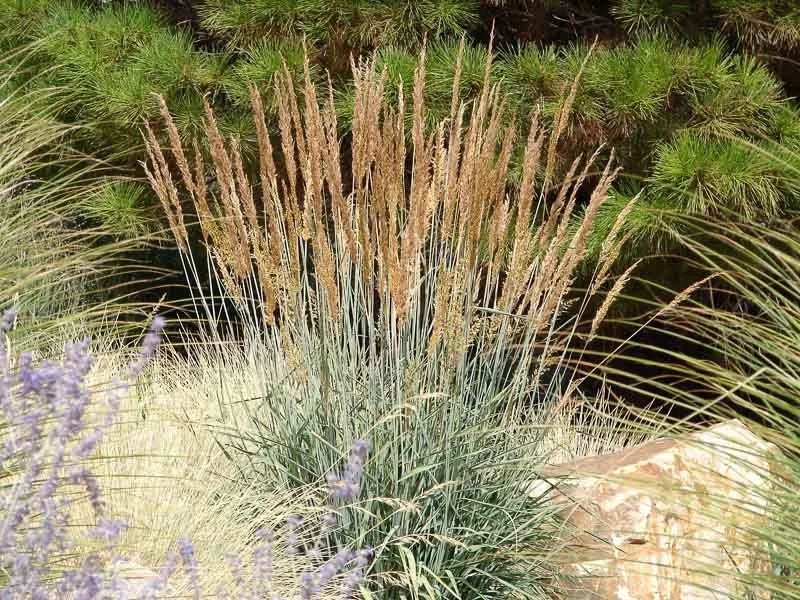
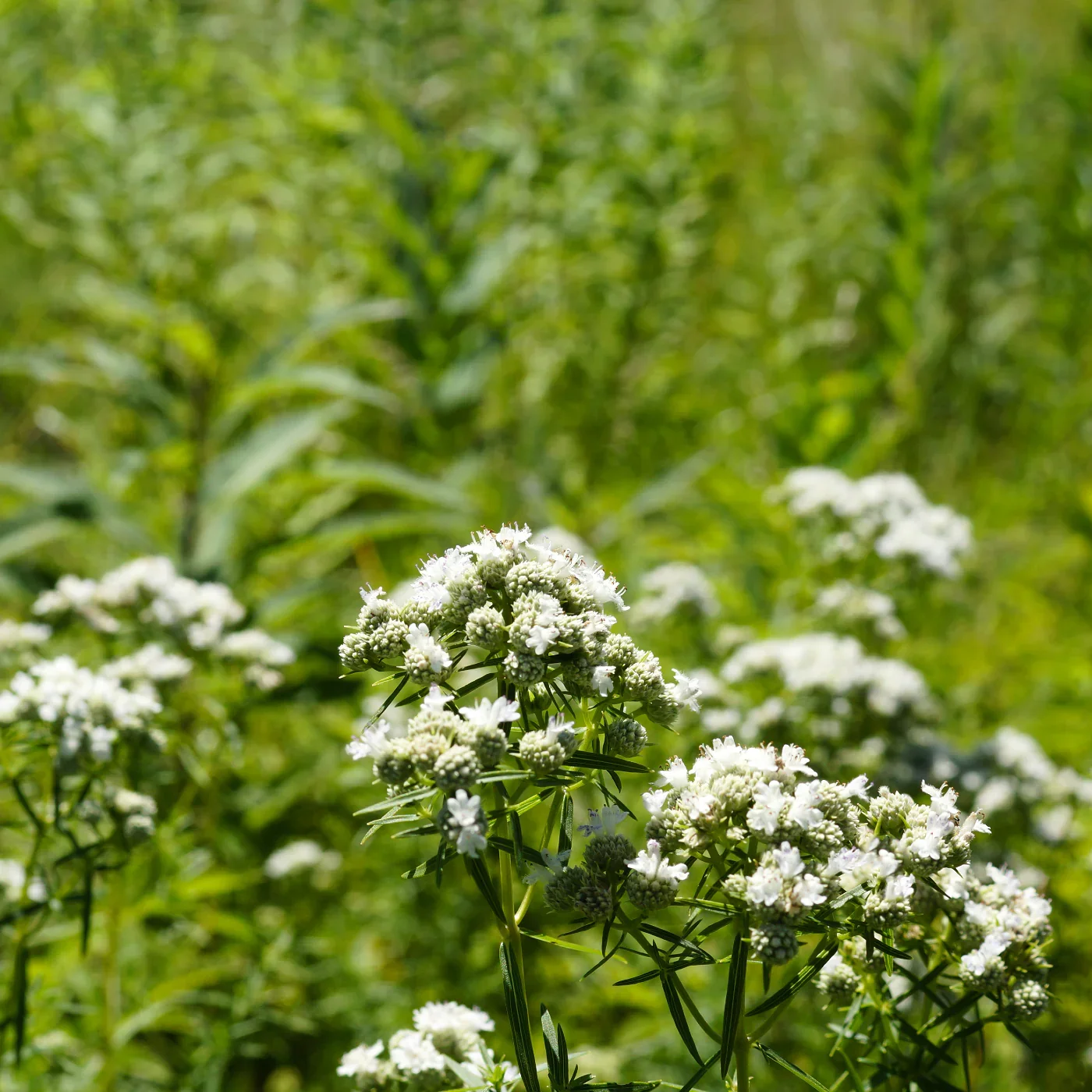
Narrowleaf mountain mint shows up in open, dry ground across Washington County, especially in fields, roadsides, and sandy or rocky soils where water doesn’t stick around long.
You’ll find it in well-drained areas that get full sun, often in places that bake out during summer. It handles those conditions without much input and holds steady where more moisture-loving plants fall off.
The foliage is fine and narrow, giving it a lighter, more airy look than other mountain mints. By mid to late summer, it puts out small white flowers that don’t look like much from a distance but are constantly covered in pollinators.
It usually stays around 2–3 feet tall and spreads by underground stems, forming loose patches over time. It’s not aggressive, but it will fill in open ground if conditions are right.
This is a strong choice for dry meadows, slopes, and open plantings where you want something that supports pollinators without needing rich soil or regular watering.
Light: Full sun to part sun
Soil: Dry to medium; well-drained, often sandy or rocky soils
Height: 1–3 ft
Bloom: Mid to late summer
Wildlife: Extremely high pollinator value (bees, wasps, butterflies)
Growth: Spreading perennial; forms loose colonies over time
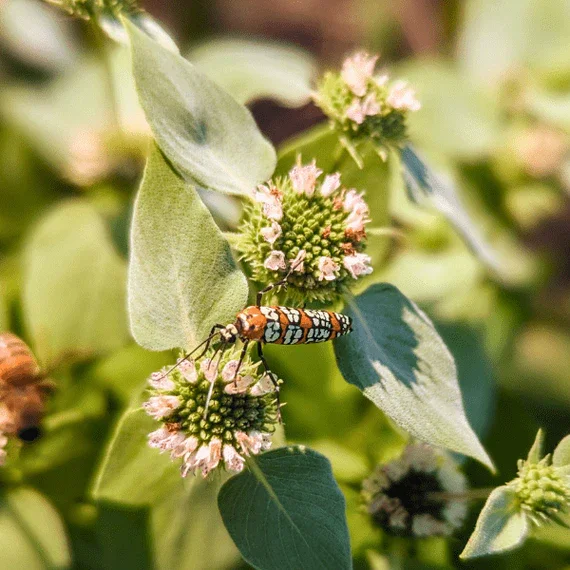
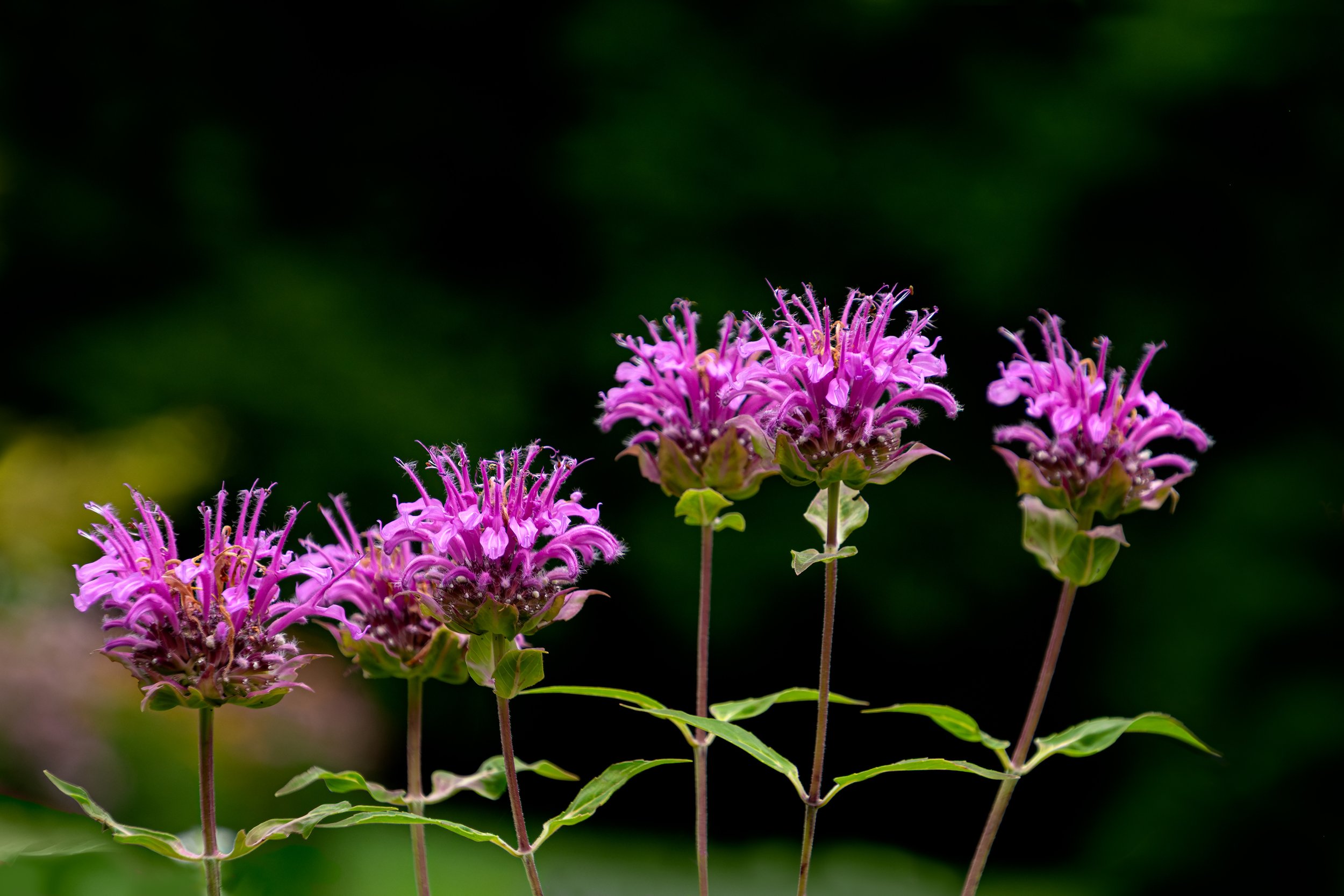
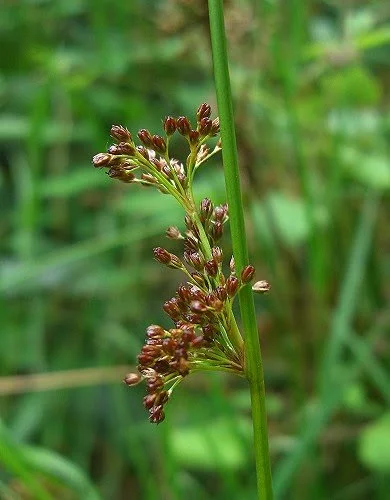
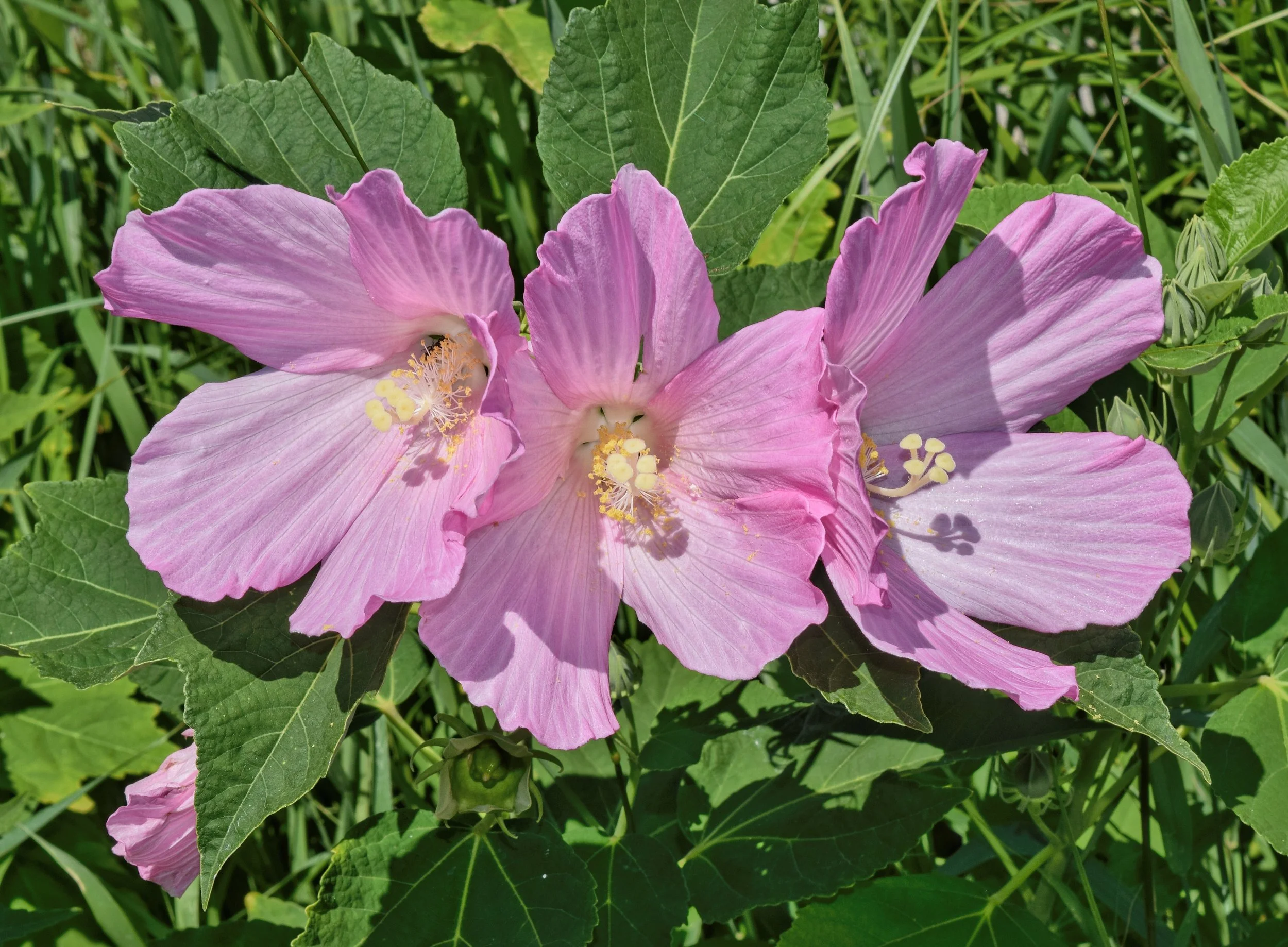
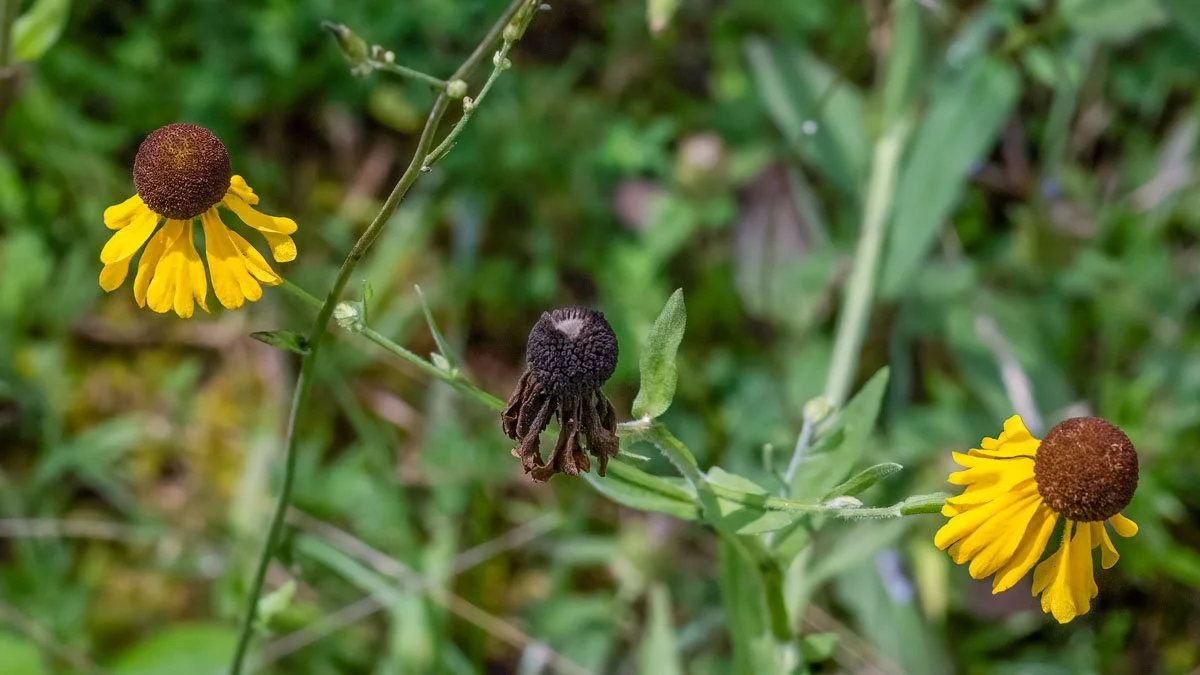
Purplehead sneezeweed shows up in woodland edges, low areas, and moist clearings around Washington County. It’s not as common as the typical sneezeweed, but it fits into those in-between spaces where there’s some shade and consistent moisture.
You’ll usually find it in soils that stay on the damp side, especially along stream edges or in partially shaded openings where water doesn’t dry out too quickly. It handles those conditions well and doesn’t need much help once established.
The flowers are smaller and more subtle than other sneezeweeds, with yellow petals and a darker, purplish center. It doesn’t stand out from a distance, but up close it holds its own and adds detail to a planting.
It grows upright, usually reaching a few feet tall, and works well mixed with other moisture-loving species. It doesn’t spread aggressively but will settle in and persist where conditions are right.
This is a good fit for shaded edges, wet pockets, and transition areas where sun and moisture shift throughout the day. It works best as part of a mix rather than a standalone plant.
Light: Part shade to shade
Soil: Medium to wet; prefers consistently moist soils
Height: 3–6 ft
Bloom: Late summer to early fall
Wildlife: Pollinators, including bees and butterflies
Growth: Clump-forming perennial; slowly expanding, not aggressive
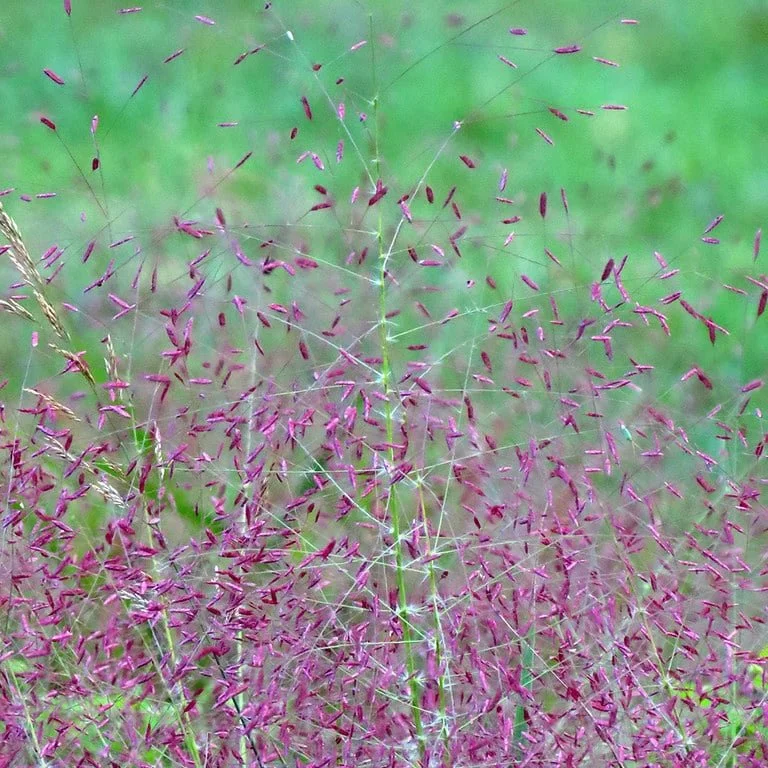
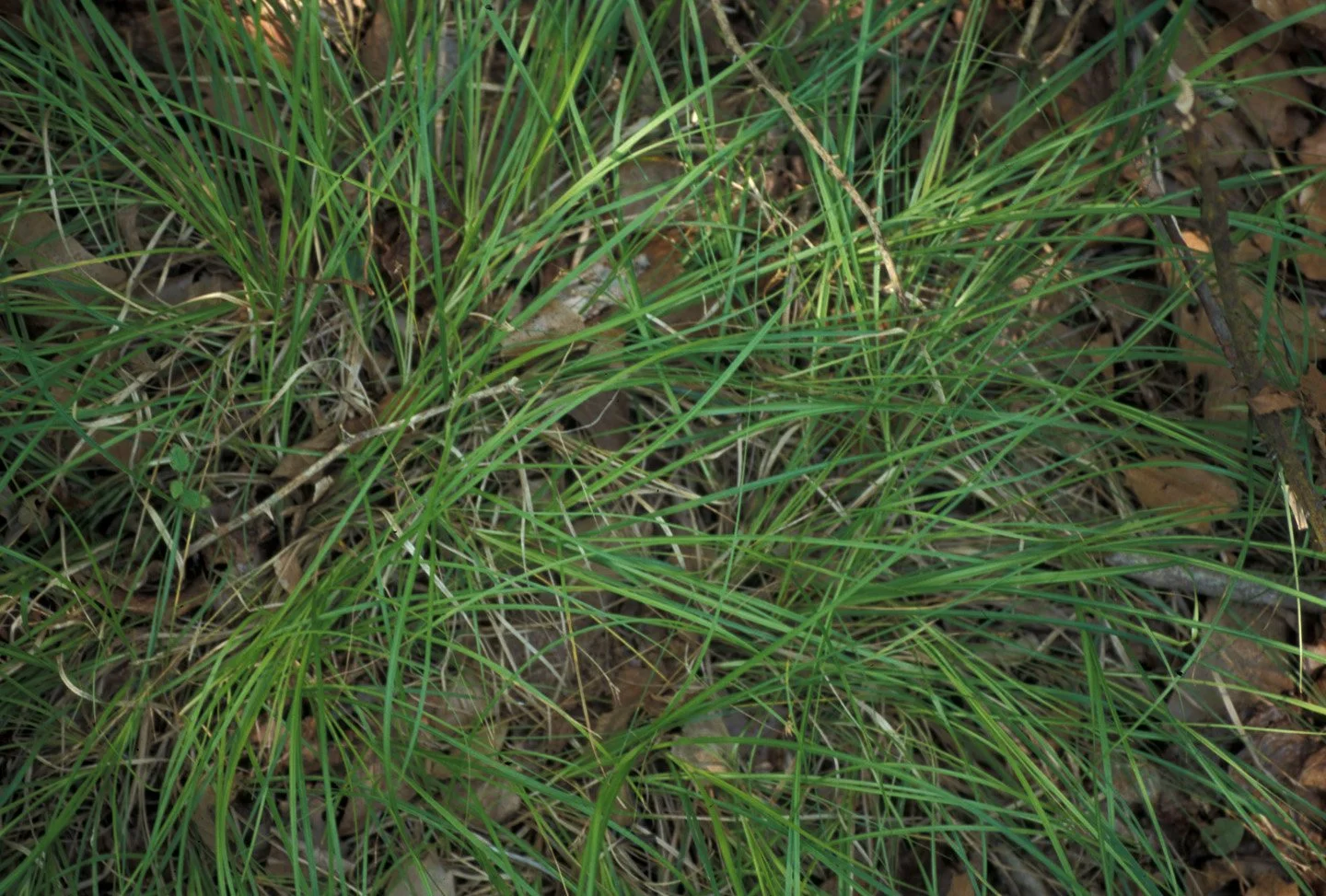
Pennsylvania sedge shows up all over Washington County once you start paying attention to woodland floors and dry slopes. It’s one of those plants that’s already doing the job people try to force turf grass to do, just in tougher conditions.
You’ll find it naturally in dry woods, along edges, and on slopes where soil is thin and drains quickly. It handles those conditions without needing much, especially in areas where grass struggles or burns out.
It stays low, usually under a foot tall, and forms soft, fine-textured patches that spread over time. It doesn’t grow like a traditional lawn, but it fills space in a way that feels natural and holds soil in place.
This is one of the best options for shaded groundcover, especially under trees or along woodland edges where mowing and maintenance don’t make sense. It also works well on slopes where you need something to stabilize soil without constant upkeep.
Light: Part shade to shade
Soil: Dry to medium; well-drained, often thin woodland soils
Height: Under 1 ft
Bloom: Spring (subtle)
Wildlife: Limited direct use, but contributes to habitat structure
Growth: Spreading sedge; forms low colonies over time without becoming aggressive
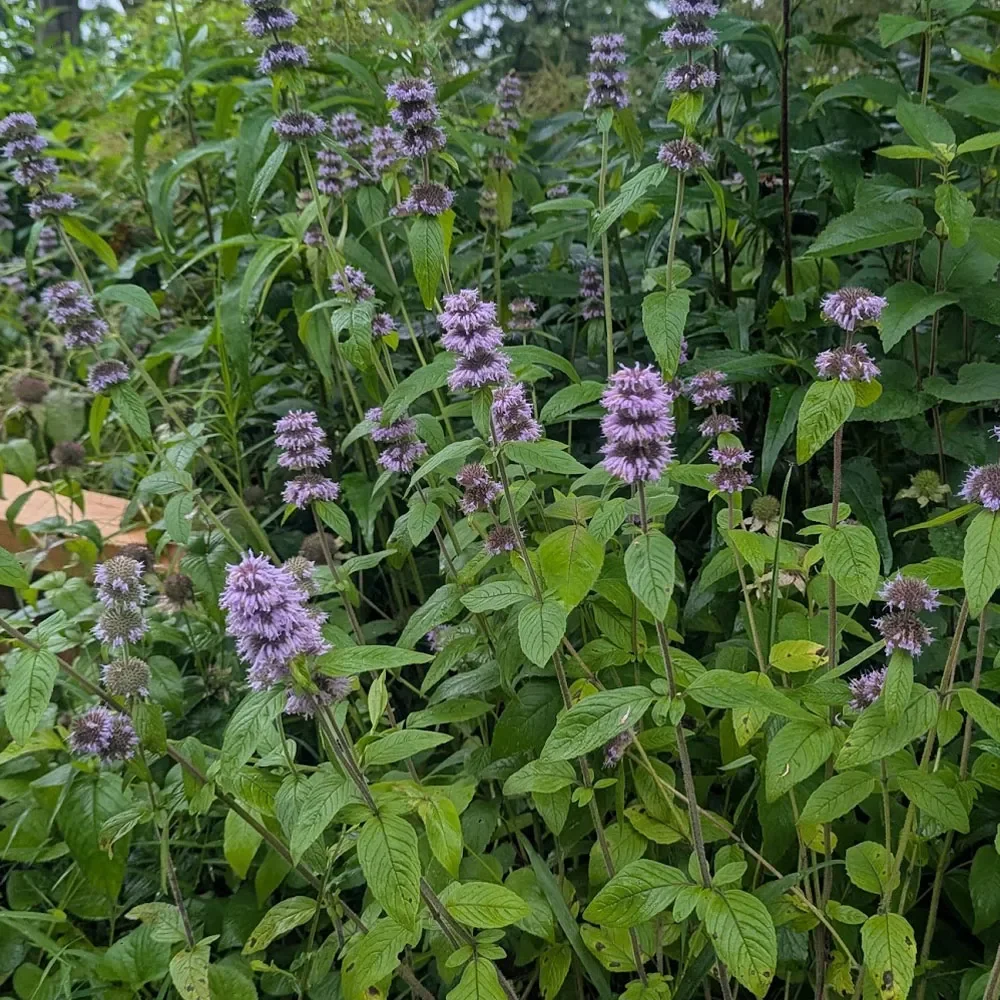
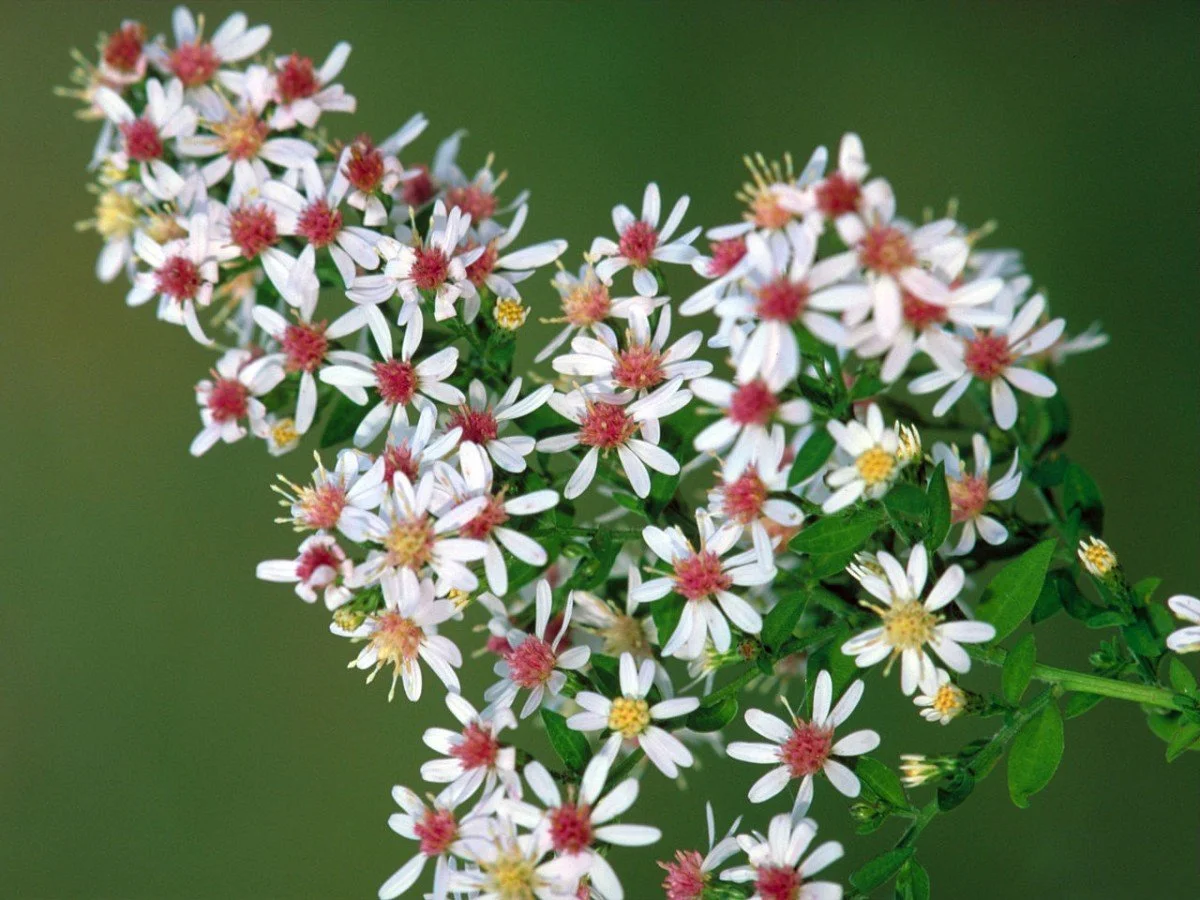
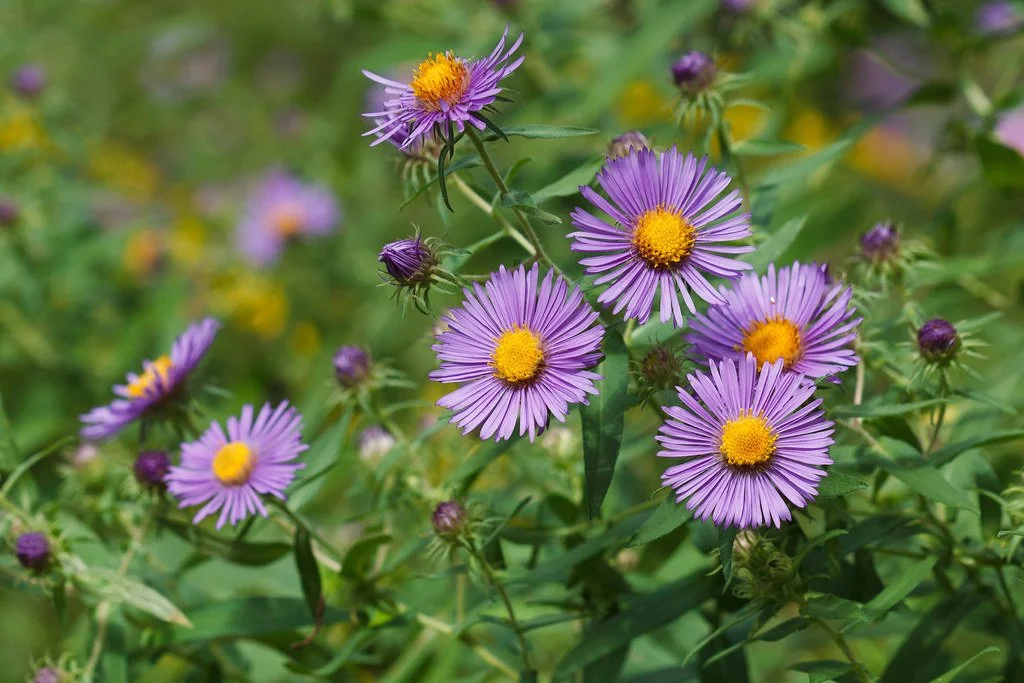
This one shows up right when the season is starting to wind down, but the insects aren’t done yet. Around Washington County, Symphyotrichum lateriflorum starts blooming late summer and carries straight into fall, filling that gap when most plants have already faded.
You’ll find it along woodland edges, floodplain forests, streambanks, and low areas where soils stay on the moist side. It handles shade better than most asters, which makes it useful in spots where a lot of other pollinator plants fall off.
The flowers are small and scattered along branching stems, starting white and often shifting to a purplish tone as they age. When it’s in bloom, it doesn’t read as one big mass of color, but up close it’s covered in detail and absolutely loaded with activity.
It usually stays around 1–3 feet tall, with a loose, branching habit. It’ll spread lightly over time and fill space, especially in edge conditions where nothing too aggressive is competing with it.
This is a strong fit for woodland borders, shaded edges, and moist naturalized areas where you still want late-season pollinator support without forcing full sun plants into the wrong conditions.
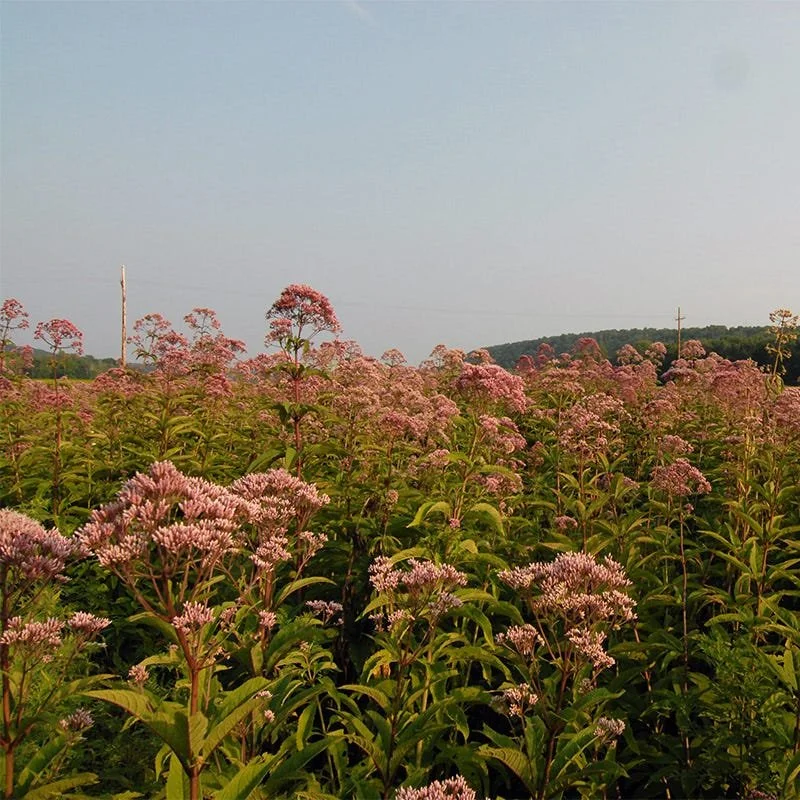
This one shows up later, when summer is starting to lean into fall. Around Washington County, Eupatorium fistulosum starts pushing height through June and July, then really comes into its own by mid to late summer when a lot of other plants are tapering off.
You’ll find it naturally in moist meadows, floodplains, stream edges, and low areas where water sticks around. It does best in deeper soils that hold moisture, especially in those richer valley bottoms and along creeks like Antietam and Conococheague where conditions stay consistently damp.
The flower heads form big, soft domes of dusty pink to mauve blooms that sit high above everything else. When it’s in bloom, it’s covered in activity. This is one of the strongest late-season pollinator plants you can put in the ground here.
It usually grows 5–8 feet tall, sometimes pushing higher in good soil. The structure is upright and bold, so it works best toward the back of plantings or in areas where you want height and presence. It spreads slowly over time but doesn’t run aggressively.
This is a go-to for wet areas, rain gardens, drainage zones, and naturalized meadow edges. If you’ve got a spot that stays moist and needs something that actually fills space and supports wildlife, this is one of the best choices you’ve got.
Light: Full sun (6+ hrs) to part sun (3–6 hrs)
Soil: Average to wet; prefers consistently moist, fertile soils
Height: 5–8 ft
Bloom: July to September
Wildlife: High pollinator value, especially butterflies and native bees
Growth: Clump-forming perennial; slowly expanding, not invasive
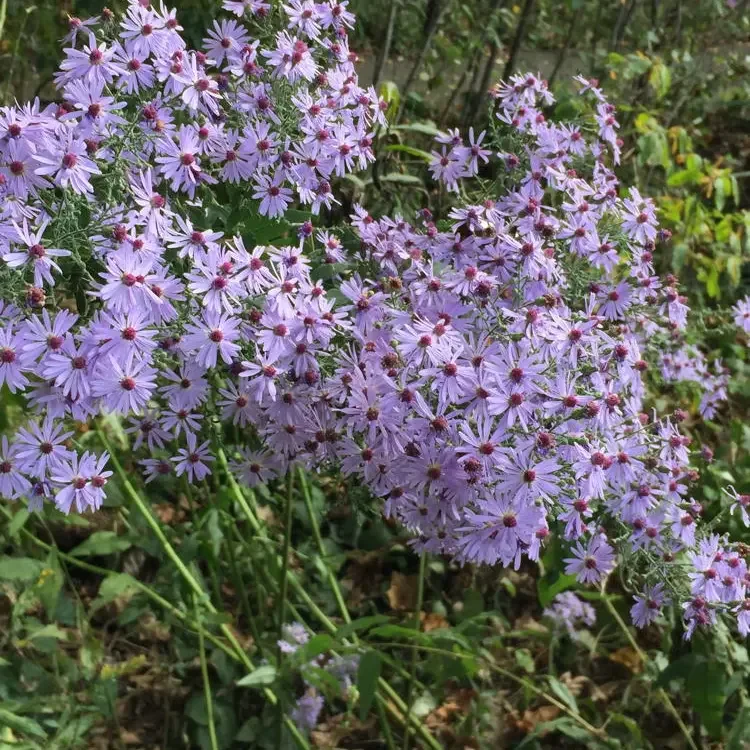
This is one you’ll find in Washington County in woodland settings, especially along edges and under partial canopy. It’s not a plant for open, dry slopes. It does better where there’s some shade, and the soil holds a bit more moisture, even if it’s still tied into limestone.
It blooms late, usually in September and into October. The flowers are small, light blue to pale purple, and come in heavy. Once it’s going, the whole plant takes on that haze of color and stays active with pollinators until late in the season.
It usually grows around 2–4 feet and has a looser structure than some of the other asters. It can spread over time, especially in good conditions, and will start to fill in if you give it space.
This is a good fit for woodland edges, light shade plantings, and areas where you’re trying to carry bloom into fall without forcing a dry-site plant into the wrong conditions.
Light: Part shade to light sun
Soil: Medium; well-drained, tolerates limestone soils with some moisture
Height: 2–4 ft
Bloom: September–October
Wildlife: Late-season pollinators
Growth: Spreading perennial; can form patches over time, dies back in winter and returns in spring
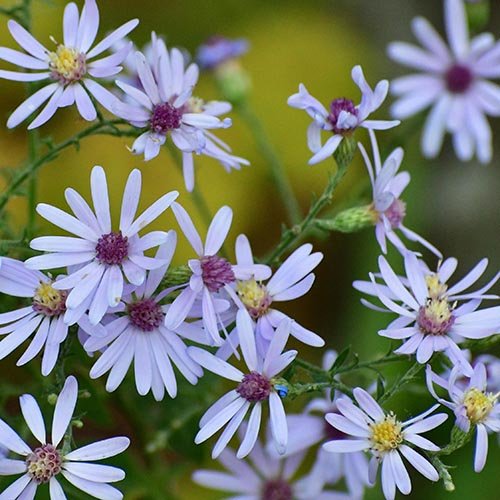
We have a strong population of Short’s aster growing wild here in Washington County, especially in limestone areas. You’ll see it holding on in rocky ground, slopes, and open edges where the soil is thin and drains quickly.
This is a plant that actually belongs in those conditions. It doesn’t need rich soil and doesn’t want wet ground. It does best where things are a little tougher and not overcrowded.
It blooms late, usually September into October, right when most of the earlier plants are done. You’ll still see pollinator activity on it at that point in the season, when options are starting to drop off.
It stays around 2–3 feet and grows as a clump. It doesn’t spread aggressively or take over, just builds out slowly where it’s planted.
This is a good fit for limestone slopes, open ground, and dry to medium sites where you want something that matches what’s already happening on the landscape.
Light: Full sun to part shade
Soil: Dry to medium; well-drained, limestone soils
Height: 2–3 ft
Bloom: September–October
Wildlife: Late-season pollinators
Growth: Clump-forming; stays in place and returns each year
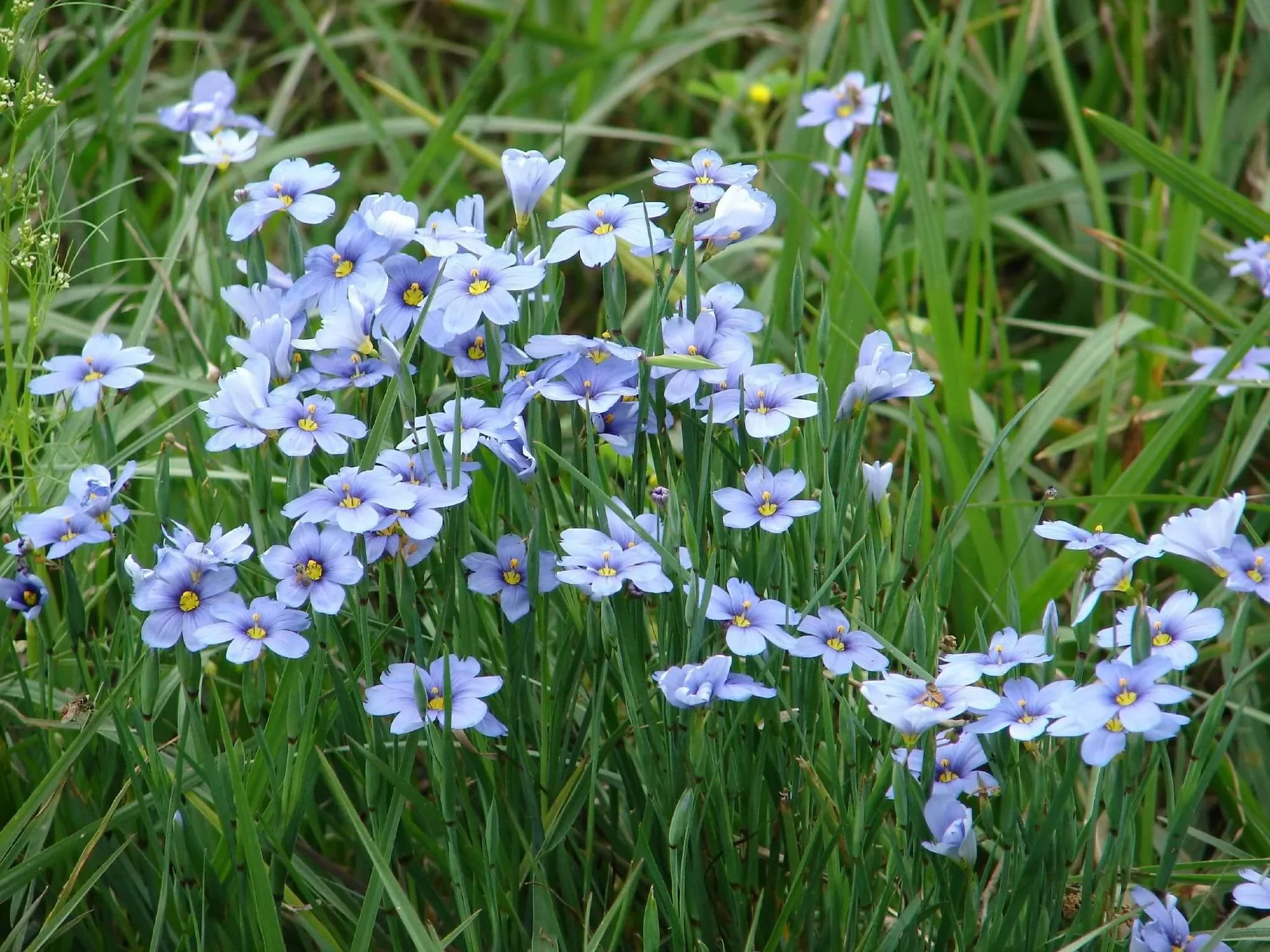
This one shows up in Washington County in open ground that holds a little moisture but still drains well. You’ll see it in fields, meadow edges, and lighter soils, including some of the limestone areas where things don’t stay wet for long.
It stays low, usually under a foot, and looks more like a grass at first. Once it blooms, you get those small blue flowers that sit just above the foliage. They don’t last long individually, but new ones keep coming through.
It doesn’t compete well with heavier, aggressive plants, so it does best where things stay a little more open. Works well in cleaner plantings or mixed meadows where it has space to hold.
This is one of those plants that fills the lower layer without making a mess. Good for tying everything together.
Light: Full sun to part shade
Soil: Medium; well-drained, tolerates limestone soils
Height: 6–12 in
Bloom: Late spring into early summer
Wildlife: Small native bees
Growth: Clump-forming perennial; slowly expands, dies back in winter and returns in spring
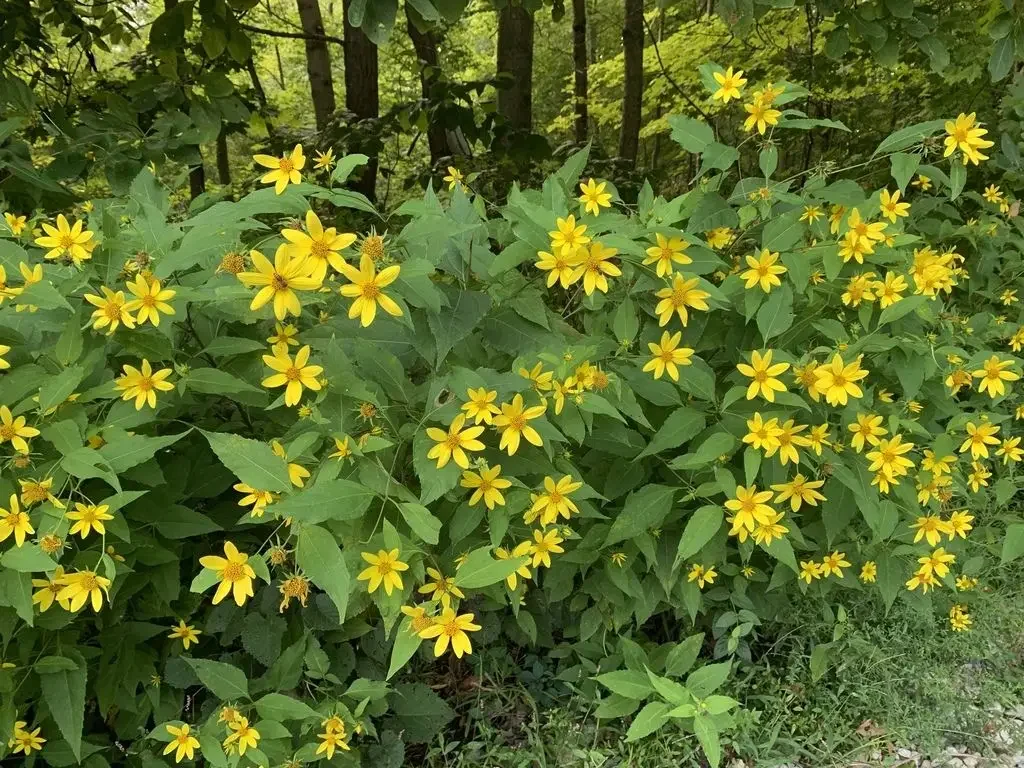
You’ll run into this one in Washington County along woodland edges and open areas where there’s enough light but still some cover. It handles those in-between spots well, especially where the soil is on the drier side and tied into limestone.
It doesn’t need rich soil to get going. You’ll see it hold in thinner ground where other plants start to drop out, especially on edges and slopes where drainage is decent.
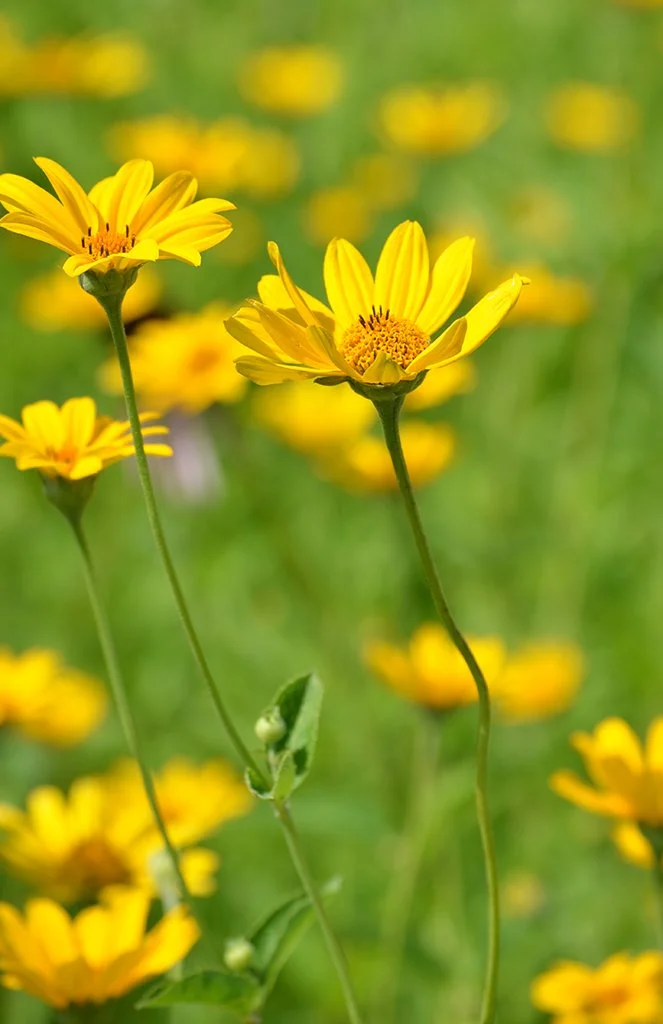
The yellow flowers come in mid to late summer and keep going for a while. It’s not a huge, showy sunflower like the annuals people are used to, but it stays active and brings in a steady mix of pollinators.
It usually grows around 3–5 feet and will spread over time. In the right conditions, it can start to form patches, so it’s better suited for naturalized plantings or areas where you want it to fill in and hold ground.
This is a good fit for woodland edges, dry slopes, and restoration work where you need something that can handle Washington County soils without a lot of input.
Light: Full sun to part shade
Soil: Dry to medium; well-drained, often rocky or limestone-influenced soils
Height: 3–5 ft
Bloom: Mid to late summer
Wildlife: Native bees, butterflies
Growth: Spreading perennial; forms colonies over time, dies back in winter and returns in spring
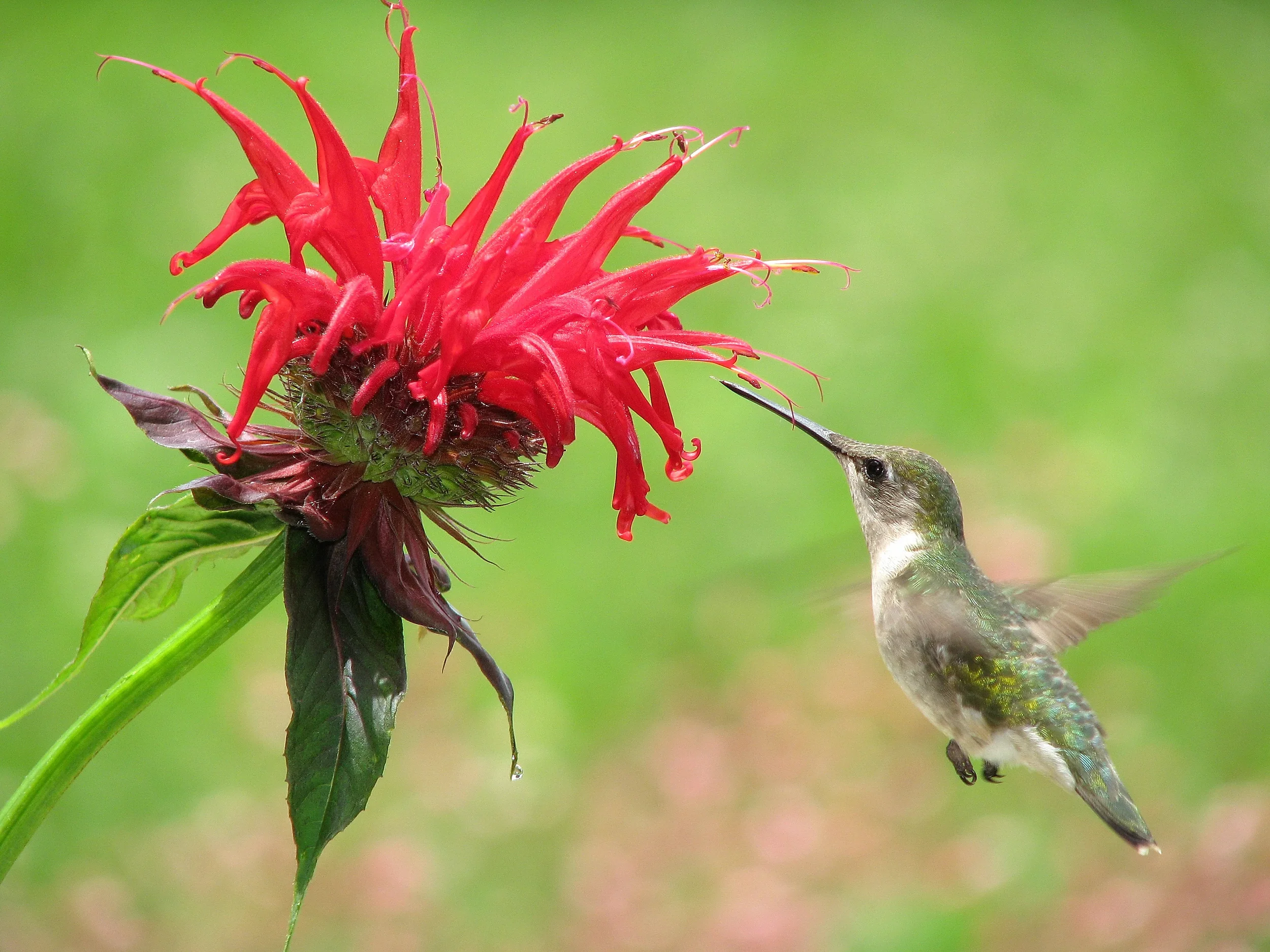
This is the bee balm you’ll find in the wetter parts of Washington County. Along streams, low ground, and areas where the soil holds moisture. It’s not a dry-site plant. If the ground dries out too much, it won’t hold up the same way.
Put it in the right spot and it does what it’s supposed to. The red flowers come in early to mid summer and pull in hummingbirds right away. You’ll still get bees working it, but this one stands out more for the birds.
It usually grows around 2–4 feet and will spread if it’s happy. In good soil with consistent moisture, it’ll fill in and hold that space.
This works best in rain gardens, lower areas, and anywhere water is part of the site. Not something you force into a dry planting.
Light: Full sun to part shade
Soil: Medium to wet; moisture-holding soils
Height: 2–4 ft
Bloom: Early to mid summer
Wildlife: Hummingbirds, bees
Growth: Spreading perennial; does best with consistent moisture
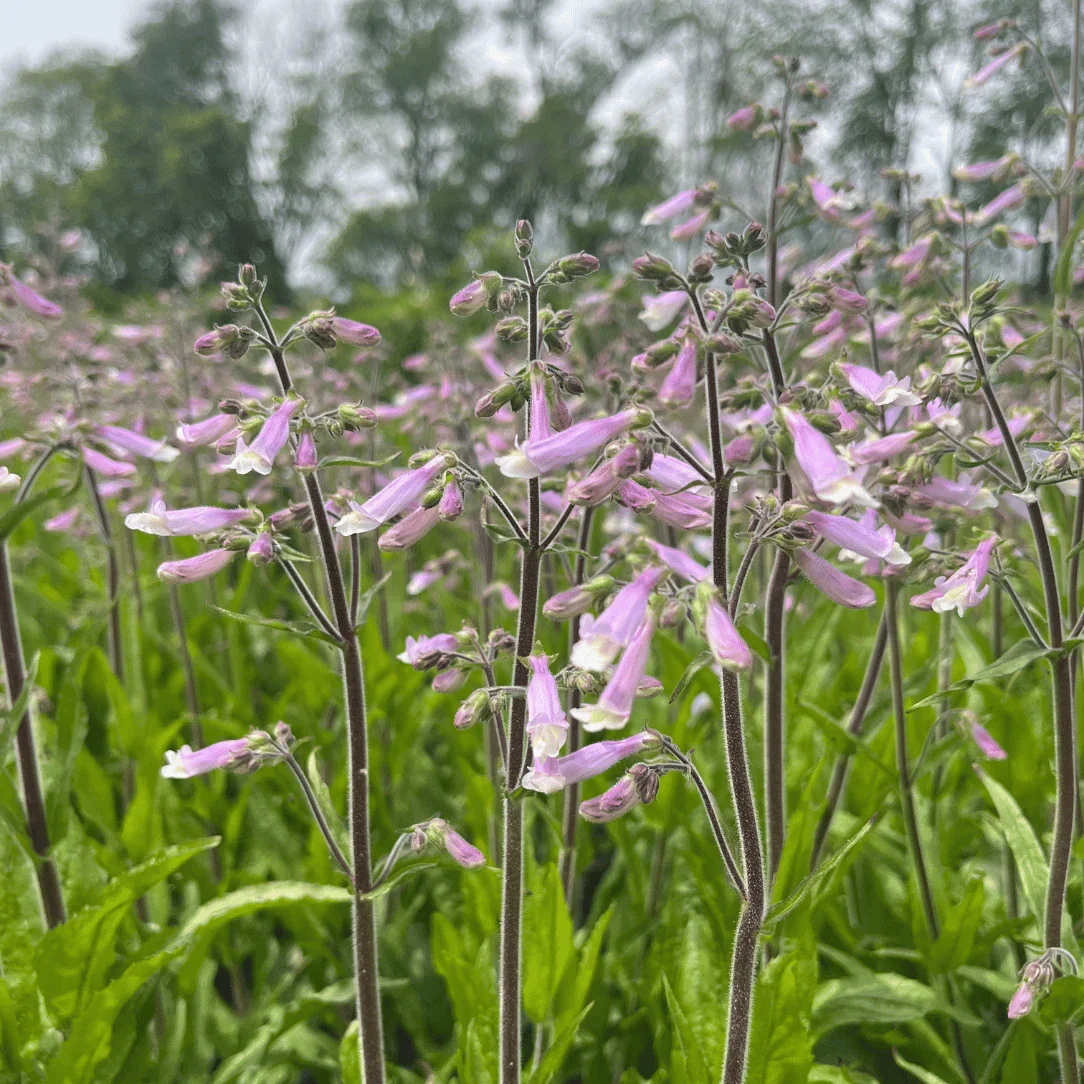
Gray beardtongue is one of those plants that fits the harsher side of Washington County really well. You’ll find it on dry, open slopes, rocky ground, and areas where the soil is thin and tied into limestone. It’s built for those conditions and doesn’t need much to settle in.
It’s one of the earlier beardtongues to bloom, usually coming in mid to late spring, right as things are shifting out of that early-season window. The soft lavender to pale purple flowers sit along upright stems and stay active with bees while they’re open.
This is not a heavy, lush plant. It stays lean, usually around 1–2 feet tall, with a more open structure that fits naturally into dry plantings. It doesn’t compete well in richer, more crowded soils, but in the right conditions it holds its ground and slowly establishes.
You’ll get the best performance out of this on slopes, glade-type areas, and any site where drainage is high and the soil isn’t doing much. It’s a good fit for more natural, low-input plantings that reflect what’s actually happening across parts of Washington County.
Light: Full sun
Soil: Dry; well-drained, shallow or rocky limestone soils
Height: 1–2 ft
Bloom: Mid to late spring
Wildlife: Native bees
Growth: Upright perennial; prefers low competition, dies back in winter and returns in spring
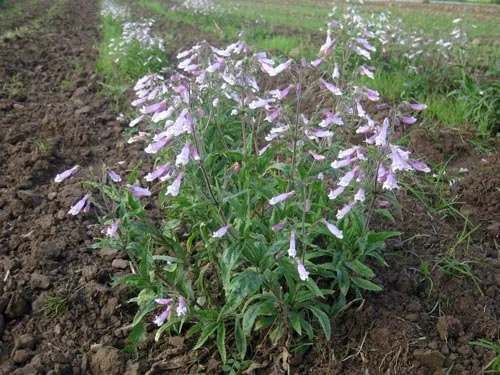
This is the beardtongue you’re more likely to find holding on in the tougher spots around Washington County. Dry slopes, open woods, rocky ground… especially where the soil is thin and tied into limestone. It doesn’t need much to get established and actually does better where competition is lower.
Compared to Penstemon digitalis, this one stays smaller and fits better into those leaner sites. It’s not trying to dominate a planting. It just settles in and does its job.
The pale lavender flowers show up late spring into early summer and draw in a steady mix of bees. It’s not as bold visually, but it’s consistent, and it lines up well with that transition period after the early-season bloomers start fading.
It usually stays around 1–2 feet tall and keeps a more compact form. In the right conditions, it’ll slowly spread and hold its space without becoming aggressive.
This is a strong fit for dry slopes, open woodland edges, and limestone-based plantings where you’re working with thinner soils and don’t want to overbuild the site.
Light: Full sun to part shade
Soil: Dry to medium; well-drained, shallow or rocky limestone soils
Height: 1–2 ft
Bloom: Late spring to early summer
Wildlife: Native bees
Growth: Compact perennial; slowly spreads, dies back in winter and returns in spring
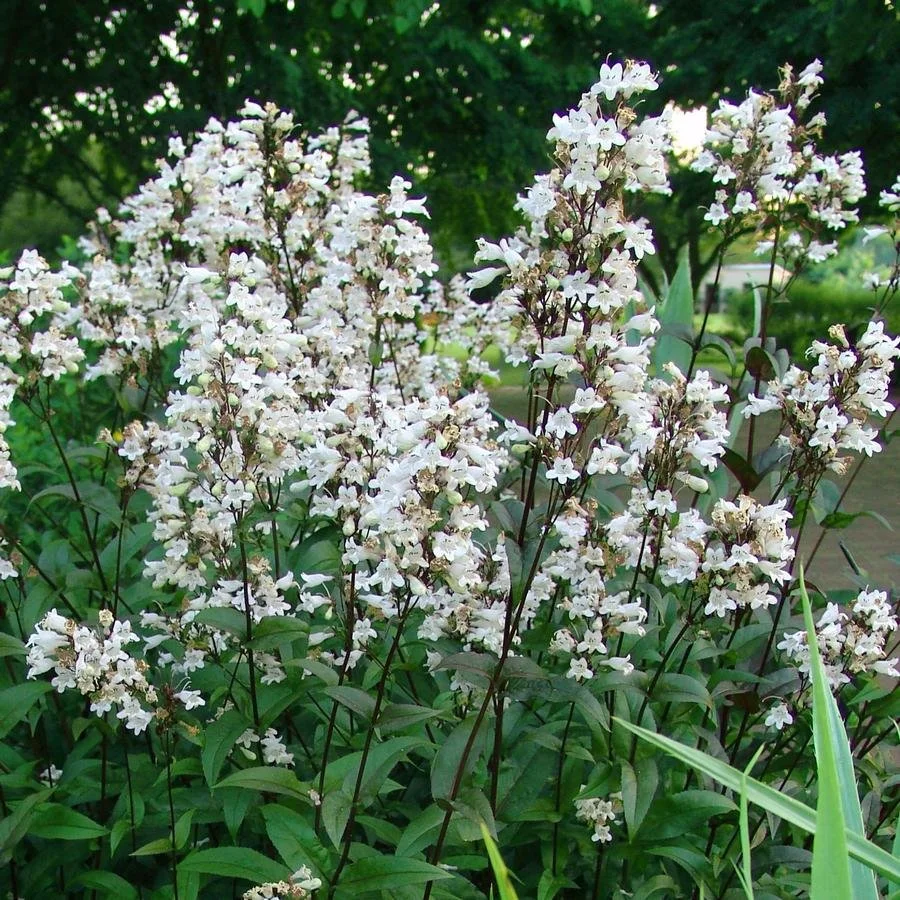
This is one of the more reliable natives you’ll see settling into Washington County once spring gets going. It shows up in open woods, field edges, and disturbed ground, especially where soils are well-drained and often influenced by limestone.
It handles a wide range of conditions here, but it really does well in those in-between spots. Not bone dry like your glades, not wet like your floodplains. Just solid, well-drained ground where it can establish and hold.
The white tubular flowers come up in late spring and early summer and are hard to miss once they open. You’ll see a lot of bee activity on this one, especially larger native bees that can work their way into the flower shape.
It usually grows around 2–4 feet tall with a strong upright form. Over time, it can form small colonies, especially in open areas where there’s enough light. It’ll also self-seed, but not in a way that gets out of control.
This is a strong fit for meadow plantings, edges, and restoration work where you need something dependable that can bridge different site conditions across Washington County.
Light: Full sun to part shade
Soil: Dry to medium; well-drained, often limestone-influenced soils
Height: 2–4 ft
Bloom: May to June
Wildlife: Native bees, especially larger species
Growth: Upright perennial; will self-seed and form small colonies over time
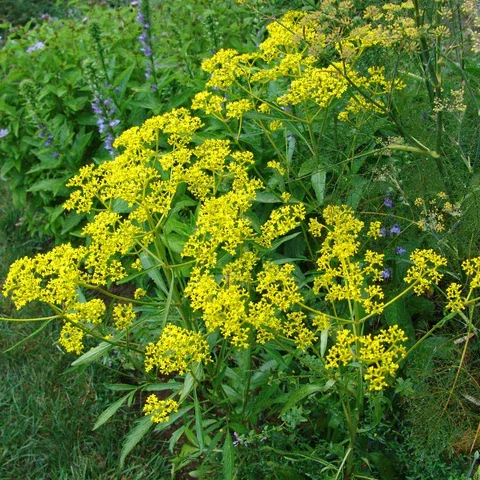
Golden Alexanders is one of the earlier plants that starts to take over once the spring ephemerals fade out across Washington County. You’ll see it come in strong through April into May, especially in open woods, field edges, and those slightly heavier soils that still have good drainage.
It handles our limestone-influenced soils well, especially in areas that hold a bit more moisture than your dry slopes. You’ll find it in those in-between spots… not fully wet, not fully dry. That’s where it really settles in naturally.
The yellow flower clusters don’t just sit there either. They’re one of the more active early-season food sources for pollinators, especially small native bees and flies that are working the landscape before summer species take over.
It usually grows around 1–3 feet tall and forms small colonies over time if conditions are right. It’s not aggressive, but it will hold its ground and slowly expand, especially in open or lightly shaded areas.
This is also an important host plant for black swallowtail butterflies, which adds another layer of value beyond just nectar.
This works well in meadow edges, open woodland plantings, and restoration areas where you’re trying to build out that early-season structure in Washington County conditions.
Light: Full sun to part shade
Soil: Medium; tolerates limestone soils, prefers areas that don’t stay fully dry
Height: 1–3 ft
Bloom: April to May
Wildlife: Native bees, flies, black swallowtail butterflies (host plant)
Growth: Clump-forming perennial; slowly spreads, dies back in winter and returns in spring
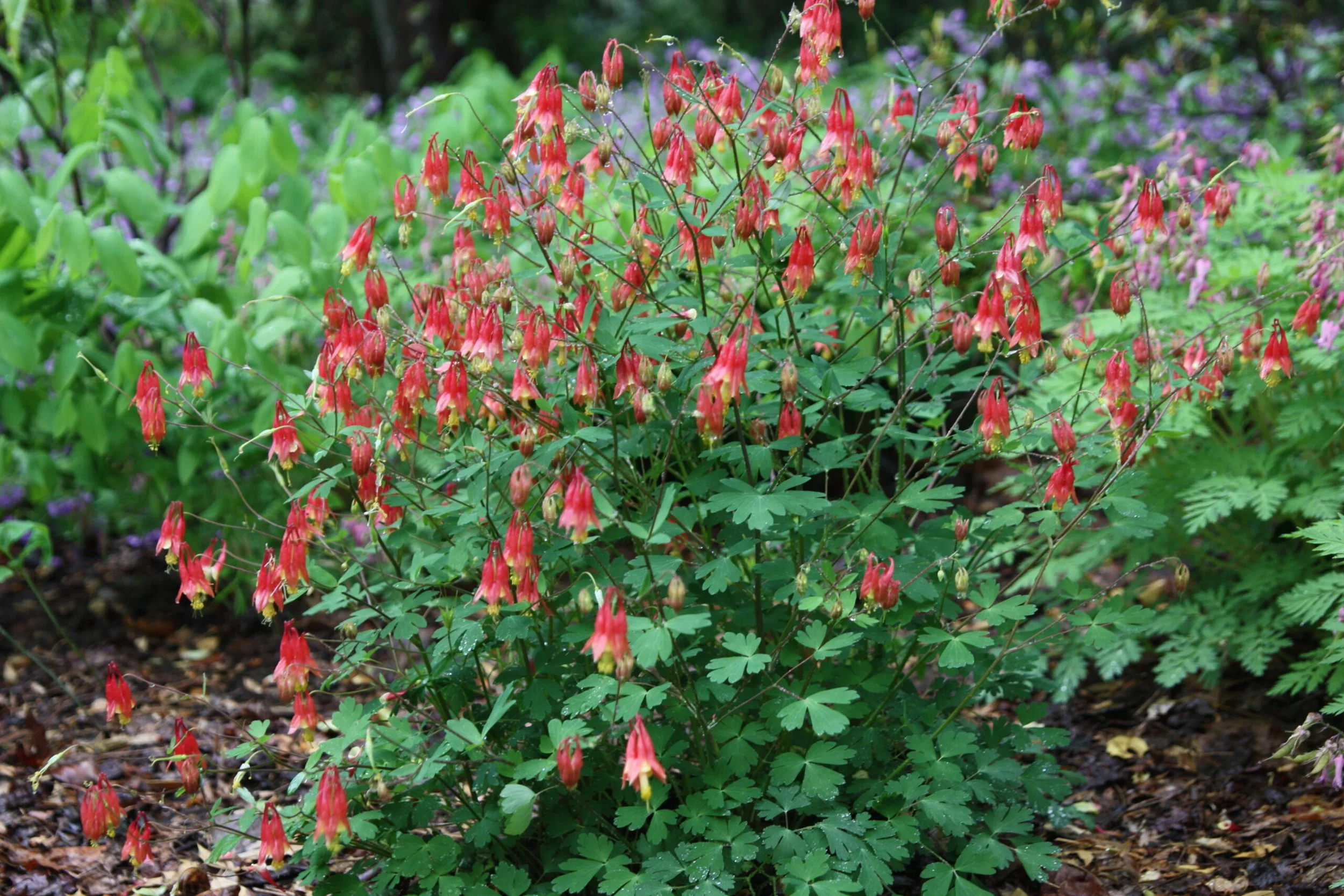
Columbine starts showing up in Washington County right after the true spring ephemerals begin to fade. Once things like bloodroot and trout lily are on their way out, this is one of the plants that carries that early-season transition forward into April and May.
You’ll find it naturally growing along rocky slopes, woodland edges, and especially in those limestone areas where the soil is shallow and drains quickly. It’s well adapted to the kind of ground we have here and doesn’t need rich conditions to establish.
The red and yellow flowers hang down off the stems and are hard to miss once they open. This is one of the key plants for hummingbirds moving through the area, and it lines up well with when they start showing up in the county.
It usually stays around 1–2 feet tall with a light, open structure. It’ll self-seed in the right spots, especially along edges and disturbed pockets in woodland systems, but it never really becomes a problem.
This is a good fit for limestone slopes, woodland borders, and transition zones where sun and shade meet. It works naturally into plantings that are trying to reflect what’s already happening on the ground here.
Light: Part shade to full sun
Soil: Dry to medium; well-drained, often shallow or rocky limestone soils
Height: 1–2 ft
Bloom: April to May
Wildlife: Hummingbirds, early-season pollinators
Growth: Short-lived perennial; self-seeds lightly, persists where conditions are right
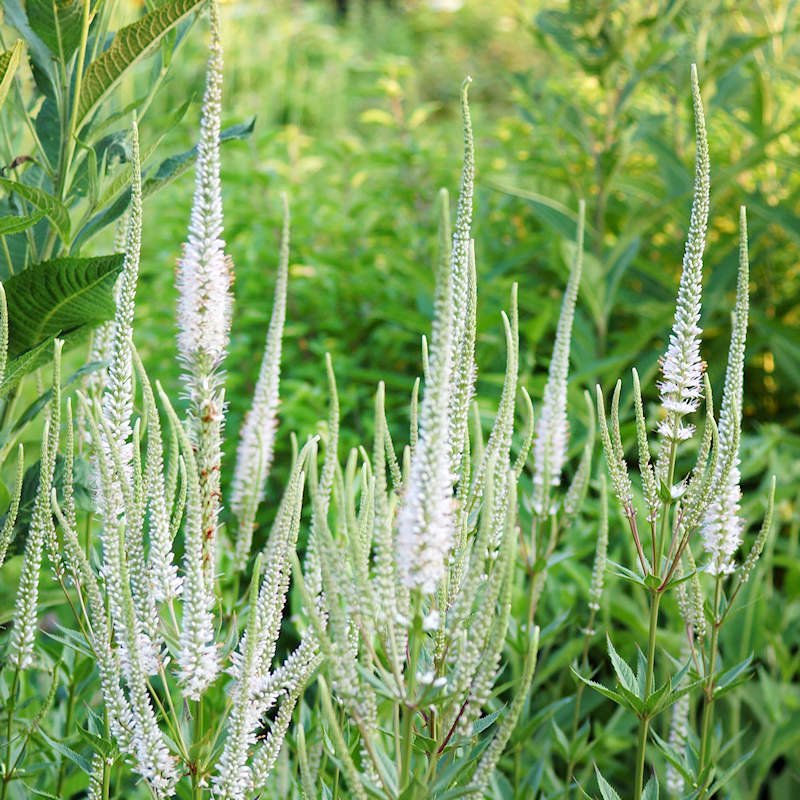
Culver’s root shows up in moist meadows, stream edges, and low ground across Washington County. It’s most common in areas where the soil holds moisture through the growing season but still drains enough to avoid standing water.
You’ll find it in deeper soils with consistent moisture, often in open or lightly shaded areas. It handles those conditions well and tends to establish best where it doesn’t dry out completely.
The plant grows upright with narrow, vertical flower spikes that branch slightly at the top. The blooms come in mid-summer and pull in a steady mix of pollinators, especially native bees.
It usually reaches around 4–6 feet tall and stays fairly narrow, which makes it useful in tighter plantings where you still want height. It doesn’t spread aggressively but will settle in and persist where conditions are right.
This is a strong choice for rain gardens, meadow edges, and areas with consistent moisture where you want vertical structure without a lot of bulk.
Light: Full sun to part sun
Soil: Medium to wet; prefers consistent moisture
Height: 3–6 ft
Bloom: Mid-summer
Wildlife: Pollinators, especially native bees
Growth: Clump-forming perennial; slowly expanding, not aggressive
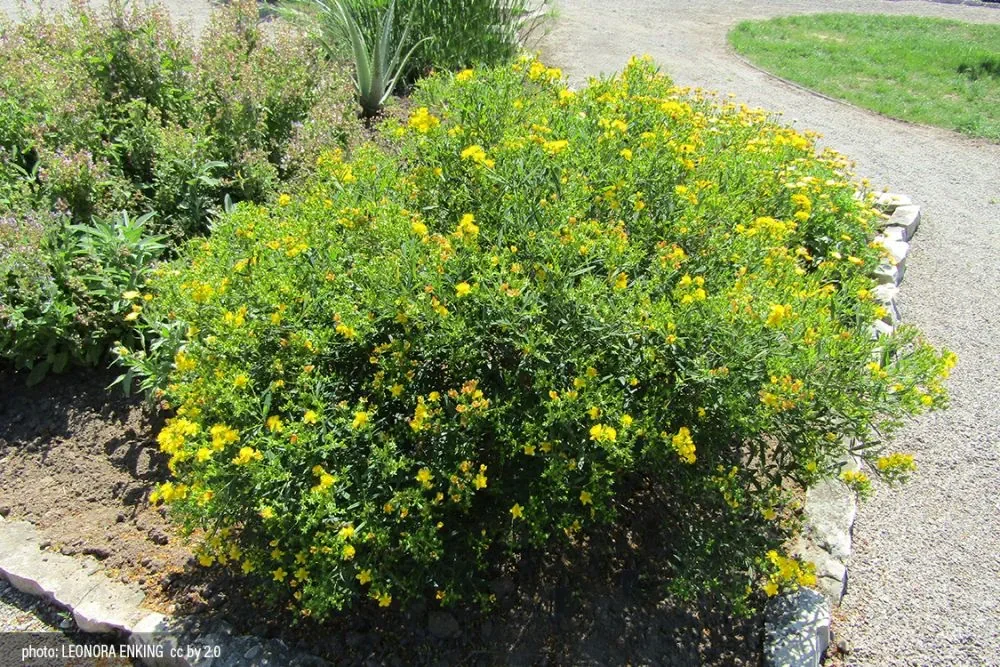
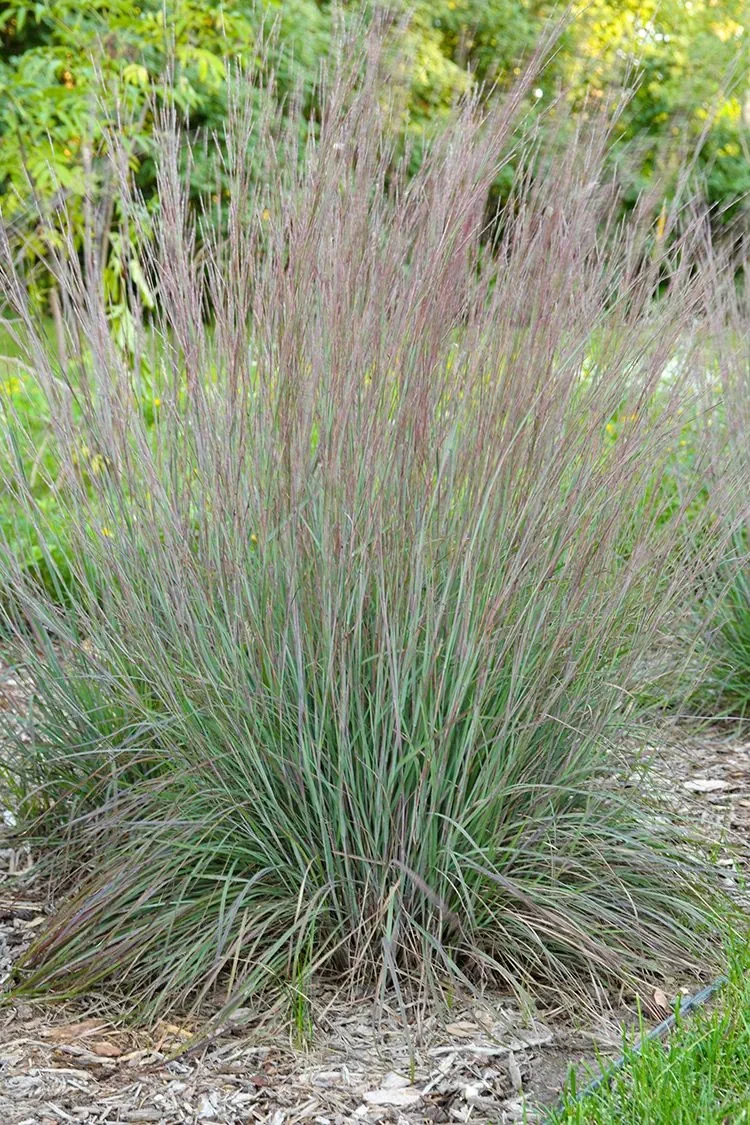
Butterfly weed is one of the most recognizable native wildflowers you’ll come across in Washington County once you know what to look for. It naturally shows up in dry, open areas like old fields, roadside banks, and rocky slopes where the soil is well-drained and often a little rough.
That’s exactly where it performs best. This isn’t a plant for rich, heavily amended beds. It thrives in the kind of conditions you’ll find across much of the county’s limestone-based soils and exposed slopes, where water moves through quickly and other plants struggle to hold on.
When it blooms, those bright orange flowers don’t sit idle. They stay active with pollinators throughout the day, especially native bees and butterflies. More importantly, this is one of the key host plants for monarch butterflies, meaning it supports their entire life cycle right here on the landscape.
It stays relatively compact, usually around 1–2 feet tall, and develops a deep taproot that makes it extremely resilient once established. Because of that, it prefers not to be disturbed after planting.
This is a strong choice for dry meadow plantings, slopes, and restoration work where you need something that can handle Washington County’s tougher soils while still contributing real ecological value.
Light: Full sun
Soil: Dry to medium; well-drained, rocky or limestone-based soils
Height: 1–2 ft
Bloom: Early to mid summer
Wildlife: Monarch butterflies (host plant), native bees, other pollinators
Growth: Deep taproot; drought-tolerant once established; does not like transplanting
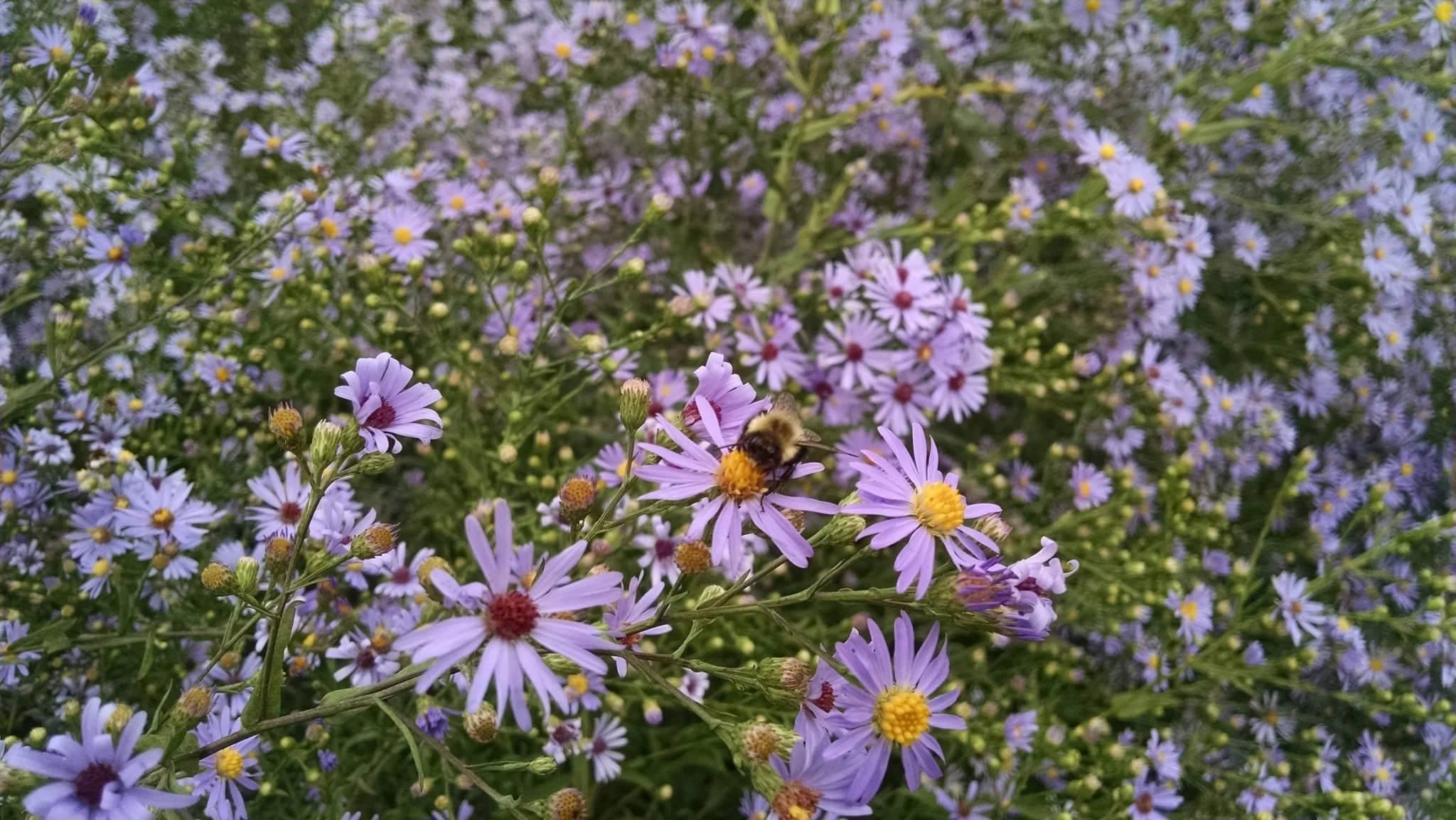
Smooth blue aster is one of those plants you start noticing more in Washington County once summer begins to fade. It tends to show up in open, dry areas like field edges, roadside slopes, and some of those thinner, rockier soils you see across the county, especially where limestone is close to the surface.
It handles those conditions without much effort. This is a plant that doesn’t need rich soil to perform. In fact, it’s right at home in the kind of well-drained, sometimes shallow soils that define a lot of our upland sites and disturbed ground.
By late summer into fall, it starts putting on soft blue to lavender flowers with yellow centers, right when most other blooms are winding down. That timing matters. You’ll see it stay active with pollinators, especially native bees and smaller insects that are still working the landscape late in the season.
It typically grows upright around 2–3 feet, with smooth, slightly bluish foliage that gives it a clean look even before it flowers. It’s not aggressive, but it will slowly spread over time and hold its space in a planting.
This is a strong choice for meadow plantings, dry slopes, and restoration areas where you need dependable late-season support for pollinators in Washington County conditions.
Light: Full sun to light shade
Soil: Dry to medium; well-drained, rocky or limestone-influenced soils
Height: 2–3 ft
Bloom: Late summer through fall
Wildlife: Native bees, butterflies, late-season pollinators
Growth: Upright perennial; slowly spreading, dies back in winter and returns in spring
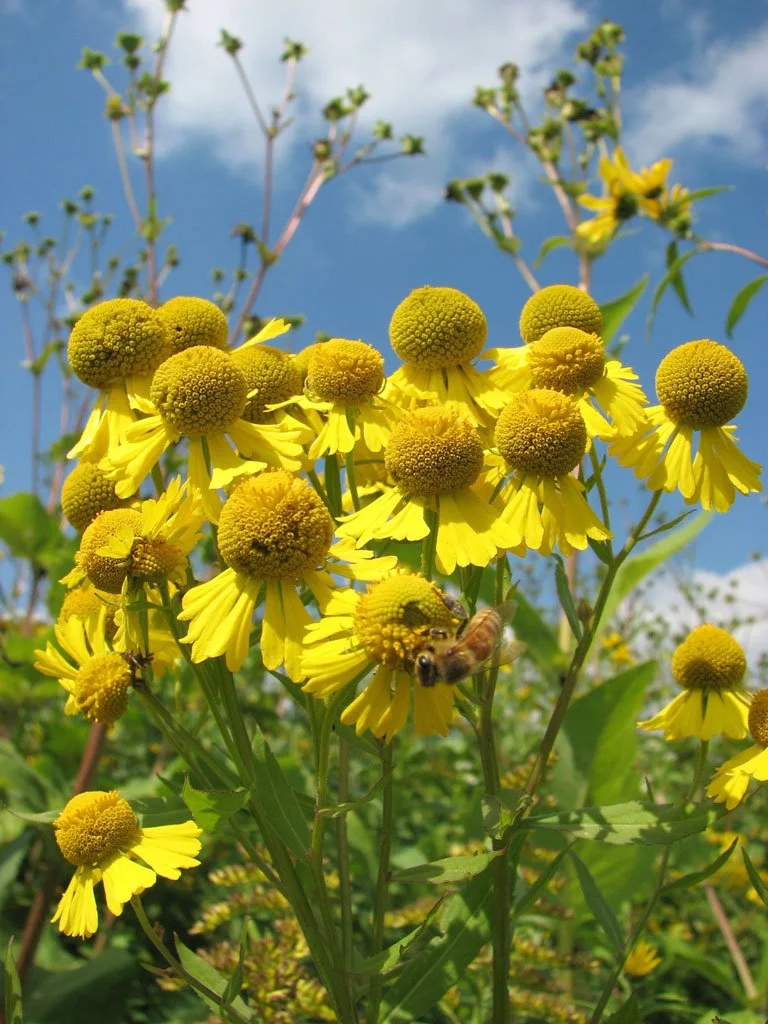
Sneezeweed is one of those plants you’ll find tucked into the wetter parts of Washington County if you know where to look. It shows up along stream edges, low spots in fields, and floodplain areas where the soil stays consistently moist, especially around places like the Antietam Creek and Conococheague Creek corridors.
This is not a dry-site plant. It thrives in those heavier, moisture-holding soils that a lot of other species struggle with. If you’ve got an area that stays damp or even periodically wet, this is where sneezeweed starts to shine.
By late summer into early fall, it pushes out bright yellow flowers that almost feel like they’re holding the season together as everything else starts to fade. That late bloom window is important. Pollinators are still active, and this plant becomes a steady food source when options are starting to thin out.
It grows upright, usually around 3–5 feet tall, forming strong vertical structure in a planting. In the right conditions, it can form nice colonies over time, especially in open areas with good sun and consistent moisture.
Despite the name, it has nothing to do with allergies. The name comes from its historical use, not airborne pollen. What it actually does is support a wide range of native insects that rely on late-season blooms in our local ecosystem.
This is a strong fit for rain gardens, low meadow areas, stream edges, and restoration work where water is part of the equation.
Light: Full sun to light shade
Soil: Medium to wet; tolerates heavier soils and periodic flooding
Height: 3–5 ft
Bloom: Late summer through fall
Wildlife: Native bees, butterflies, late-season pollinators
Growth: Upright perennial; can form colonies in moist conditions; dies back in winter and returns in spring
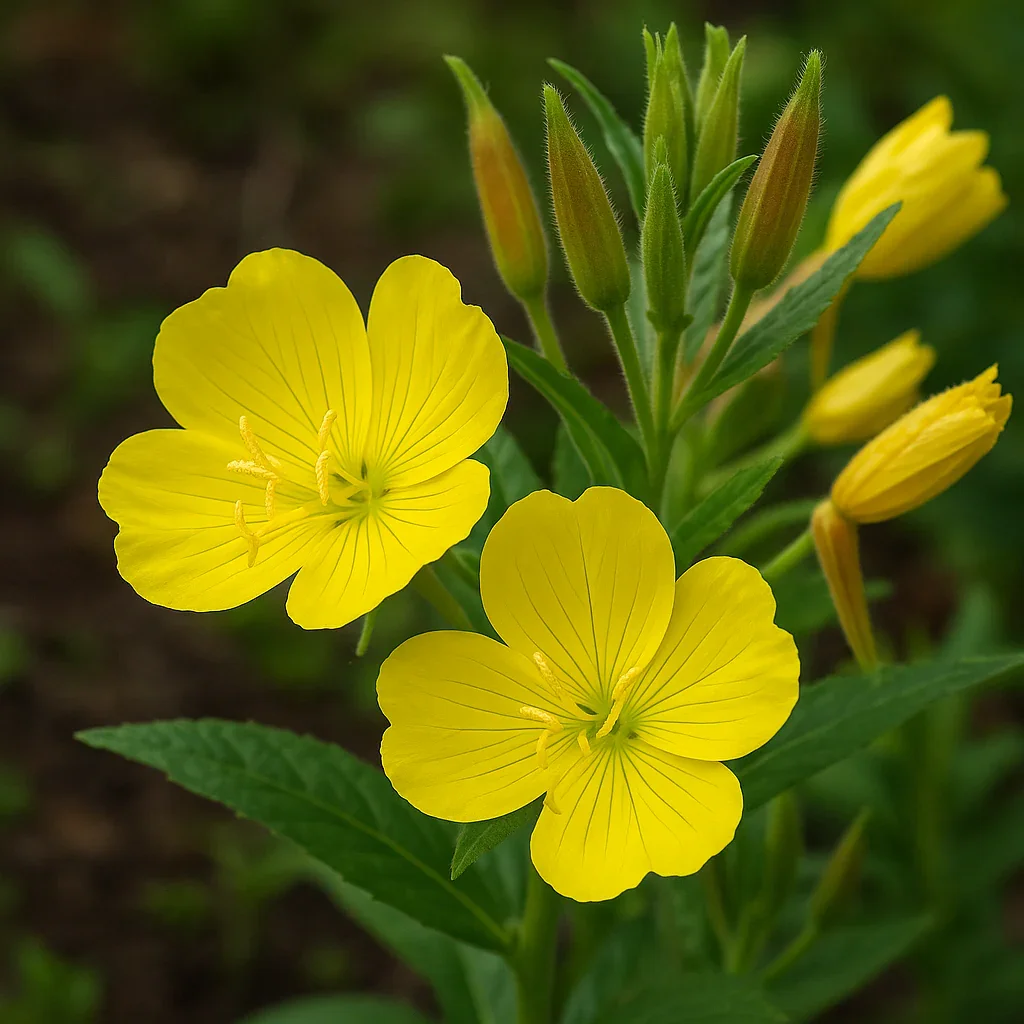
Evening primrose is one you’ll run into pretty often around Washington County, but almost always in disturbed ground. Road edges, old fields, construction sites, anywhere the soil’s been opened up and competition hasn’t closed back in yet.
It does especially well in our lighter, well-drained soils, including those rocky areas where limestone is close to the surface. It doesn’t need much to get established and will usually show up on its own if the conditions are right.
What makes it stand out is how it operates. The flowers open in the evening and stay active into the night, which brings in a different group of pollinators than most daytime bloomers. You’ll get moth activity on this one, along with bees picking it up earlier in the day.
It typically grows upright, around 2–5 feet depending on conditions, with yellow flowers spaced along the stem. It’s a biennial, so the first year is just a low rosette, and the second year it bolts, flowers, sets seed, and then drops out.
This is a good fit for open plantings, early-stage restoration, and areas where you’re trying to get coverage on disturbed soil. It fills space fast but usually gives way over time as more competitive natives establish.
Light: Full sun
Soil: Dry to medium; well-drained, often disturbed soils
Height: 2–5 ft
Bloom: Summer into early fall (evening-opening flowers)
Wildlife: Moths, bees, other pollinators
Growth: Biennial; first-year rosette, second-year flowering and seed set
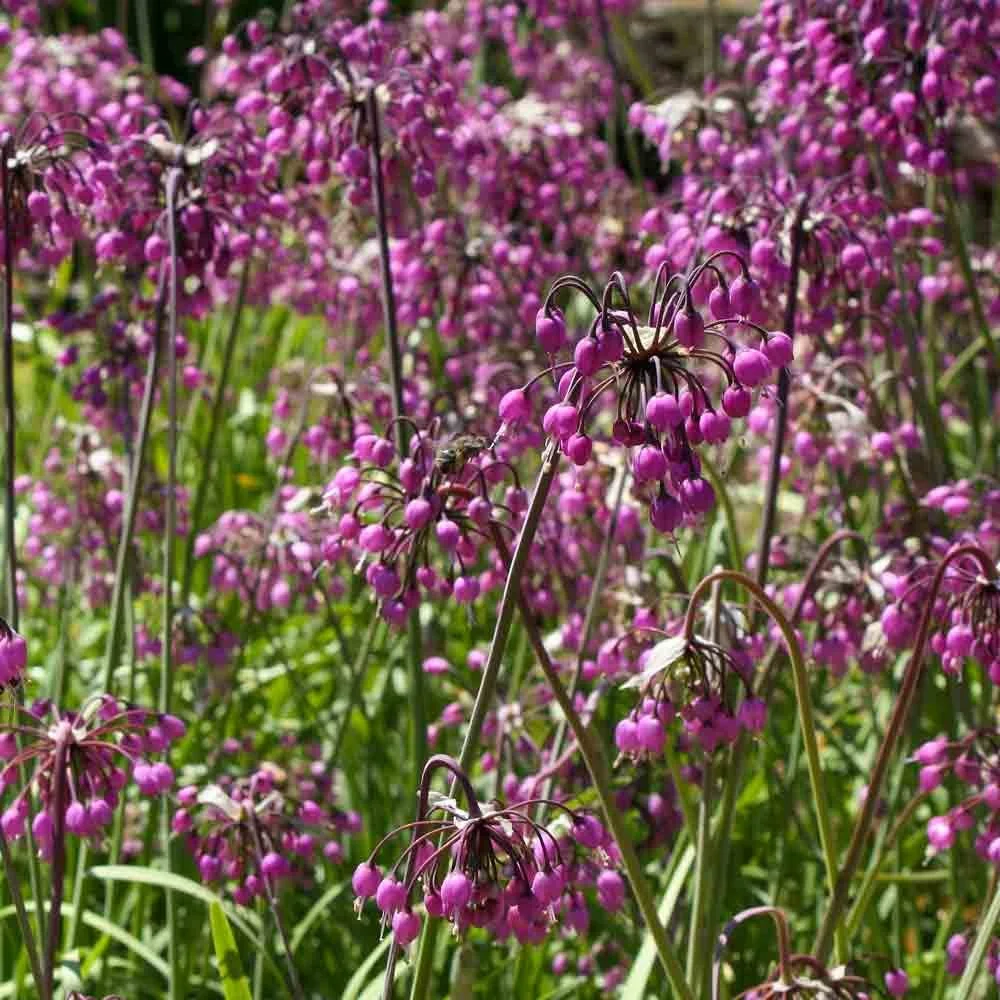
Nodding Onion is one of those subtle plants that starts to stand out the more time you spend around it. The flowers hang downward in soft clusters, usually a pale pink to light lavender, and they show up right in the middle of summer when a lot of other plants start to slow down.
This species is native across much of the eastern U.S., including the Appalachian region. You’ll find it in open woods, rocky slopes, glades, and well-drained soils where it gets a mix of sun and light shade. It handles tougher conditions well, especially in thinner soils where more aggressive plants don’t dominate.
It grows in tidy clumps, usually around 1–2 feet tall, with narrow, grass-like leaves and slender stems that give it a clean, natural look. It doesn’t spread aggressively, but it will slowly form small colonies over time if it’s happy.
Pollinators key in on this plant fast. Native bees, especially smaller species, work the flowers consistently, and you’ll also see butterflies visiting. Because it blooms mid to late summer, it fills an important gap when nectar sources can start to drop off.
It’s a great fit for naturalistic plantings, edges, and rockier areas where you want something refined but still fully functional from an ecological standpoint.
Light: Full sun to partial shade
Soil: Dry to medium; well-drained, rocky or average soils
Height: 1–2 ft
Bloom: Mid to late summer
Wildlife: Native bees, butterflies
Growth: Clumping perennial; slowly spreads over time, dies back in winter and returns in spring
Frequently Asked Questions
-
Not at this time. We focus on live plants to give you a stronger start and better establishment.
-
We offer plants in plugs, quarts, and gallons depending on the species and stage of growth.
-
We grow native plants suited to Washington County and the surrounding region, including perennials, grasses, and select trees and shrubs.
-
We are based in Hagerstown and grow plants for the surrounding Mid-Atlantic region.
-
We prioritize plant health using low-impact methods such as hand management, biological controls, and horticultural treatments when needed. We avoid unnecessary chemical use and do not use systemic pesticides like neonicotinoids.
-
Native plants are adapted to local soils and climate, support pollinators and wildlife, and require less long-term maintenance once established.
Have Questions?
We'll review your message and get back to you within 48 hours.