
Carolina rose shows up in meadows, old fields, woodland edges, and stream corridors throughout Washington County. It’s most common in open, sunny areas with well-drained soils, though it can also persist in light shade along thickets and forest margins.
You’ll often find it in prairies and disturbed ground that stays moderately moist in spring but dries out through summer. Once established, it handles drought, heat, and poor soils with ease.
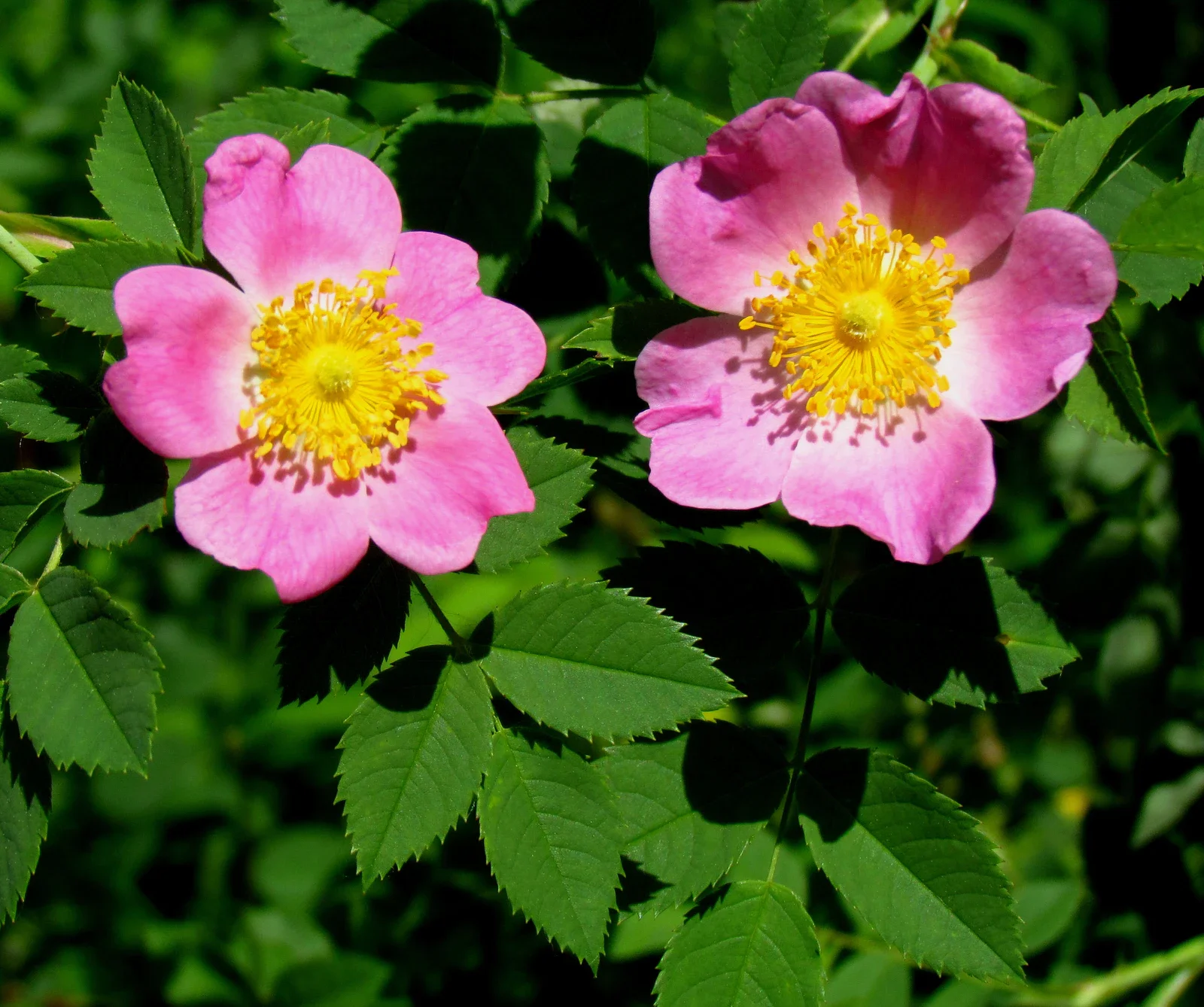
The plant grows as a low to medium shrub, usually reaching 3–6 feet tall and forming loose colonies over time. In late spring to early summer, it produces clusters of soft pink to rose-colored flowers that attract a wide range of pollinators, including native bees and butterflies.
After flowering, it develops small red rose hips that persist into fall and winter, providing an important food source for birds and other wildlife. The foliage is compound and finely textured, giving it a lighter, more open appearance than many other native shrubs.
It spreads gradually by suckering but is generally easy to manage and works well in naturalistic plantings. It can be used for erosion control, hedgerows, and wildlife plantings where a native rose with dependable performance is needed.
This is a strong choice for sunny edges and meadow-style plantings where you want seasonal flowers, wildlife value, and long-term structure without heavy maintenance.
Light: Full sun to part shade
Soil: Dry to medium; prefers well-drained soils but adaptable
Height: 3–6 ft
Bloom: Late spring to early summer
Wildlife: Native bees, butterflies, birds (hips provide winter food)
Growth: Colony-forming deciduous shrub; spreads by suckers, moderately vigorous but manageable
Carolina rose shows up in meadows, old fields, woodland edges, and stream corridors throughout Washington County. It’s most common in open, sunny areas with well-drained soils, though it can also persist in light shade along thickets and forest margins.
You’ll often find it in prairies and disturbed ground that stays moderately moist in spring but dries out through summer. Once established, it handles drought, heat, and poor soils with ease.
The plant grows as a low to medium shrub, usually reaching 3–6 feet tall and forming loose colonies over time. In late spring to early summer, it produces clusters of soft pink to rose-colored flowers that attract a wide range of pollinators, including native bees and butterflies.
After flowering, it develops small red rose hips that persist into fall and winter, providing an important food source for birds and other wildlife. The foliage is compound and finely textured, giving it a lighter, more open appearance than many other native shrubs.
It spreads gradually by suckering but is generally easy to manage and works well in naturalistic plantings. It can be used for erosion control, hedgerows, and wildlife plantings where a native rose with dependable performance is needed.
This is a strong choice for sunny edges and meadow-style plantings where you want seasonal flowers, wildlife value, and long-term structure without heavy maintenance.
Light: Full sun to part shade
Soil: Dry to medium; prefers well-drained soils but adaptable
Height: 3–6 ft
Bloom: Late spring to early summer
Wildlife: Native bees, butterflies, birds (hips provide winter food)
Growth: Colony-forming deciduous shrub; spreads by suckers, moderately vigorous but manageable