 Image 1 of 1
Gray beardtongue is one of those plants that fits the harsher side of Washington County really well. You’ll find it on dry, open slopes, rocky ground, and areas where the soil is thin and tied into limestone. It’s built for those conditions and doesn’t need much to settle in.
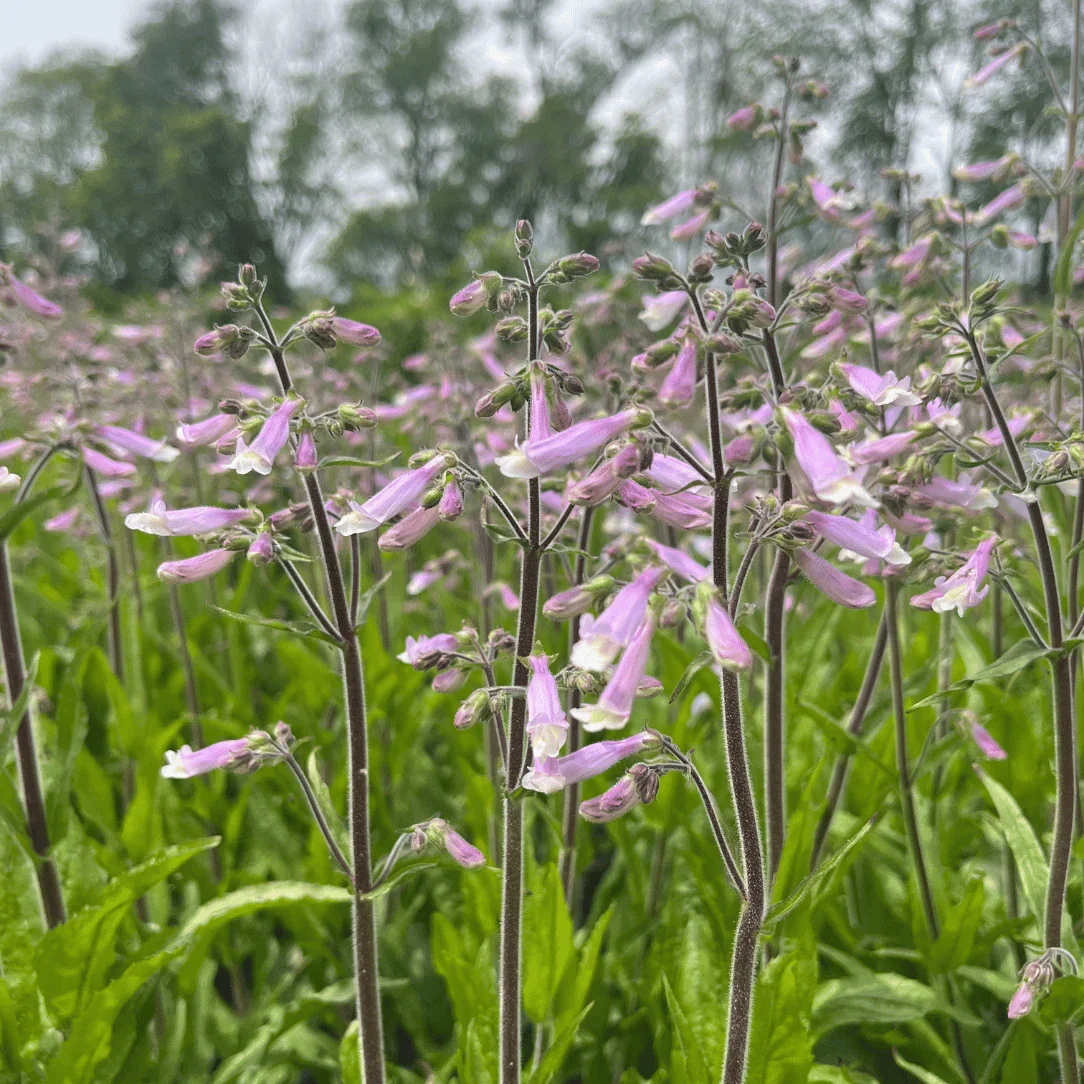
It’s one of the earlier beardtongues to bloom, usually coming in mid to late spring, right as things are shifting out of that early-season window. The soft lavender to pale purple flowers sit along upright stems and stay active with bees while they’re open.
This is not a heavy, lush plant. It stays lean, usually around 1–2 feet tall, with a more open structure that fits naturally into dry plantings. It doesn’t compete well in richer, more crowded soils, but in the right conditions it holds its ground and slowly establishes.
You’ll get the best performance out of this on slopes, glade-type areas, and any site where drainage is high and the soil isn’t doing much. It’s a good fit for more natural, low-input plantings that reflect what’s actually happening across parts of Washington County.
Light: Full sun
Soil: Dry; well-drained, shallow or rocky limestone soils
Height: 1–2 ft
Bloom: Mid to late spring
Wildlife: Native bees
Growth: Upright perennial; prefers low competition, dies back in winter and returns in spring
Gray beardtongue is one of those plants that fits the harsher side of Washington County really well. You’ll find it on dry, open slopes, rocky ground, and areas where the soil is thin and tied into limestone. It’s built for those conditions and doesn’t need much to settle in.
It’s one of the earlier beardtongues to bloom, usually coming in mid to late spring, right as things are shifting out of that early-season window. The soft lavender to pale purple flowers sit along upright stems and stay active with bees while they’re open.
This is not a heavy, lush plant. It stays lean, usually around 1–2 feet tall, with a more open structure that fits naturally into dry plantings. It doesn’t compete well in richer, more crowded soils, but in the right conditions it holds its ground and slowly establishes.
You’ll get the best performance out of this on slopes, glade-type areas, and any site where drainage is high and the soil isn’t doing much. It’s a good fit for more natural, low-input plantings that reflect what’s actually happening across parts of Washington County.
Light: Full sun
Soil: Dry; well-drained, shallow or rocky limestone soils
Height: 1–2 ft
Bloom: Mid to late spring
Wildlife: Native bees
Growth: Upright perennial; prefers low competition, dies back in winter and returns in spring