
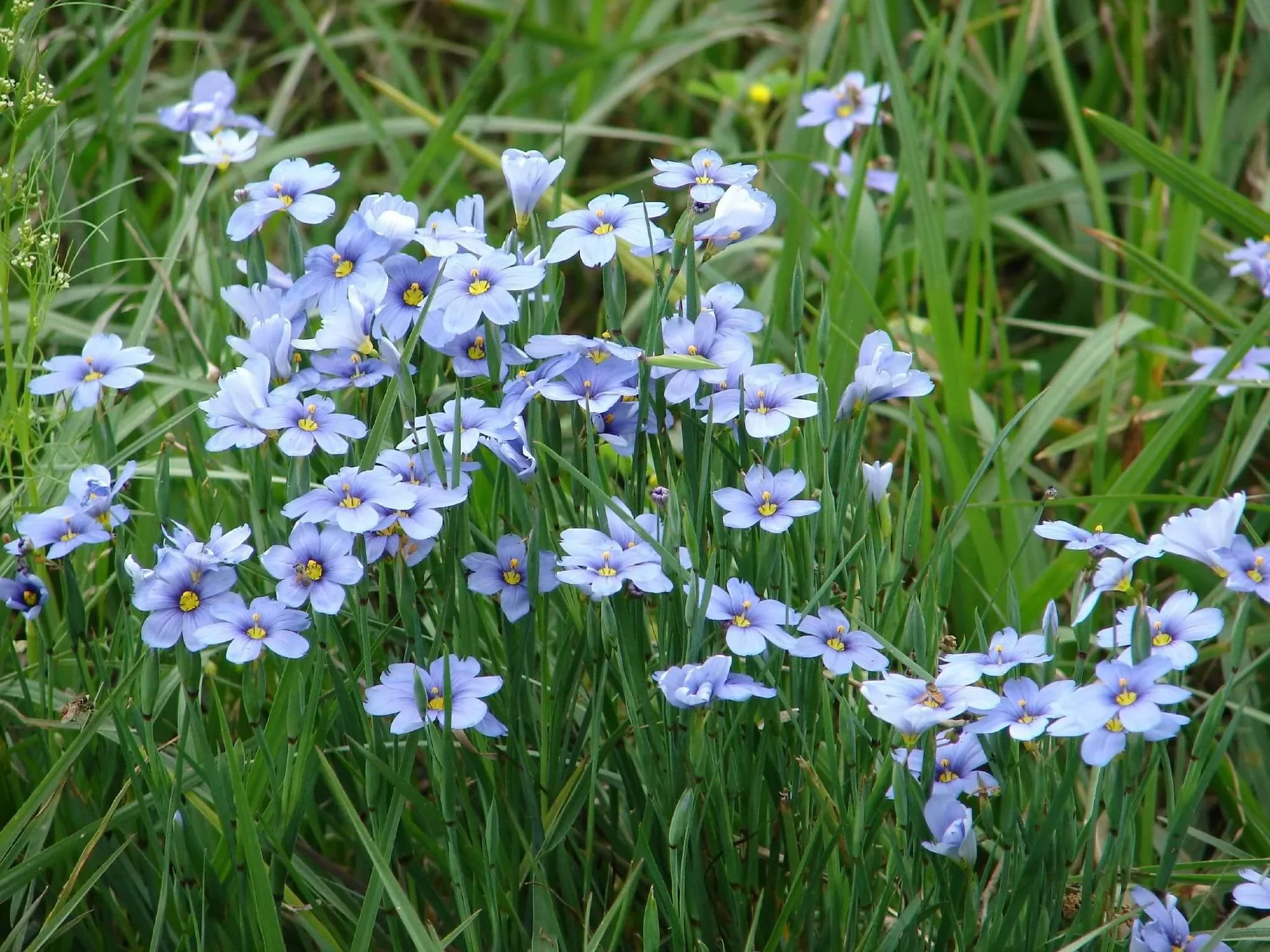
This one shows up in Washington County in open ground that holds a little moisture but still drains well. You’ll see it in fields, meadow edges, and lighter soils, including some of the limestone areas where things don’t stay wet for long.
It stays low, usually under a foot, and looks more like a grass at first. Once it blooms, you get those small blue flowers that sit just above the foliage. They don’t last long individually, but new ones keep coming through.
It doesn’t compete well with heavier, aggressive plants, so it does best where things stay a little more open. Works well in cleaner plantings or mixed meadows where it has space to hold.
This is one of those plants that fills the lower layer without making a mess. Good for tying everything together.
Light: Full sun to part shade
Soil: Medium; well-drained, tolerates limestone soils
Height: 6–12 in
Bloom: Late spring into early summer
Wildlife: Small native bees
Growth: Clump-forming perennial; slowly expands, dies back in winter and returns in spring
This one shows up in Washington County in open ground that holds a little moisture but still drains well. You’ll see it in fields, meadow edges, and lighter soils, including some of the limestone areas where things don’t stay wet for long.
It stays low, usually under a foot, and looks more like a grass at first. Once it blooms, you get those small blue flowers that sit just above the foliage. They don’t last long individually, but new ones keep coming through.
It doesn’t compete well with heavier, aggressive plants, so it does best where things stay a little more open. Works well in cleaner plantings or mixed meadows where it has space to hold.
This is one of those plants that fills the lower layer without making a mess. Good for tying everything together.
Light: Full sun to part shade
Soil: Medium; well-drained, tolerates limestone soils
Height: 6–12 in
Bloom: Late spring into early summer
Wildlife: Small native bees
Growth: Clump-forming perennial; slowly expands, dies back in winter and returns in spring