
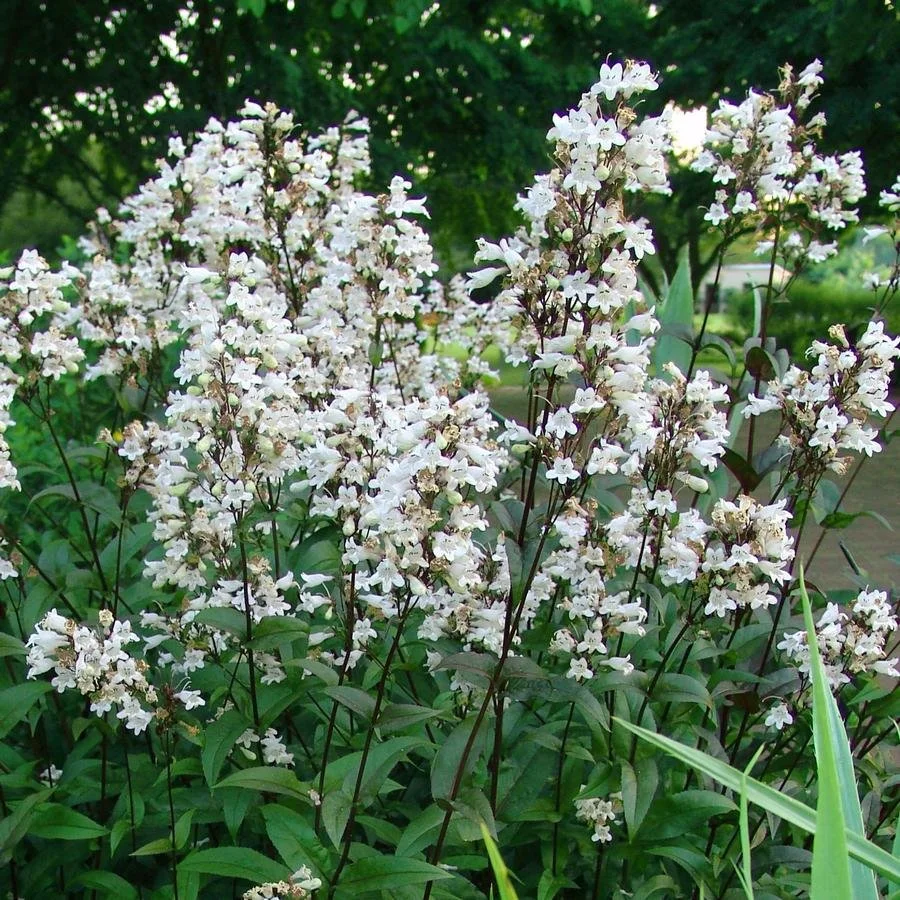
This is one of the more reliable natives you’ll see settling into Washington County once spring gets going. It shows up in open woods, field edges, and disturbed ground, especially where soils are well-drained and often influenced by limestone.
It handles a wide range of conditions here, but it really does well in those in-between spots. Not bone dry like your glades, not wet like your floodplains. Just solid, well-drained ground where it can establish and hold.
The white tubular flowers come up in late spring and early summer and are hard to miss once they open. You’ll see a lot of bee activity on this one, especially larger native bees that can work their way into the flower shape.
It usually grows around 2–4 feet tall with a strong upright form. Over time, it can form small colonies, especially in open areas where there’s enough light. It’ll also self-seed, but not in a way that gets out of control.
This is a strong fit for meadow plantings, edges, and restoration work where you need something dependable that can bridge different site conditions across Washington County.
Light: Full sun to part shade
Soil: Dry to medium; well-drained, often limestone-influenced soils
Height: 2–4 ft
Bloom: May to June
Wildlife: Native bees, especially larger species
Growth: Upright perennial; will self-seed and form small colonies over time
This is one of the more reliable natives you’ll see settling into Washington County once spring gets going. It shows up in open woods, field edges, and disturbed ground, especially where soils are well-drained and often influenced by limestone.
It handles a wide range of conditions here, but it really does well in those in-between spots. Not bone dry like your glades, not wet like your floodplains. Just solid, well-drained ground where it can establish and hold.
The white tubular flowers come up in late spring and early summer and are hard to miss once they open. You’ll see a lot of bee activity on this one, especially larger native bees that can work their way into the flower shape.
It usually grows around 2–4 feet tall with a strong upright form. Over time, it can form small colonies, especially in open areas where there’s enough light. It’ll also self-seed, but not in a way that gets out of control.
This is a strong fit for meadow plantings, edges, and restoration work where you need something dependable that can bridge different site conditions across Washington County.
Light: Full sun to part shade
Soil: Dry to medium; well-drained, often limestone-influenced soils
Height: 2–4 ft
Bloom: May to June
Wildlife: Native bees, especially larger species
Growth: Upright perennial; will self-seed and form small colonies over time