
Blackhaw viburnum shows up in woodland edges, open woods, thickets, and limestone slopes throughout Washington County. It’s most common in well-drained soils in partial shade, though it also performs well in sunnier edge habitats.
You’ll often find it growing as part of mixed understory vegetation where conditions are neither too wet nor too dry. Once established, it’s quite adaptable and can handle drought, heat, and a range of soil types, including rocky limestone soils.
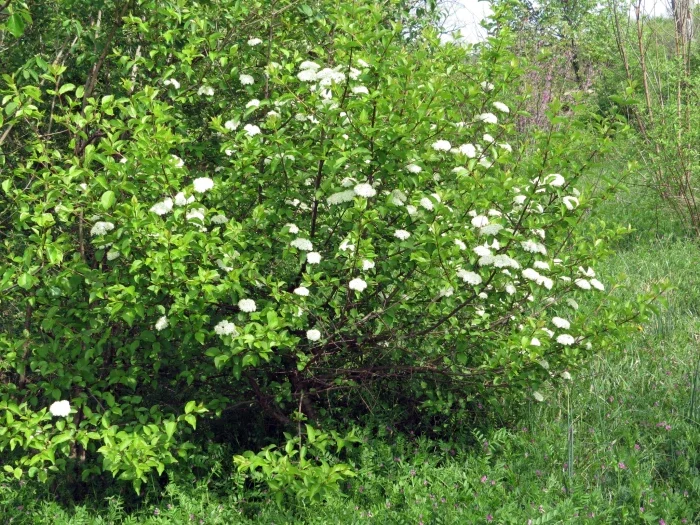
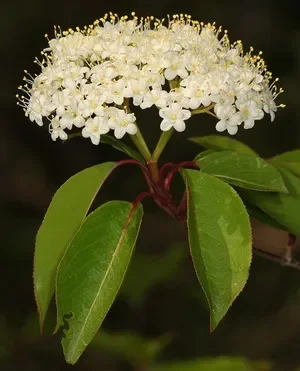
The plant grows as a large, multi-stemmed shrub or small tree, typically reaching 10–15 feet tall. In late spring, it produces flat clusters of creamy white flowers that attract a variety of pollinators, including native bees and butterflies.
By late summer to fall, it develops clusters of blue-black fruits that are highly valued by birds and other wildlife. The foliage is glossy and dark green through the growing season, turning shades of red and purple in fall.
It has a naturally irregular, rounded form that fits well into hedgerows and woodland plantings. It can be pruned into a more tree-like shape if desired, but is just as effective when allowed to grow naturally.
This is a strong choice for native landscapes, woodland edges, and wildlife plantings where you want structure, seasonal interest, and reliable food sources for birds.
Light: Full sun to part shade
Soil: Dry to medium; prefers well-drained soils but adaptable, including limestone
Height: 10–15 ft
Bloom: Late spring
Wildlife: Native bees, butterflies, birds (fruit important in fall)
Growth: Multi-stemmed deciduous shrub or small tree; moderately slow-growing, long-lived
Blackhaw viburnum shows up in woodland edges, open woods, thickets, and limestone slopes throughout Washington County. It’s most common in well-drained soils in partial shade, though it also performs well in sunnier edge habitats.
You’ll often find it growing as part of mixed understory vegetation where conditions are neither too wet nor too dry. Once established, it’s quite adaptable and can handle drought, heat, and a range of soil types, including rocky limestone soils.
The plant grows as a large, multi-stemmed shrub or small tree, typically reaching 10–15 feet tall. In late spring, it produces flat clusters of creamy white flowers that attract a variety of pollinators, including native bees and butterflies.
By late summer to fall, it develops clusters of blue-black fruits that are highly valued by birds and other wildlife. The foliage is glossy and dark green through the growing season, turning shades of red and purple in fall.
It has a naturally irregular, rounded form that fits well into hedgerows and woodland plantings. It can be pruned into a more tree-like shape if desired, but is just as effective when allowed to grow naturally.
This is a strong choice for native landscapes, woodland edges, and wildlife plantings where you want structure, seasonal interest, and reliable food sources for birds.
Light: Full sun to part shade
Soil: Dry to medium; prefers well-drained soils but adaptable, including limestone
Height: 10–15 ft
Bloom: Late spring
Wildlife: Native bees, butterflies, birds (fruit important in fall)
Growth: Multi-stemmed deciduous shrub or small tree; moderately slow-growing, long-lived