
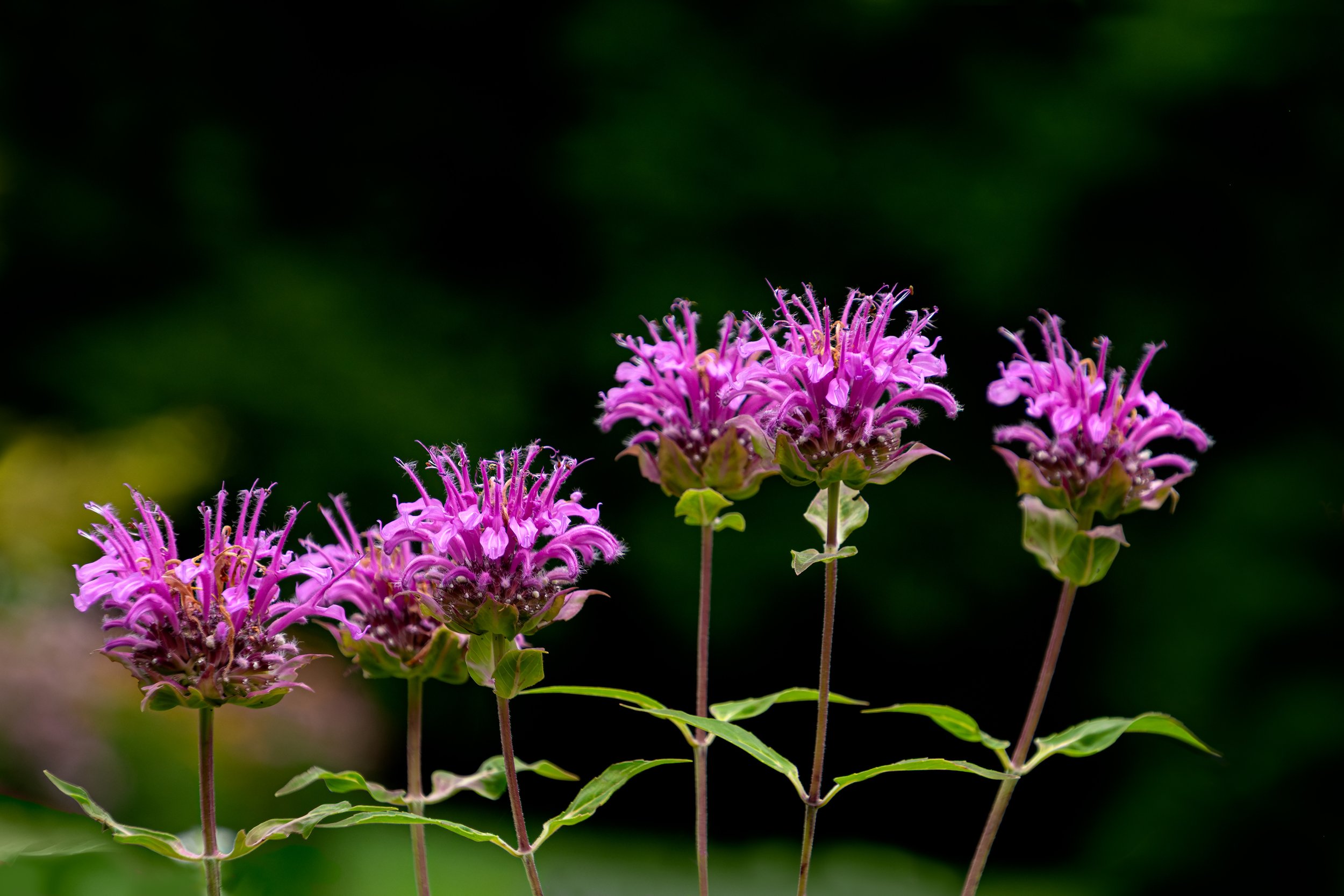
Wild bergamot shows up in open fields, dry slopes, and roadside edges across Washington County. It’s one of the more adaptable natives and handles a wide range of conditions, especially in areas where the soil is dry or not particularly rich.
You’ll usually find it in well-drained soils, including rocky or disturbed ground. It doesn’t need much to establish and tends to do well in spots where other plants struggle to stay consistent through the summer.
The flowers are light purple and form rounded clusters at the top of the stems. They bloom through mid-summer and draw in a steady mix of pollinators, especially bees and butterflies.
It grows upright and spreads gradually by underground stems, forming loose colonies over time. It doesn’t take over aggressively, but it will fill in space if given room.
This is a solid choice for sunny plantings, dry meadows, and slopes where you want something reliable that supports pollinators without needing extra input.
Light: Full sun to part sun
Soil: Dry to medium; well-drained soils
Height: 3–6 ft
Bloom: Mid-summer
Wildlife: Pollinators, especially bees and butterflies
Growth: Spreading perennial; forms loose colonies, not aggressive
Wild bergamot shows up in open fields, dry slopes, and roadside edges across Washington County. It’s one of the more adaptable natives and handles a wide range of conditions, especially in areas where the soil is dry or not particularly rich.
You’ll usually find it in well-drained soils, including rocky or disturbed ground. It doesn’t need much to establish and tends to do well in spots where other plants struggle to stay consistent through the summer.
The flowers are light purple and form rounded clusters at the top of the stems. They bloom through mid-summer and draw in a steady mix of pollinators, especially bees and butterflies.
It grows upright and spreads gradually by underground stems, forming loose colonies over time. It doesn’t take over aggressively, but it will fill in space if given room.
This is a solid choice for sunny plantings, dry meadows, and slopes where you want something reliable that supports pollinators without needing extra input.
Light: Full sun to part sun
Soil: Dry to medium; well-drained soils
Height: 3–6 ft
Bloom: Mid-summer
Wildlife: Pollinators, especially bees and butterflies
Growth: Spreading perennial; forms loose colonies, not aggressive