 Image 1 of 1
This is the beardtongue you’re more likely to find holding on in the tougher spots around Washington County. Dry slopes, open woods, rocky ground… especially where the soil is thin and tied into limestone. It doesn’t need much to get established and actually does better where competition is lower.
Compared to Penstemon digitalis, this one stays smaller and fits better into those leaner sites. It’s not trying to dominate a planting. It just settles in and does its job.
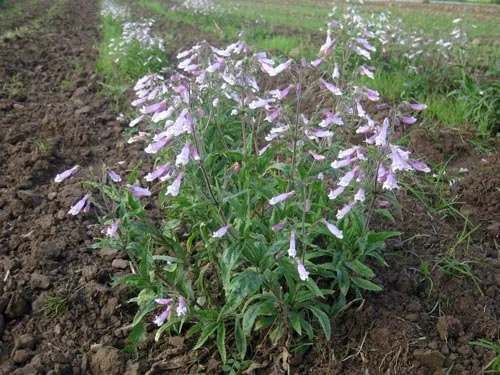
The pale lavender flowers show up late spring into early summer and draw in a steady mix of bees. It’s not as bold visually, but it’s consistent, and it lines up well with that transition period after the early-season bloomers start fading.
It usually stays around 1–2 feet tall and keeps a more compact form. In the right conditions, it’ll slowly spread and hold its space without becoming aggressive.
This is a strong fit for dry slopes, open woodland edges, and limestone-based plantings where you’re working with thinner soils and don’t want to overbuild the site.
Light: Full sun to part shade
Soil: Dry to medium; well-drained, shallow or rocky limestone soils
Height: 1–2 ft
Bloom: Late spring to early summer
Wildlife: Native bees
Growth: Compact perennial; slowly spreads, dies back in winter and returns in spring
This is the beardtongue you’re more likely to find holding on in the tougher spots around Washington County. Dry slopes, open woods, rocky ground… especially where the soil is thin and tied into limestone. It doesn’t need much to get established and actually does better where competition is lower.
Compared to Penstemon digitalis, this one stays smaller and fits better into those leaner sites. It’s not trying to dominate a planting. It just settles in and does its job.
The pale lavender flowers show up late spring into early summer and draw in a steady mix of bees. It’s not as bold visually, but it’s consistent, and it lines up well with that transition period after the early-season bloomers start fading.
It usually stays around 1–2 feet tall and keeps a more compact form. In the right conditions, it’ll slowly spread and hold its space without becoming aggressive.
This is a strong fit for dry slopes, open woodland edges, and limestone-based plantings where you’re working with thinner soils and don’t want to overbuild the site.
Light: Full sun to part shade
Soil: Dry to medium; well-drained, shallow or rocky limestone soils
Height: 1–2 ft
Bloom: Late spring to early summer
Wildlife: Native bees
Growth: Compact perennial; slowly spreads, dies back in winter and returns in spring