
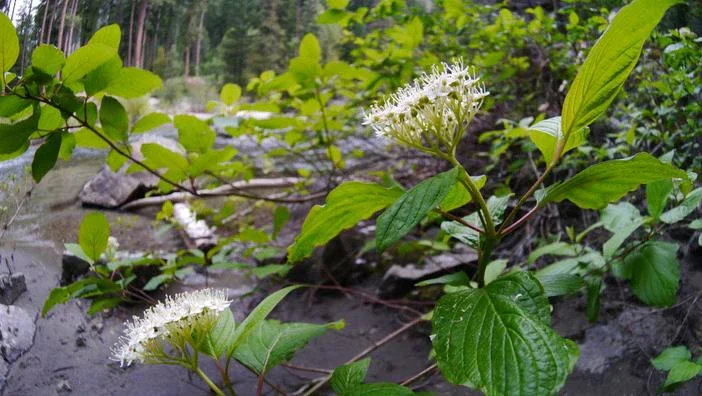
Red osier dogwood shows up in wet woods, streambanks, ditches, and low floodplains throughout Washington County. It’s most common in areas where the soil stays consistently moist or seasonally flooded.
You’ll often find it along creeks, pond edges, and other low spots where water collects for part of the year. It thrives in these conditions and is especially useful for stabilizing banks and holding soil in place.
The plant grows as a dense, multi-stemmed shrub, typically reaching 6–9 feet tall. In late spring to early summer, it produces clusters of small white flowers that attract a variety of pollinators, including native bees and butterflies.
By late summer, it develops white to bluish-white berries that are eaten by birds and other wildlife. The foliage is green through the growing season and turns reddish-purple in fall.
One of its most distinctive features is its bright red stems, which become especially noticeable in winter after the leaves drop, adding strong color to otherwise dormant landscapes.
It spreads readily by suckering, often forming dense thickets that provide excellent cover for wildlife and help stabilize wet soils.
This is a strong choice for stream restoration, rain gardens, wet meadows, and naturalized plantings where you want reliable structure, erosion control, and year-round visual interest.
Light: Full sun to part shade
Soil: Wet to medium-wet; tolerates periodic flooding and heavy soils
Height: 6–9 ft
Bloom: Late spring to early summer
Wildlife: Native bees, butterflies, birds (berries important in late summer)
Growth: Colony-forming deciduous shrub; spreads aggressively by suckers, very good for stabilization
Red osier dogwood shows up in wet woods, streambanks, ditches, and low floodplains throughout Washington County. It’s most common in areas where the soil stays consistently moist or seasonally flooded.
You’ll often find it along creeks, pond edges, and other low spots where water collects for part of the year. It thrives in these conditions and is especially useful for stabilizing banks and holding soil in place.
The plant grows as a dense, multi-stemmed shrub, typically reaching 6–9 feet tall. In late spring to early summer, it produces clusters of small white flowers that attract a variety of pollinators, including native bees and butterflies.
By late summer, it develops white to bluish-white berries that are eaten by birds and other wildlife. The foliage is green through the growing season and turns reddish-purple in fall.
One of its most distinctive features is its bright red stems, which become especially noticeable in winter after the leaves drop, adding strong color to otherwise dormant landscapes.
It spreads readily by suckering, often forming dense thickets that provide excellent cover for wildlife and help stabilize wet soils.
This is a strong choice for stream restoration, rain gardens, wet meadows, and naturalized plantings where you want reliable structure, erosion control, and year-round visual interest.
Light: Full sun to part shade
Soil: Wet to medium-wet; tolerates periodic flooding and heavy soils
Height: 6–9 ft
Bloom: Late spring to early summer
Wildlife: Native bees, butterflies, birds (berries important in late summer)
Growth: Colony-forming deciduous shrub; spreads aggressively by suckers, very good for stabilization