

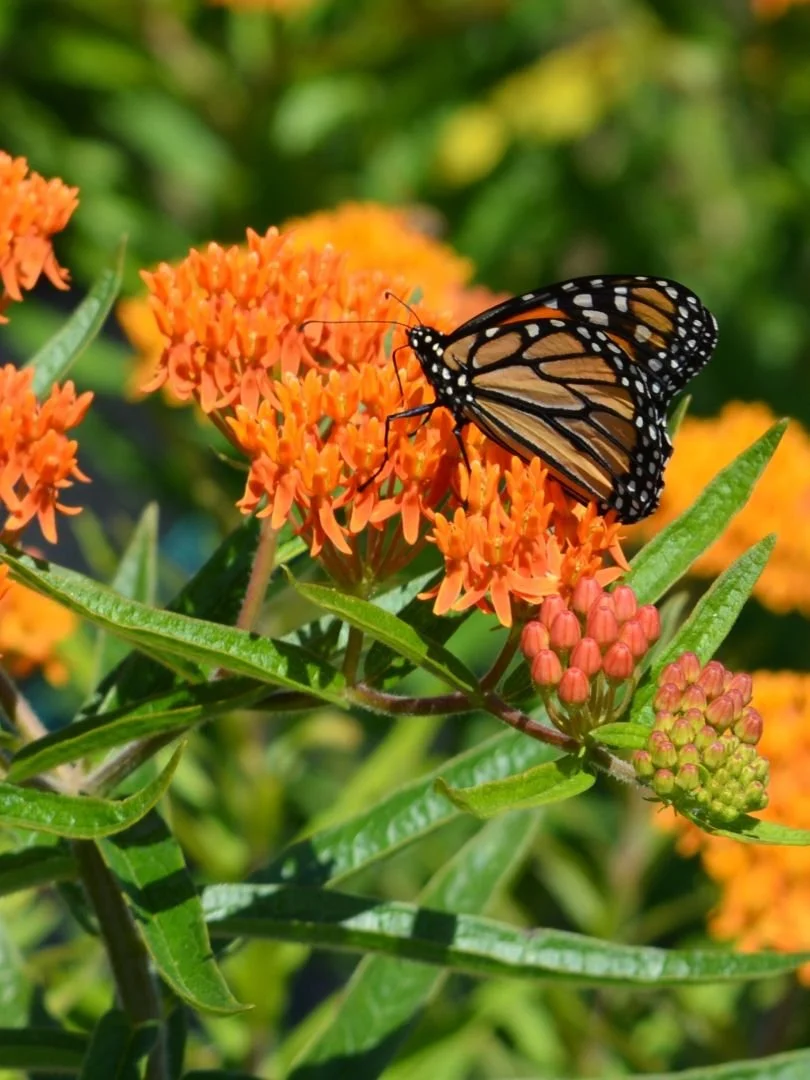
Butterfly weed is one of the most recognizable native wildflowers you’ll come across in Washington County once you know what to look for. It naturally shows up in dry, open areas like old fields, roadside banks, and rocky slopes where the soil is well-drained and often a little rough.
That’s exactly where it performs best. This isn’t a plant for rich, heavily amended beds. It thrives in the kind of conditions you’ll find across much of the county’s limestone-based soils and exposed slopes, where water moves through quickly and other plants struggle to hold on.
When it blooms, those bright orange flowers don’t sit idle. They stay active with pollinators throughout the day, especially native bees and butterflies. More importantly, this is one of the key host plants for monarch butterflies, meaning it supports their entire life cycle right here on the landscape.
It stays relatively compact, usually around 1–2 feet tall, and develops a deep taproot that makes it extremely resilient once established. Because of that, it prefers not to be disturbed after planting.
This is a strong choice for dry meadow plantings, slopes, and restoration work where you need something that can handle Washington County’s tougher soils while still contributing real ecological value.
Light: Full sun
Soil: Dry to medium; well-drained, rocky or limestone-based soils
Height: 1–2 ft
Bloom: Early to mid summer
Wildlife: Monarch butterflies (host plant), native bees, other pollinators
Growth: Deep taproot; drought-tolerant once established; does not like transplanting
Now Open!!!
Laurel Field Co. Native Plant Nursery
We grow native plants for Western Maryland, with species selected for our region’s mountains, valleys, plateaus, and surrounding Appalachian landscapes, while prioritizing local ecotypes when available.
Our inventory includes perennials, grasses, and select trees and shrubs, including a growing selection of native edible plants for habitat, home landscapes, and food-orchard plantings. Plants are produced in plugs, quarts, and gallon containers, with availability changing throughout the season as crops become ready.
Spring availability is primarily flowers and grasses beginning around mid-May. Trees and shrubs are typically available year-round.
Purchasing & Fulfillment
Local delivery is available within 25 miles of Hagerstown.
Shipping is offered on select items when available.
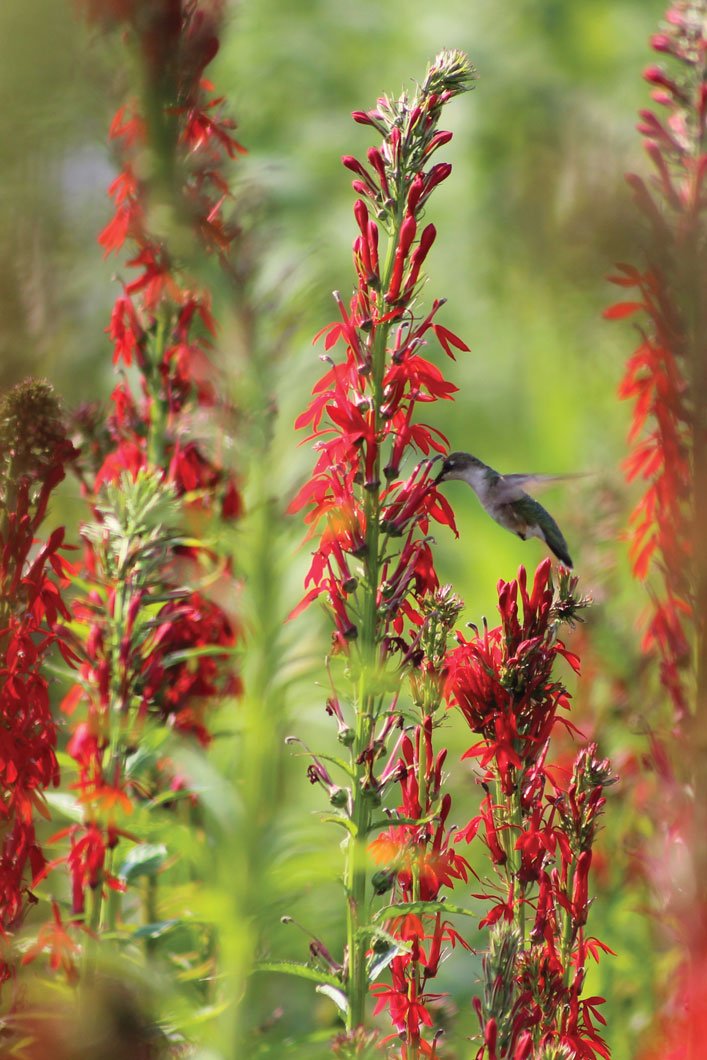
Cardinal flower shows up in wet meadows, streambanks, seeps, and low areas throughout Washington County where the soil stays consistently moist or periodically saturated during the growing season.
You’ll often find it along creeks, shaded drainage lines, and marshy edges where competition from taller, aggressive plants is limited. It prefers reliable moisture and does not tolerate drying out well for long periods.
The plant grows as an upright perennial with strong stems and lance-shaped leaves. In mid to late summer, it produces striking spikes of vivid red tubular flowers that stand out sharply against surrounding vegetation.
It typically reaches 2–4 feet tall and has a clean, vertical habit that works well in naturalistic plantings. Each flower spike blooms from the bottom upward, extending the display over several weeks.
The blooms are highly attractive to hummingbirds, which are the primary pollinators, along with occasional visits from long-tongued native bees and butterflies.
It can be short-lived in some sites but often persists through self-seeding in suitable wet conditions. It performs best where soil moisture is consistent and competition is not too intense.
This is a standout choice for rain gardens, wet meadows, and riparian plantings where you want strong color, wildlife value, and a true native wetland presence.
Light: Full sun to part shade
Soil: Wet to medium-wet; requires consistently moist soils
Height: 2–4 ft
Bloom: Mid to late summer
Wildlife: Hummingbirds, native bees, butterflies
Growth: Herbaceous perennial; often short-lived but may self-seed in ideal conditions
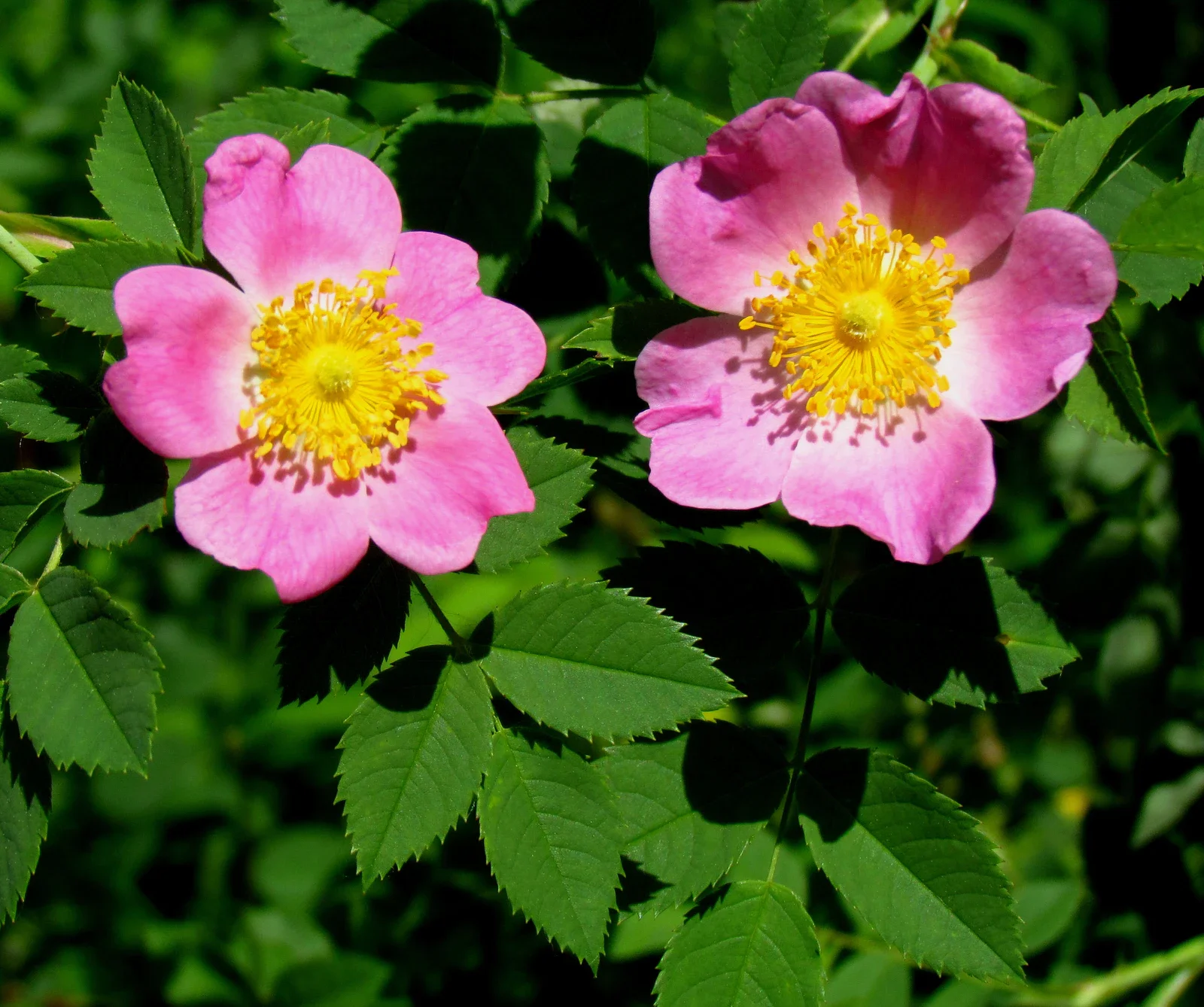
Carolina rose shows up in meadows, old fields, woodland edges, and stream corridors throughout Washington County. It’s most common in open, sunny areas with well-drained soils, though it can also persist in light shade along thickets and forest margins.
You’ll often find it in prairies and disturbed ground that stays moderately moist in spring but dries out through summer. Once established, it handles drought, heat, and poor soils with ease.
The plant grows as a low to medium shrub, usually reaching 3–6 feet tall and forming loose colonies over time. In late spring to early summer, it produces clusters of soft pink to rose-colored flowers that attract a wide range of pollinators, including native bees and butterflies.
After flowering, it develops small red rose hips that persist into fall and winter, providing an important food source for birds and other wildlife. The foliage is compound and finely textured, giving it a lighter, more open appearance than many other native shrubs.
It spreads gradually by suckering but is generally easy to manage and works well in naturalistic plantings. It can be used for erosion control, hedgerows, and wildlife plantings where a native rose with dependable performance is needed.
This is a strong choice for sunny edges and meadow-style plantings where you want seasonal flowers, wildlife value, and long-term structure without heavy maintenance.
Light: Full sun to part shade
Soil: Dry to medium; prefers well-drained soils but adaptable
Height: 3–6 ft
Bloom: Late spring to early summer
Wildlife: Native bees, butterflies, birds (hips provide winter food)
Growth: Colony-forming deciduous shrub; spreads by suckers, moderately vigorous but manageable
Frequently Asked Questions
-
Not at this time. We focus on live plants to give you a stronger start and better establishment.
-
We offer plants in plugs, quarts, and gallons depending on the species and stage of growth.
-
We grow native plants suited to Washington County and the surrounding region, including perennials, grasses, and select trees and shrubs.
-
We are based in Hagerstown and grow plants for the surrounding Mid-Atlantic region.
-
We prioritize plant health using low-impact methods such as hand management, biological controls, and horticultural treatments when needed. We avoid unnecessary chemical use and do not use systemic pesticides like neonicotinoids.
-
Native plants are adapted to local soils and climate, support pollinators and wildlife, and require less long-term maintenance once established.
Have Questions?
We'll review your message and get back to you within 48 hours.