
Cardinal flower shows up in wet meadows, streambanks, seeps, and low areas throughout Washington County where the soil stays consistently moist or periodically saturated during the growing season.
You’ll often find it along creeks, shaded drainage lines, and marshy edges where competition from taller, aggressive plants is limited. It prefers reliable moisture and does not tolerate drying out well for long periods.
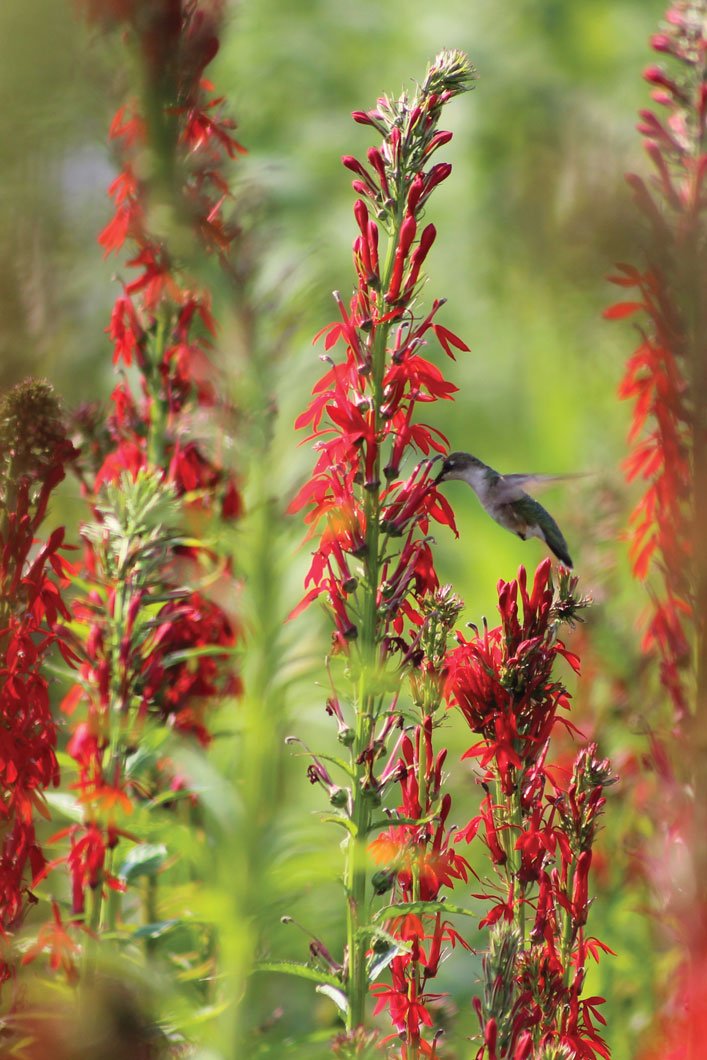
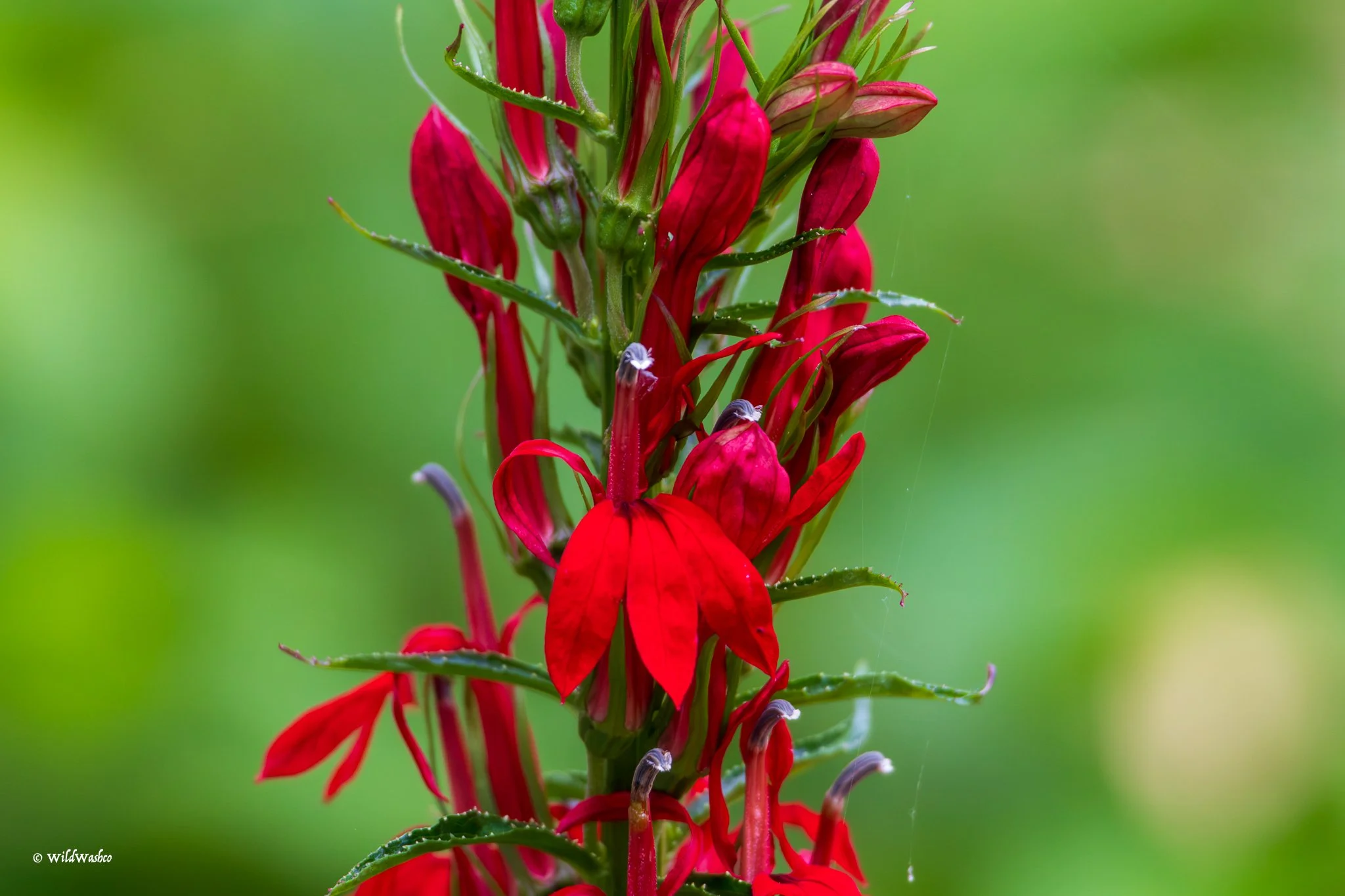
The plant grows as an upright perennial with strong stems and lance-shaped leaves. In mid to late summer, it produces striking spikes of vivid red tubular flowers that stand out sharply against surrounding vegetation.
It typically reaches 2–4 feet tall and has a clean, vertical habit that works well in naturalistic plantings. Each flower spike blooms from the bottom upward, extending the display over several weeks.
The blooms are highly attractive to hummingbirds, which are the primary pollinators, along with occasional visits from long-tongued native bees and butterflies.
It can be short-lived in some sites but often persists through self-seeding in suitable wet conditions. It performs best where soil moisture is consistent and competition is not too intense.
This is a standout choice for rain gardens, wet meadows, and riparian plantings where you want strong color, wildlife value, and a true native wetland presence.
Light: Full sun to part shade
Soil: Wet to medium-wet; requires consistently moist soils
Height: 2–4 ft
Bloom: Mid to late summer
Wildlife: Hummingbirds, native bees, butterflies
Growth: Herbaceous perennial; often short-lived but may self-seed in ideal conditions
Cardinal flower shows up in wet meadows, streambanks, seeps, and low areas throughout Washington County where the soil stays consistently moist or periodically saturated during the growing season.
You’ll often find it along creeks, shaded drainage lines, and marshy edges where competition from taller, aggressive plants is limited. It prefers reliable moisture and does not tolerate drying out well for long periods.
The plant grows as an upright perennial with strong stems and lance-shaped leaves. In mid to late summer, it produces striking spikes of vivid red tubular flowers that stand out sharply against surrounding vegetation.
It typically reaches 2–4 feet tall and has a clean, vertical habit that works well in naturalistic plantings. Each flower spike blooms from the bottom upward, extending the display over several weeks.
The blooms are highly attractive to hummingbirds, which are the primary pollinators, along with occasional visits from long-tongued native bees and butterflies.
It can be short-lived in some sites but often persists through self-seeding in suitable wet conditions. It performs best where soil moisture is consistent and competition is not too intense.
This is a standout choice for rain gardens, wet meadows, and riparian plantings where you want strong color, wildlife value, and a true native wetland presence.
Light: Full sun to part shade
Soil: Wet to medium-wet; requires consistently moist soils
Height: 2–4 ft
Bloom: Mid to late summer
Wildlife: Hummingbirds, native bees, butterflies
Growth: Herbaceous perennial; often short-lived but may self-seed in ideal conditions