 Image 1 of 1
Butterfly weed is one of the most recognizable native wildflowers you’ll come across in Washington County once you know what to look for. It naturally shows up in dry, open areas like old fields, roadside banks, and rocky slopes where the soil is well-drained and often a little rough.
That’s exactly where it performs best. This isn’t a plant for rich, heavily amended beds. It thrives in the kind of conditions you’ll find across much of the county’s limestone-based soils and exposed slopes, where water moves through quickly and other plants struggle to hold on.
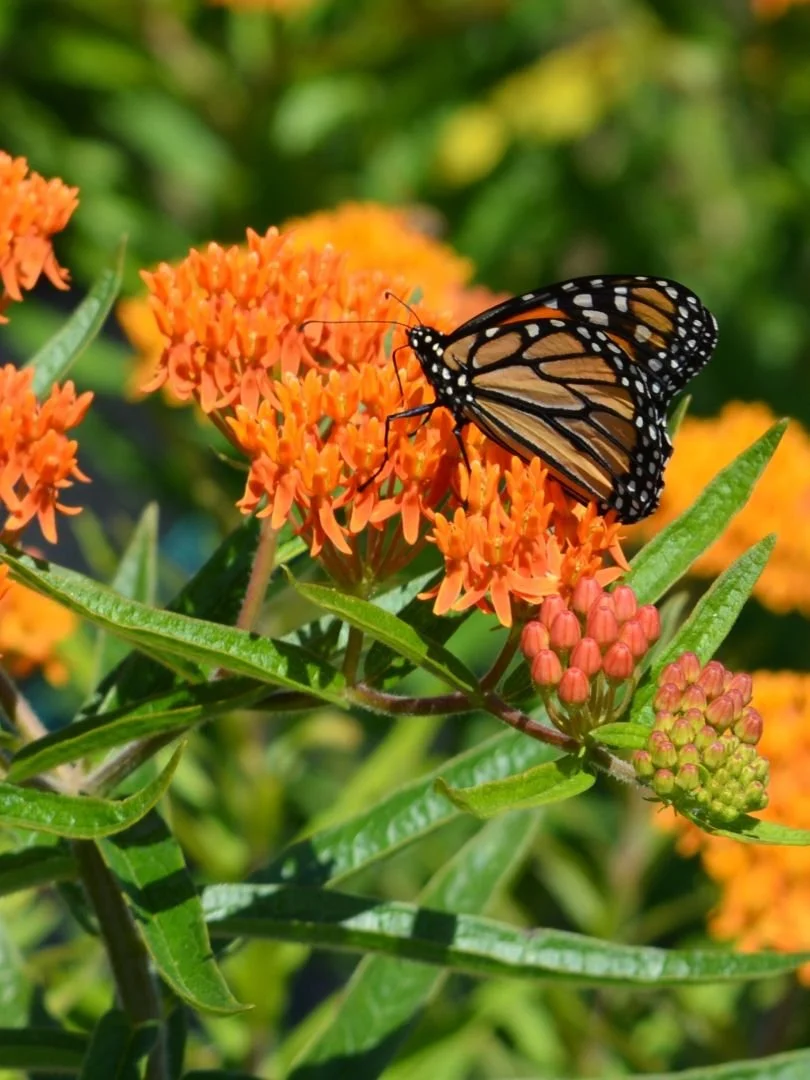
When it blooms, those bright orange flowers don’t sit idle. They stay active with pollinators throughout the day, especially native bees and butterflies. More importantly, this is one of the key host plants for monarch butterflies, meaning it supports their entire life cycle right here on the landscape.
It stays relatively compact, usually around 1–2 feet tall, and develops a deep taproot that makes it extremely resilient once established. Because of that, it prefers not to be disturbed after planting.
This is a strong choice for dry meadow plantings, slopes, and restoration work where you need something that can handle Washington County’s tougher soils while still contributing real ecological value.
Light: Full sun
Soil: Dry to medium; well-drained, rocky or limestone-based soils
Height: 1–2 ft
Bloom: Early to mid summer
Wildlife: Monarch butterflies (host plant), native bees, other pollinators
Growth: Deep taproot; drought-tolerant once established; does not like transplanting
Butterfly weed is one of the most recognizable native wildflowers you’ll come across in Washington County once you know what to look for. It naturally shows up in dry, open areas like old fields, roadside banks, and rocky slopes where the soil is well-drained and often a little rough.
That’s exactly where it performs best. This isn’t a plant for rich, heavily amended beds. It thrives in the kind of conditions you’ll find across much of the county’s limestone-based soils and exposed slopes, where water moves through quickly and other plants struggle to hold on.
When it blooms, those bright orange flowers don’t sit idle. They stay active with pollinators throughout the day, especially native bees and butterflies. More importantly, this is one of the key host plants for monarch butterflies, meaning it supports their entire life cycle right here on the landscape.
It stays relatively compact, usually around 1–2 feet tall, and develops a deep taproot that makes it extremely resilient once established. Because of that, it prefers not to be disturbed after planting.
This is a strong choice for dry meadow plantings, slopes, and restoration work where you need something that can handle Washington County’s tougher soils while still contributing real ecological value.
Light: Full sun
Soil: Dry to medium; well-drained, rocky or limestone-based soils
Height: 1–2 ft
Bloom: Early to mid summer
Wildlife: Monarch butterflies (host plant), native bees, other pollinators
Growth: Deep taproot; drought-tolerant once established; does not like transplanting