
Purplehead sneezeweed shows up in woodland edges, low areas, and moist clearings around Washington County. It’s not as common as the typical sneezeweed, but it fits into those in-between spaces where there’s some shade and consistent moisture.
You’ll usually find it in soils that stay on the damp side, especially along stream edges or in partially shaded openings where water doesn’t dry out too quickly. It handles those conditions well and doesn’t need much help once established.
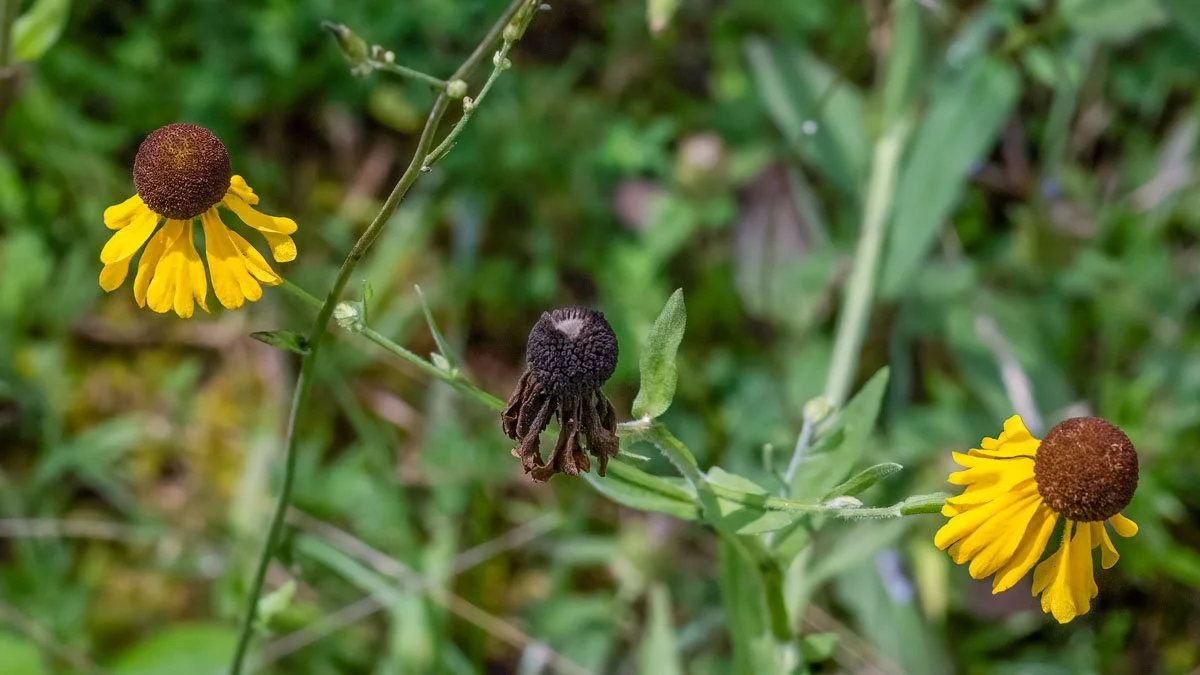
The flowers are smaller and more subtle than other sneezeweeds, with yellow petals and a darker, purplish center. It doesn’t stand out from a distance, but up close it holds its own and adds detail to a planting.
It grows upright, usually reaching a few feet tall, and works well mixed with other moisture-loving species. It doesn’t spread aggressively but will settle in and persist where conditions are right.
This is a good fit for shaded edges, wet pockets, and transition areas where sun and moisture shift throughout the day. It works best as part of a mix rather than a standalone plant.
Light: Part shade to shade
Soil: Medium to wet; prefers consistently moist soils
Height: 3–6 ft
Bloom: Late summer to early fall
Wildlife: Pollinators, including bees and butterflies
Growth: Clump-forming perennial; slowly expanding, not aggressive
Purplehead sneezeweed shows up in woodland edges, low areas, and moist clearings around Washington County. It’s not as common as the typical sneezeweed, but it fits into those in-between spaces where there’s some shade and consistent moisture.
You’ll usually find it in soils that stay on the damp side, especially along stream edges or in partially shaded openings where water doesn’t dry out too quickly. It handles those conditions well and doesn’t need much help once established.
The flowers are smaller and more subtle than other sneezeweeds, with yellow petals and a darker, purplish center. It doesn’t stand out from a distance, but up close it holds its own and adds detail to a planting.
It grows upright, usually reaching a few feet tall, and works well mixed with other moisture-loving species. It doesn’t spread aggressively but will settle in and persist where conditions are right.
This is a good fit for shaded edges, wet pockets, and transition areas where sun and moisture shift throughout the day. It works best as part of a mix rather than a standalone plant.
Light: Part shade to shade
Soil: Medium to wet; prefers consistently moist soils
Height: 3–6 ft
Bloom: Late summer to early fall
Wildlife: Pollinators, including bees and butterflies
Growth: Clump-forming perennial; slowly expanding, not aggressive