
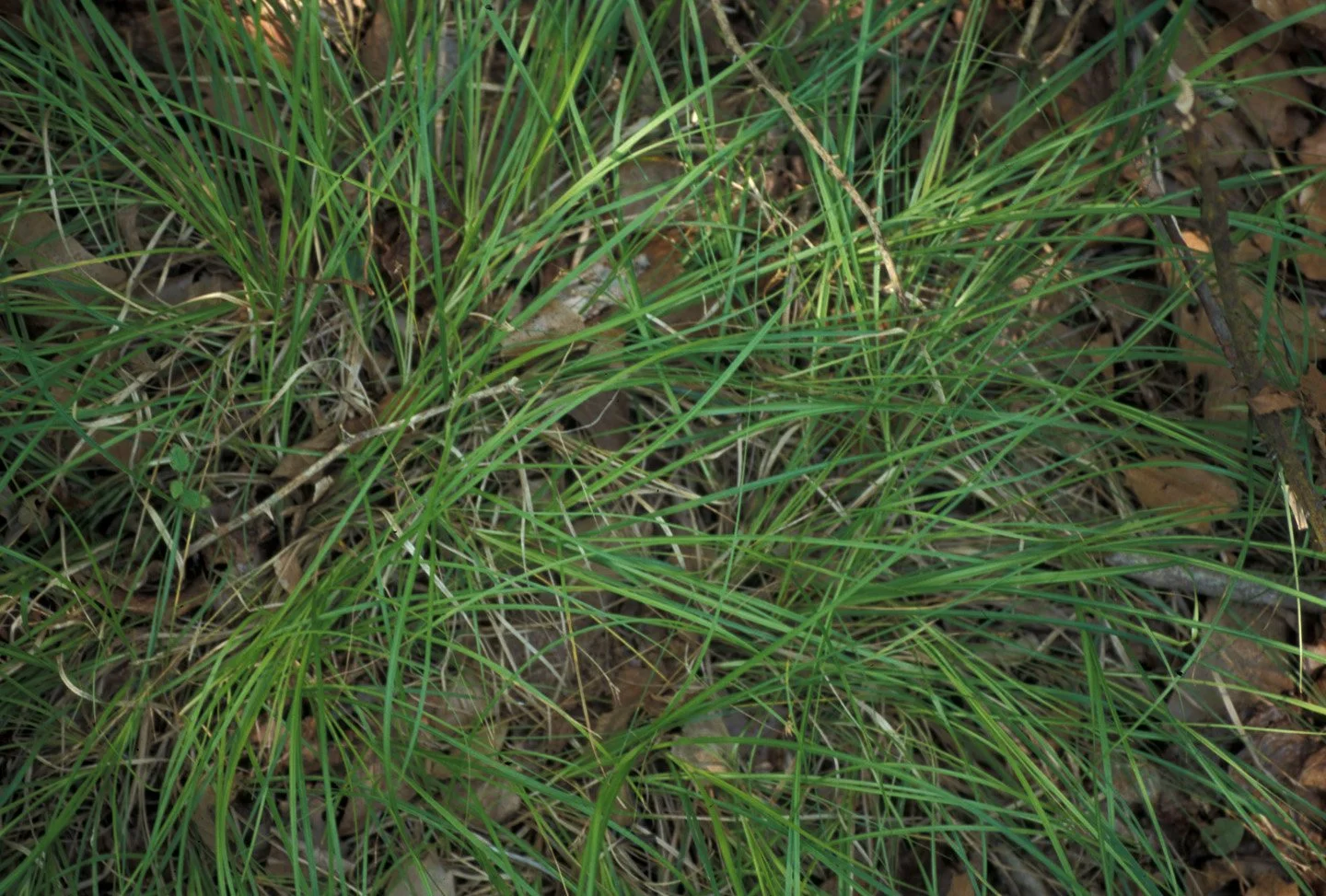
Pennsylvania sedge shows up all over Washington County once you start paying attention to woodland floors and dry slopes. It’s one of those plants that’s already doing the job people try to force turf grass to do, just in tougher conditions.
You’ll find it naturally in dry woods, along edges, and on slopes where soil is thin and drains quickly. It handles those conditions without needing much, especially in areas where grass struggles or burns out.
It stays low, usually under a foot tall, and forms soft, fine-textured patches that spread over time. It doesn’t grow like a traditional lawn, but it fills space in a way that feels natural and holds soil in place.
This is one of the best options for shaded groundcover, especially under trees or along woodland edges where mowing and maintenance don’t make sense. It also works well on slopes where you need something to stabilize soil without constant upkeep.
Light: Part shade to shade
Soil: Dry to medium; well-drained, often thin woodland soils
Height: Under 1 ft
Bloom: Spring (subtle)
Wildlife: Limited direct use, but contributes to habitat structure
Growth: Spreading sedge; forms low colonies over time without becoming aggressive
Pennsylvania sedge shows up all over Washington County once you start paying attention to woodland floors and dry slopes. It’s one of those plants that’s already doing the job people try to force turf grass to do, just in tougher conditions.
You’ll find it naturally in dry woods, along edges, and on slopes where soil is thin and drains quickly. It handles those conditions without needing much, especially in areas where grass struggles or burns out.
It stays low, usually under a foot tall, and forms soft, fine-textured patches that spread over time. It doesn’t grow like a traditional lawn, but it fills space in a way that feels natural and holds soil in place.
This is one of the best options for shaded groundcover, especially under trees or along woodland edges where mowing and maintenance don’t make sense. It also works well on slopes where you need something to stabilize soil without constant upkeep.
Light: Part shade to shade
Soil: Dry to medium; well-drained, often thin woodland soils
Height: Under 1 ft
Bloom: Spring (subtle)
Wildlife: Limited direct use, but contributes to habitat structure
Growth: Spreading sedge; forms low colonies over time without becoming aggressive