
New England aster shows up in meadows, old fields, roadside edges, and stream corridors throughout Washington County. It’s most common in open areas with full sun where the soil holds some moisture but doesn't stay saturated for long periods.
You'll often find it growing alongside other late-season natives in fields and meadow habitats. It prefers medium to moist soils but is adaptable enough to handle short periods of drought once established.
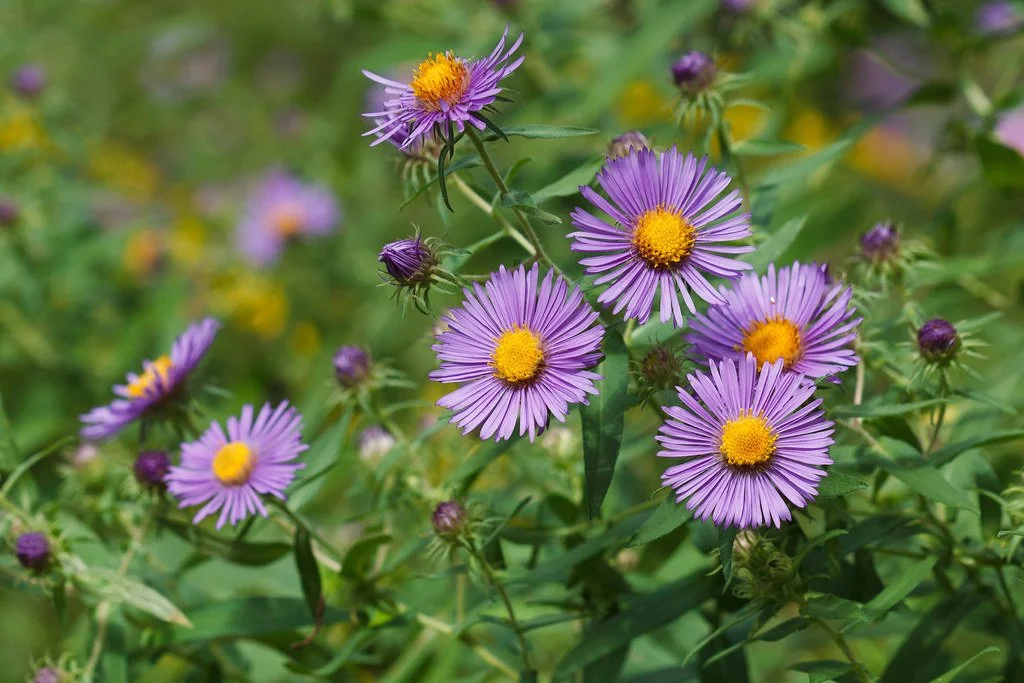
The plant grows upright and can reach impressive heights by late summer. As the season shifts toward fall, it becomes covered in masses of purple to violet flowers with bright yellow centers, providing one of the most noticeable displays in the landscape.
It typically reaches 3–6 feet tall and adds substantial color and structure when many other plants are beginning to fade. The flowers are highly attractive to pollinators and are especially valuable as a late-season nectar source.
Despite its size, it mixes well with native grasses and other meadow species. Pinching stems in early summer can encourage a shorter, bushier plant with even more blooms.
This is a strong choice for pollinator gardens, meadows, and naturalized plantings where you want dependable fall color and exceptional wildlife value.
Light: Full sun
Soil: Medium to moist; adaptable to a range of well-drained soils
Height: 3–6 ft
Bloom: Late summer through fall
Wildlife: Native bees, butterflies, and migrating monarchs
Growth: Clump-forming perennial; may slowly spread and self-seed, dies back in winter and returns in spring
New England aster shows up in meadows, old fields, roadside edges, and stream corridors throughout Washington County. It’s most common in open areas with full sun where the soil holds some moisture but doesn't stay saturated for long periods.
You'll often find it growing alongside other late-season natives in fields and meadow habitats. It prefers medium to moist soils but is adaptable enough to handle short periods of drought once established.
The plant grows upright and can reach impressive heights by late summer. As the season shifts toward fall, it becomes covered in masses of purple to violet flowers with bright yellow centers, providing one of the most noticeable displays in the landscape.
It typically reaches 3–6 feet tall and adds substantial color and structure when many other plants are beginning to fade. The flowers are highly attractive to pollinators and are especially valuable as a late-season nectar source.
Despite its size, it mixes well with native grasses and other meadow species. Pinching stems in early summer can encourage a shorter, bushier plant with even more blooms.
This is a strong choice for pollinator gardens, meadows, and naturalized plantings where you want dependable fall color and exceptional wildlife value.
Light: Full sun
Soil: Medium to moist; adaptable to a range of well-drained soils
Height: 3–6 ft
Bloom: Late summer through fall
Wildlife: Native bees, butterflies, and migrating monarchs
Growth: Clump-forming perennial; may slowly spread and self-seed, dies back in winter and returns in spring