
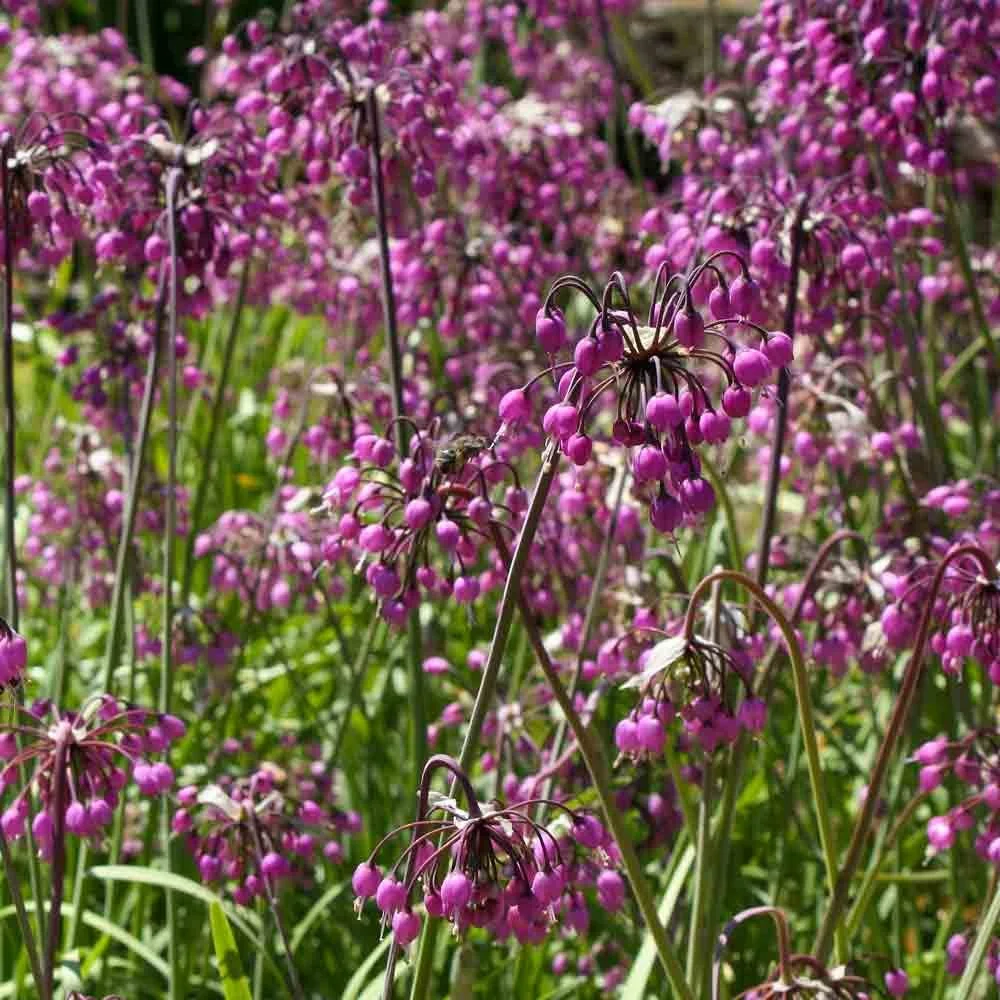
Nodding Onion is one of those subtle plants that starts to stand out the more time you spend around it. The flowers hang downward in soft clusters, usually a pale pink to light lavender, and they show up right in the middle of summer when a lot of other plants start to slow down.
This species is native across much of the eastern U.S., including the Appalachian region. You’ll find it in open woods, rocky slopes, glades, and well-drained soils where it gets a mix of sun and light shade. It handles tougher conditions well, especially in thinner soils where more aggressive plants don’t dominate.
It grows in tidy clumps, usually around 1–2 feet tall, with narrow, grass-like leaves and slender stems that give it a clean, natural look. It doesn’t spread aggressively, but it will slowly form small colonies over time if it’s happy.
Pollinators key in on this plant fast. Native bees, especially smaller species, work the flowers consistently, and you’ll also see butterflies visiting. Because it blooms mid to late summer, it fills an important gap when nectar sources can start to drop off.
It’s a great fit for naturalistic plantings, edges, and rockier areas where you want something refined but still fully functional from an ecological standpoint.
Light: Full sun to partial shade
Soil: Dry to medium; well-drained, rocky or average soils
Height: 1–2 ft
Bloom: Mid to late summer
Wildlife: Native bees, butterflies
Growth: Clumping perennial; slowly spreads over time, dies back in winter and returns in spring
Nodding Onion is one of those subtle plants that starts to stand out the more time you spend around it. The flowers hang downward in soft clusters, usually a pale pink to light lavender, and they show up right in the middle of summer when a lot of other plants start to slow down.
This species is native across much of the eastern U.S., including the Appalachian region. You’ll find it in open woods, rocky slopes, glades, and well-drained soils where it gets a mix of sun and light shade. It handles tougher conditions well, especially in thinner soils where more aggressive plants don’t dominate.
It grows in tidy clumps, usually around 1–2 feet tall, with narrow, grass-like leaves and slender stems that give it a clean, natural look. It doesn’t spread aggressively, but it will slowly form small colonies over time if it’s happy.
Pollinators key in on this plant fast. Native bees, especially smaller species, work the flowers consistently, and you’ll also see butterflies visiting. Because it blooms mid to late summer, it fills an important gap when nectar sources can start to drop off.
It’s a great fit for naturalistic plantings, edges, and rockier areas where you want something refined but still fully functional from an ecological standpoint.
Light: Full sun to partial shade
Soil: Dry to medium; well-drained, rocky or average soils
Height: 1–2 ft
Bloom: Mid to late summer
Wildlife: Native bees, butterflies
Growth: Clumping perennial; slowly spreads over time, dies back in winter and returns in spring