
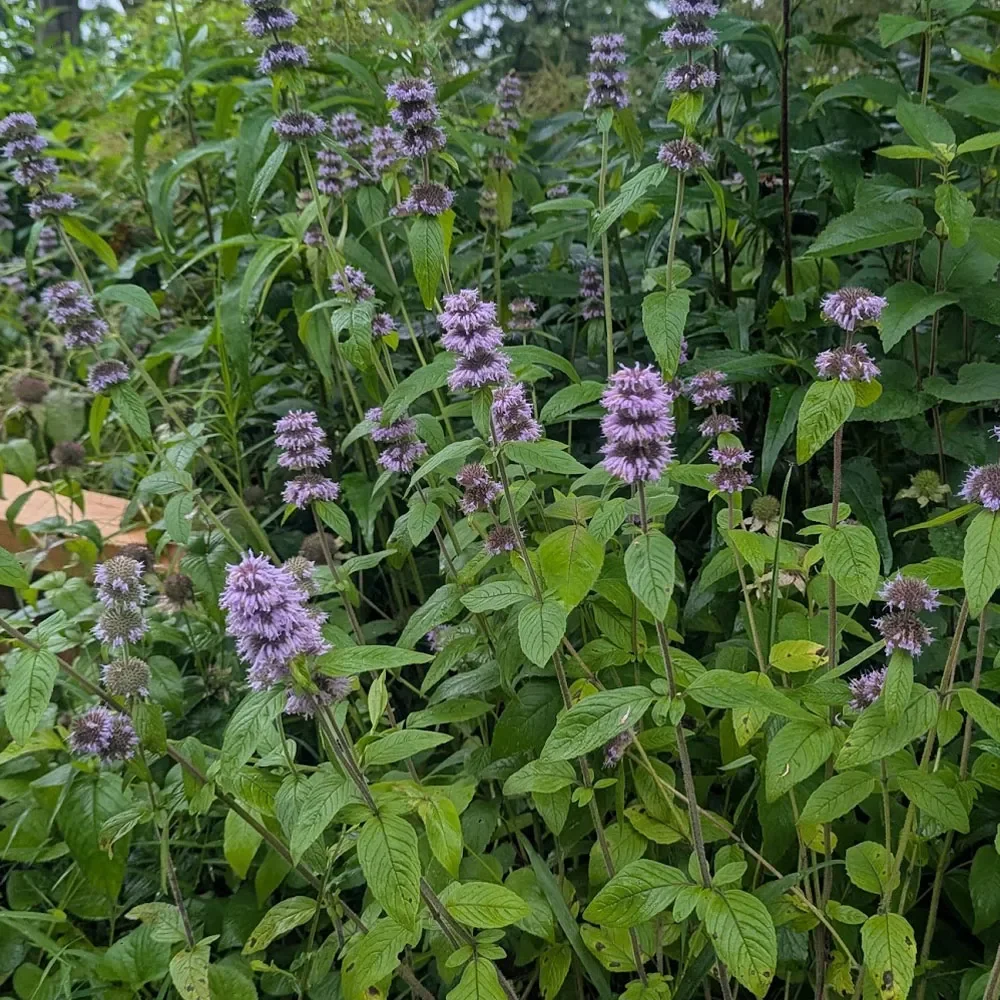
Downy wood mint starts showing up in Washington County in late spring and carries into early summer. It fits right into that transition window after the earliest bloomers fade, adding structure and steady pollinator activity going into June.
You’ll find it growing naturally on dry, rocky slopes, open woods, and limestone outcrops where soils are shallow and well-drained. It’s well adapted to the kind of ground we have here, especially in areas where richer plants struggle to hold on.
The flowers form in stacked whorls along the stem, usually a soft lavender to pale purple. It’s not flashy from a distance, but up close it’s constantly active with native bees and smaller pollinators working through it.
It typically stays around 1–3 feet tall with a clean, upright habit. It spreads slowly by clumping and occasional seeding, but it doesn’t run or take over, which makes it easy to control in designed plantings.
This is a strong fit for dry slopes, rocky beds, woodland edges, and limestone-based plantings where you need something tough that still supports pollinators.
Downy wood mint starts showing up in Washington County in late spring and carries into early summer. It fits right into that transition window after the earliest bloomers fade, adding structure and steady pollinator activity going into June.
You’ll find it growing naturally on dry, rocky slopes, open woods, and limestone outcrops where soils are shallow and well-drained. It’s well adapted to the kind of ground we have here, especially in areas where richer plants struggle to hold on.
The flowers form in stacked whorls along the stem, usually a soft lavender to pale purple. It’s not flashy from a distance, but up close it’s constantly active with native bees and smaller pollinators working through it.
It typically stays around 1–3 feet tall with a clean, upright habit. It spreads slowly by clumping and occasional seeding, but it doesn’t run or take over, which makes it easy to control in designed plantings.
This is a strong fit for dry slopes, rocky beds, woodland edges, and limestone-based plantings where you need something tough that still supports pollinators.