
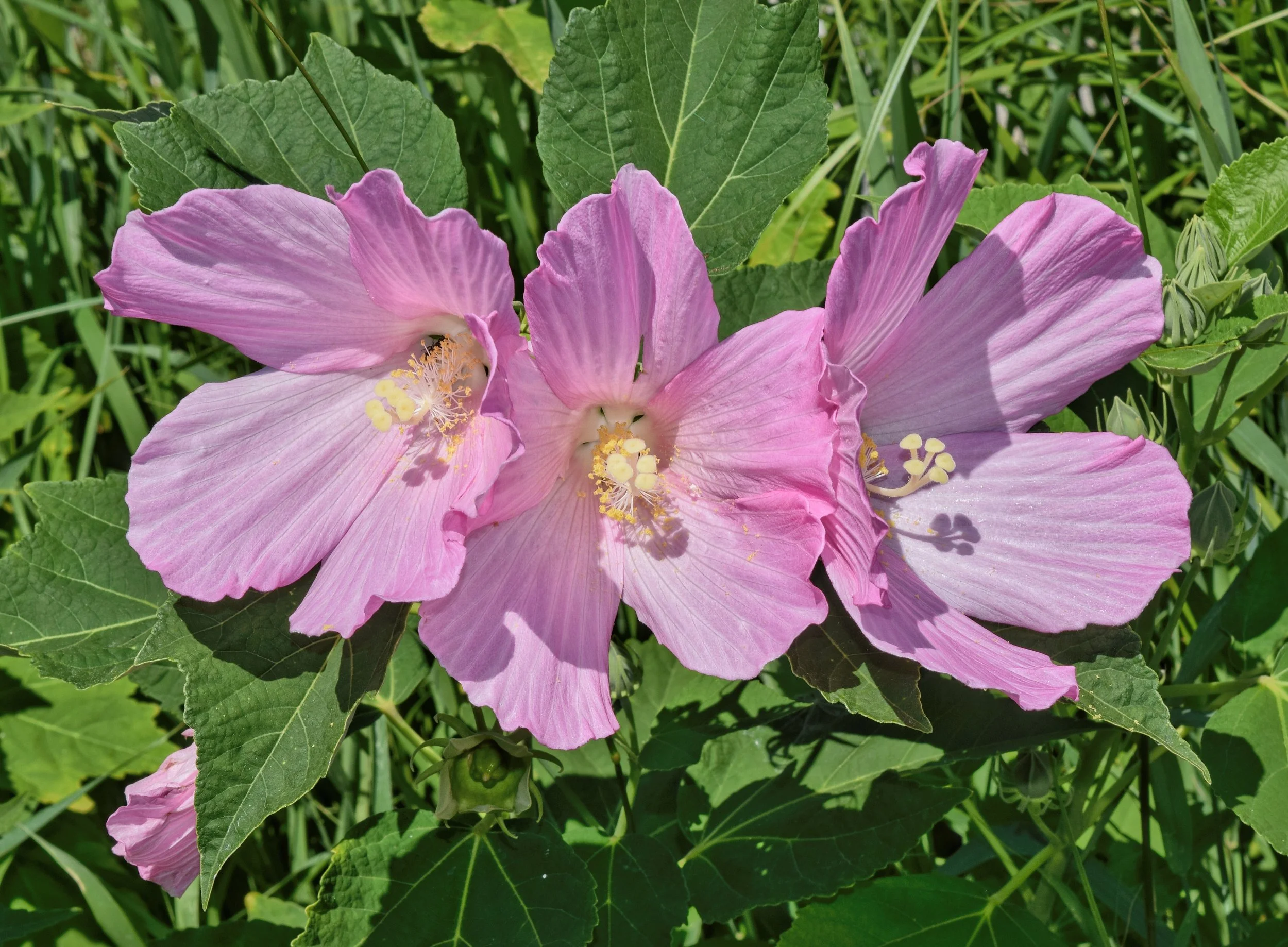
Swamp rose mallow shows up in low, wet ground around Washington County, especially along streams, floodplains, and areas that hold water through the growing season. It’s built for those conditions and does best where the soil stays consistently moist.
You’ll usually find it in deeper soils that don’t dry out quickly. It can handle occasional flooding and doesn’t mind heavy ground, which makes it a good fit for areas that are hard to manage with typical plantings.
The flowers are large and hard to miss, usually white to pink with a darker center. They bloom through the heat of summer when a lot of other plants start slowing down, and they pull in a steady flow of pollinators.
It grows upright and fills space quickly once established, usually reaching several feet tall by mid to late summer. It dies back in winter and comes up late in the season, so it’s worth pairing with earlier plants if you want consistent coverage.
This is a strong choice for rain gardens, drainage areas, and low spots where water collects. It works best in full sun with enough moisture to support its size.
Light: Full sun to part sun
Soil: Wet; tolerates heavy, moisture-retentive soils
Height: 3–6 ft
Bloom: Mid to late summer
Wildlife: Pollinators, especially bees
Growth: Clump-forming perennial; emerges late, fills in quickly during summer
Swamp rose mallow shows up in low, wet ground around Washington County, especially along streams, floodplains, and areas that hold water through the growing season. It’s built for those conditions and does best where the soil stays consistently moist.
You’ll usually find it in deeper soils that don’t dry out quickly. It can handle occasional flooding and doesn’t mind heavy ground, which makes it a good fit for areas that are hard to manage with typical plantings.
The flowers are large and hard to miss, usually white to pink with a darker center. They bloom through the heat of summer when a lot of other plants start slowing down, and they pull in a steady flow of pollinators.
It grows upright and fills space quickly once established, usually reaching several feet tall by mid to late summer. It dies back in winter and comes up late in the season, so it’s worth pairing with earlier plants if you want consistent coverage.
This is a strong choice for rain gardens, drainage areas, and low spots where water collects. It works best in full sun with enough moisture to support its size.
Light: Full sun to part sun
Soil: Wet; tolerates heavy, moisture-retentive soils
Height: 3–6 ft
Bloom: Mid to late summer
Wildlife: Pollinators, especially bees
Growth: Clump-forming perennial; emerges late, fills in quickly during summer