
Sneezeweed is one of those plants you’ll find tucked into the wetter parts of Washington County if you know where to look. It shows up along stream edges, low spots in fields, and floodplain areas where the soil stays consistently moist, especially around places like the Antietam Creek and Conococheague Creek corridors.
This is not a dry-site plant. It thrives in those heavier, moisture-holding soils that a lot of other species struggle with. If you’ve got an area that stays damp or even periodically wet, this is where sneezeweed starts to shine.
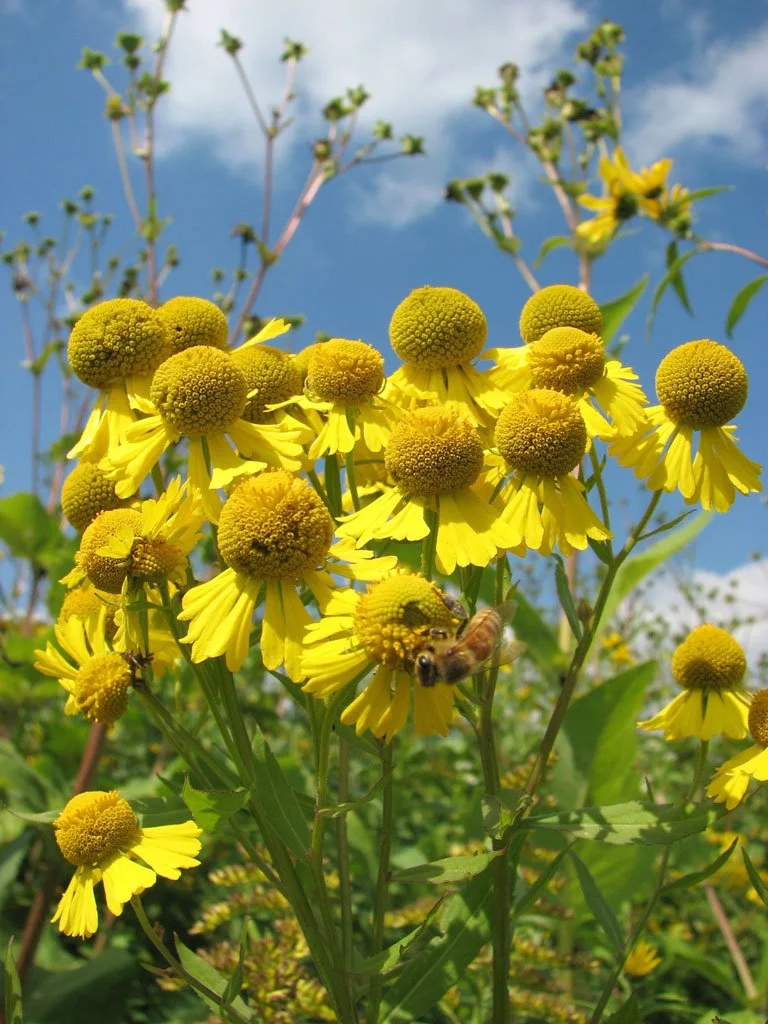
By late summer into early fall, it pushes out bright yellow flowers that almost feel like they’re holding the season together as everything else starts to fade. That late bloom window is important. Pollinators are still active, and this plant becomes a steady food source when options are starting to thin out.
It grows upright, usually around 3–5 feet tall, forming strong vertical structure in a planting. In the right conditions, it can form nice colonies over time, especially in open areas with good sun and consistent moisture.
Despite the name, it has nothing to do with allergies. The name comes from its historical use, not airborne pollen. What it actually does is support a wide range of native insects that rely on late-season blooms in our local ecosystem.
This is a strong fit for rain gardens, low meadow areas, stream edges, and restoration work where water is part of the equation.
Light: Full sun to light shade
Soil: Medium to wet; tolerates heavier soils and periodic flooding
Height: 3–5 ft
Bloom: Late summer through fall
Wildlife: Native bees, butterflies, late-season pollinators
Growth: Upright perennial; can form colonies in moist conditions; dies back in winter and returns in spring
Sneezeweed is one of those plants you’ll find tucked into the wetter parts of Washington County if you know where to look. It shows up along stream edges, low spots in fields, and floodplain areas where the soil stays consistently moist, especially around places like the Antietam Creek and Conococheague Creek corridors.
This is not a dry-site plant. It thrives in those heavier, moisture-holding soils that a lot of other species struggle with. If you’ve got an area that stays damp or even periodically wet, this is where sneezeweed starts to shine.
By late summer into early fall, it pushes out bright yellow flowers that almost feel like they’re holding the season together as everything else starts to fade. That late bloom window is important. Pollinators are still active, and this plant becomes a steady food source when options are starting to thin out.
It grows upright, usually around 3–5 feet tall, forming strong vertical structure in a planting. In the right conditions, it can form nice colonies over time, especially in open areas with good sun and consistent moisture.
Despite the name, it has nothing to do with allergies. The name comes from its historical use, not airborne pollen. What it actually does is support a wide range of native insects that rely on late-season blooms in our local ecosystem.
This is a strong fit for rain gardens, low meadow areas, stream edges, and restoration work where water is part of the equation.
Light: Full sun to light shade
Soil: Medium to wet; tolerates heavier soils and periodic flooding
Height: 3–5 ft
Bloom: Late summer through fall
Wildlife: Native bees, butterflies, late-season pollinators
Growth: Upright perennial; can form colonies in moist conditions; dies back in winter and returns in spring