
This one shows up right when the season is starting to wind down, but the insects aren’t done yet. Around Washington County, Symphyotrichum lateriflorum starts blooming late summer and carries straight into fall, filling that gap when most plants have already faded.
You’ll find it along woodland edges, floodplain forests, streambanks, and low areas where soils stay on the moist side. It handles shade better than most asters, which makes it useful in spots where a lot of other pollinator plants fall off.
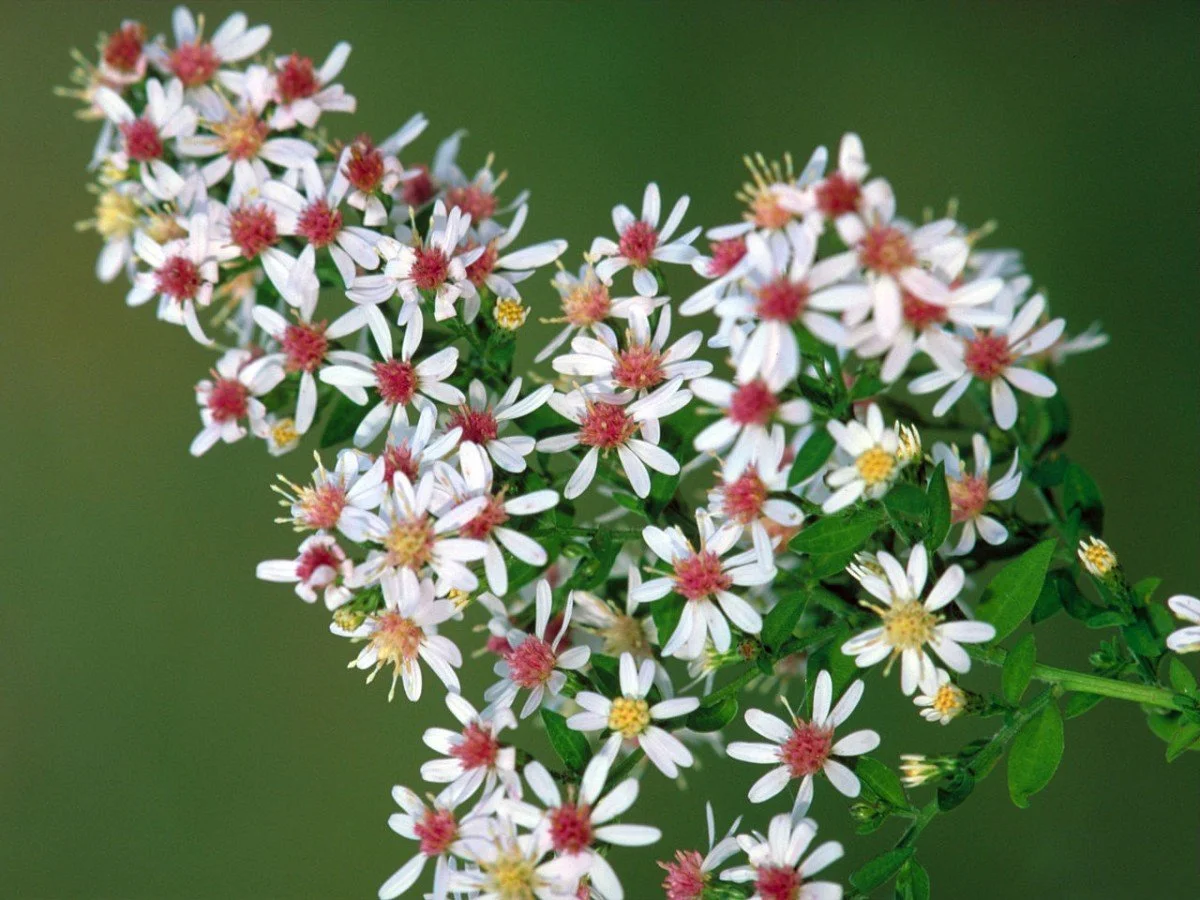
The flowers are small and scattered along branching stems, starting white and often shifting to a purplish tone as they age. When it’s in bloom, it doesn’t read as one big mass of color, but up close it’s covered in detail and absolutely loaded with activity.
It usually stays around 1–3 feet tall, with a loose, branching habit. It’ll spread lightly over time and fill space, especially in edge conditions where nothing too aggressive is competing with it.
This is a strong fit for woodland borders, shaded edges, and moist naturalized areas where you still want late-season pollinator support without forcing full sun plants into the wrong conditions.
This one shows up right when the season is starting to wind down, but the insects aren’t done yet. Around Washington County, Symphyotrichum lateriflorum starts blooming late summer and carries straight into fall, filling that gap when most plants have already faded.
You’ll find it along woodland edges, floodplain forests, streambanks, and low areas where soils stay on the moist side. It handles shade better than most asters, which makes it useful in spots where a lot of other pollinator plants fall off.
The flowers are small and scattered along branching stems, starting white and often shifting to a purplish tone as they age. When it’s in bloom, it doesn’t read as one big mass of color, but up close it’s covered in detail and absolutely loaded with activity.
It usually stays around 1–3 feet tall, with a loose, branching habit. It’ll spread lightly over time and fill space, especially in edge conditions where nothing too aggressive is competing with it.
This is a strong fit for woodland borders, shaded edges, and moist naturalized areas where you still want late-season pollinator support without forcing full sun plants into the wrong conditions.