
Clustered mountain mint shows up in open meadows, field edges, and moist clearings around Washington County. It handles a range of conditions but does best where the soil holds some moisture and gets good sun.
You’ll find it in medium to slightly wet soils, often in areas that aren’t completely dry but also not fully saturated. It establishes easily and tends to hold its ground once it’s in.
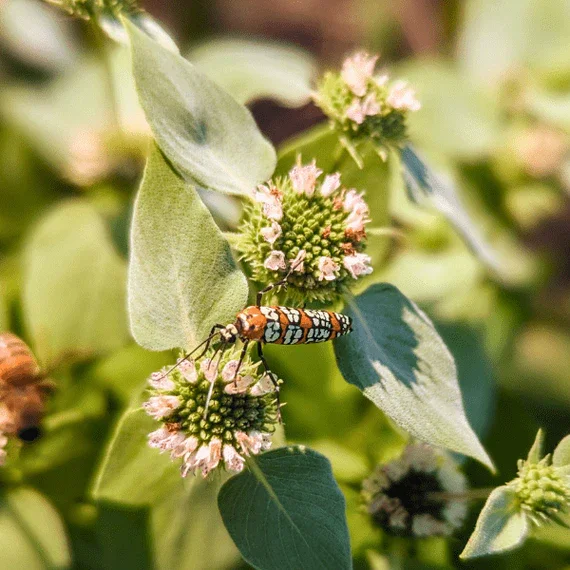
The flowers are small and subtle, but the silvery bracts around them give the plant a soft, almost glowing look in mid to late summer. Up close, it’s constantly covered in pollinators. It’s one of the most active plants you can add if that’s your goal.
It usually stays around 2–3 feet tall and spreads steadily by underground stems, forming dense patches over time. It’s not invasive, but it will fill in space if it’s happy.
This is a strong choice for pollinator-focused plantings, meadow edges, and areas where you want something that performs without needing much input. It also works well in mass plantings where it can spread and create coverage.
Light: Full sun to part sun
Soil: Medium to wet; prefers consistent moisture
Height: 1–3 ft
Bloom: Mid to late summer
Wildlife: Extremely high pollinator value (bees, wasps, butterflies)
Growth: Spreading perennial; forms colonies over time
Clustered mountain mint shows up in open meadows, field edges, and moist clearings around Washington County. It handles a range of conditions but does best where the soil holds some moisture and gets good sun.
You’ll find it in medium to slightly wet soils, often in areas that aren’t completely dry but also not fully saturated. It establishes easily and tends to hold its ground once it’s in.
The flowers are small and subtle, but the silvery bracts around them give the plant a soft, almost glowing look in mid to late summer. Up close, it’s constantly covered in pollinators. It’s one of the most active plants you can add if that’s your goal.
It usually stays around 2–3 feet tall and spreads steadily by underground stems, forming dense patches over time. It’s not invasive, but it will fill in space if it’s happy.
This is a strong choice for pollinator-focused plantings, meadow edges, and areas where you want something that performs without needing much input. It also works well in mass plantings where it can spread and create coverage.
Light: Full sun to part sun
Soil: Medium to wet; prefers consistent moisture
Height: 1–3 ft
Bloom: Mid to late summer
Wildlife: Extremely high pollinator value (bees, wasps, butterflies)
Growth: Spreading perennial; forms colonies over time