
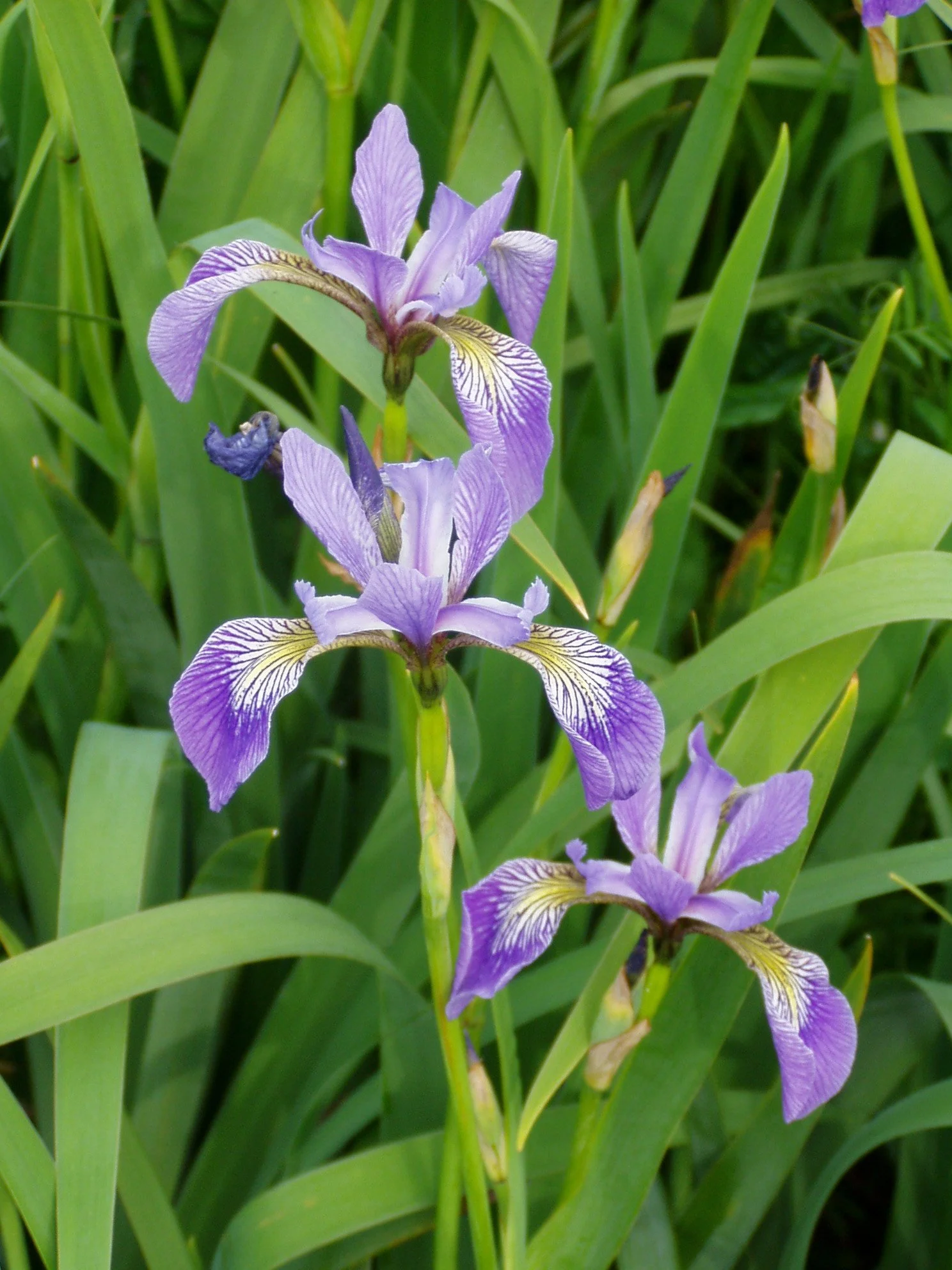
Northern blue flag iris shows up in low, wet ground around Washington County, especially along streams, pond edges, wetlands, and other areas that stay moist through much of the growing season. It does best where the soil holds consistent moisture and rarely dries out completely.
You'll usually find it in rich soils near water, though it can also grow in heavier ground that stays damp. Once established, it handles seasonal flooding well and helps stabilize wet areas with its dense root system.
The flowers are hard to miss in late spring, with blue to violet blooms held above tall, sword-like foliage. Each flower only lasts a short time, but the display can continue for weeks as new blooms open. The flowers attract a variety of pollinators, including native bees and butterflies.
It grows in upright clumps that gradually expand over time, providing strong texture even after flowering has finished. The foliage stays attractive through much of the season before dying back in winter.
This is a dependable choice for rain gardens, pond margins, wetlands, and other moisture-rich plantings. It adds color early in the season and brings structure to areas where many garden plants struggle.
Light: Full sun to part sun
Soil: Wet to moist; tolerates heavy, moisture-retentive soils
Height: 2–4 ft
Bloom: Late spring to early summer
Wildlife: Native bees, butterflies, and other pollinators
Growth: Clump-forming perennial; slowly expands, dies back in winter and returns in spring
Northern blue flag iris shows up in low, wet ground around Washington County, especially along streams, pond edges, wetlands, and other areas that stay moist through much of the growing season. It does best where the soil holds consistent moisture and rarely dries out completely.
You'll usually find it in rich soils near water, though it can also grow in heavier ground that stays damp. Once established, it handles seasonal flooding well and helps stabilize wet areas with its dense root system.
The flowers are hard to miss in late spring, with blue to violet blooms held above tall, sword-like foliage. Each flower only lasts a short time, but the display can continue for weeks as new blooms open. The flowers attract a variety of pollinators, including native bees and butterflies.
It grows in upright clumps that gradually expand over time, providing strong texture even after flowering has finished. The foliage stays attractive through much of the season before dying back in winter.
This is a dependable choice for rain gardens, pond margins, wetlands, and other moisture-rich plantings. It adds color early in the season and brings structure to areas where many garden plants struggle.
Light: Full sun to part sun
Soil: Wet to moist; tolerates heavy, moisture-retentive soils
Height: 2–4 ft
Bloom: Late spring to early summer
Wildlife: Native bees, butterflies, and other pollinators
Growth: Clump-forming perennial; slowly expands, dies back in winter and returns in spring