
Garden phlox is a native perennial found in rich woods, thickets, stream edges, and open woodland margins through much of the eastern United States. In gardens, it performs best where the soil has decent organic matter and does not dry out completely in summer.
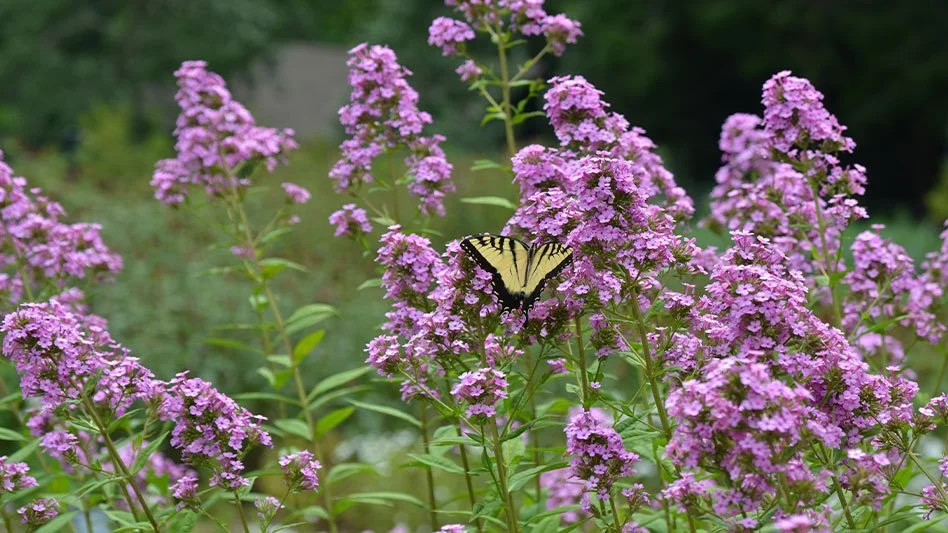
‘Jeana’ is a selected cultivar of Phlox paniculata, not a wild straight-species form. It is mainly valued for its strong mildew resistance, tall upright habit, long bloom period, and smaller lavender pink flowers held in loose clusters.
Compared to many garden phlox cultivars, ‘Jeana’ has a finer flower texture. The individual flowers are smaller, but the plant produces many of them over a long period. This makes it especially useful in pollinator plantings where steady nectar availability matters more than oversized flower heads.
It grows best in full sun to part sun with consistent moisture and good airflow. In hot, dry, exposed sites, the foliage can stress, especially if the soil is thin or compacted. It is a better fit for richer garden beds, meadow edges, moist borders, and planted areas that receive some summer moisture.
Plants usually reach around 3–5 feet tall and grow as upright clumps. It slowly expands from the crown but is not an aggressive spreader. Cutting back spent flowers can keep the plant cleaner, while leaving some stems later in the season can provide structure and habitat.
Because ‘Jeana’ is a cultivar, it works well in designed native gardens, pollinator beds, and residential landscapes, but it should be treated differently than local ecotype seed-grown Phlox paniculata for restoration work.
Light: Full sun to part sun
Soil: Medium to moist; fertile, well-drained soil with organic matter
Height: 3–5 ft
Bloom: Mid summer to early fall
Wildlife: Strong nectar source for butterflies, skippers, moths, hummingbird moths, and some bees
Growth: Upright clump-forming perennial; slowly expanding, non-aggressive
Garden phlox is a native perennial found in rich woods, thickets, stream edges, and open woodland margins through much of the eastern United States. In gardens, it performs best where the soil has decent organic matter and does not dry out completely in summer.
‘Jeana’ is a selected cultivar of Phlox paniculata, not a wild straight-species form. It is mainly valued for its strong mildew resistance, tall upright habit, long bloom period, and smaller lavender pink flowers held in loose clusters.
Compared to many garden phlox cultivars, ‘Jeana’ has a finer flower texture. The individual flowers are smaller, but the plant produces many of them over a long period. This makes it especially useful in pollinator plantings where steady nectar availability matters more than oversized flower heads.
It grows best in full sun to part sun with consistent moisture and good airflow. In hot, dry, exposed sites, the foliage can stress, especially if the soil is thin or compacted. It is a better fit for richer garden beds, meadow edges, moist borders, and planted areas that receive some summer moisture.
Plants usually reach around 3–5 feet tall and grow as upright clumps. It slowly expands from the crown but is not an aggressive spreader. Cutting back spent flowers can keep the plant cleaner, while leaving some stems later in the season can provide structure and habitat.
Because ‘Jeana’ is a cultivar, it works well in designed native gardens, pollinator beds, and residential landscapes, but it should be treated differently than local ecotype seed-grown Phlox paniculata for restoration work.
Light: Full sun to part sun
Soil: Medium to moist; fertile, well-drained soil with organic matter
Height: 3–5 ft
Bloom: Mid summer to early fall
Wildlife: Strong nectar source for butterflies, skippers, moths, hummingbird moths, and some bees
Growth: Upright clump-forming perennial; slowly expanding, non-aggressive