
Swamp milkweed is a native wetland and wet meadow perennial found in marsh edges, floodplains, streambanks, ditches, and low areas where the soil stays consistently moist. In Washington County gardens, it is one of the better milkweeds for rain gardens, pond edges, and heavier soils that do not dry out too quickly.
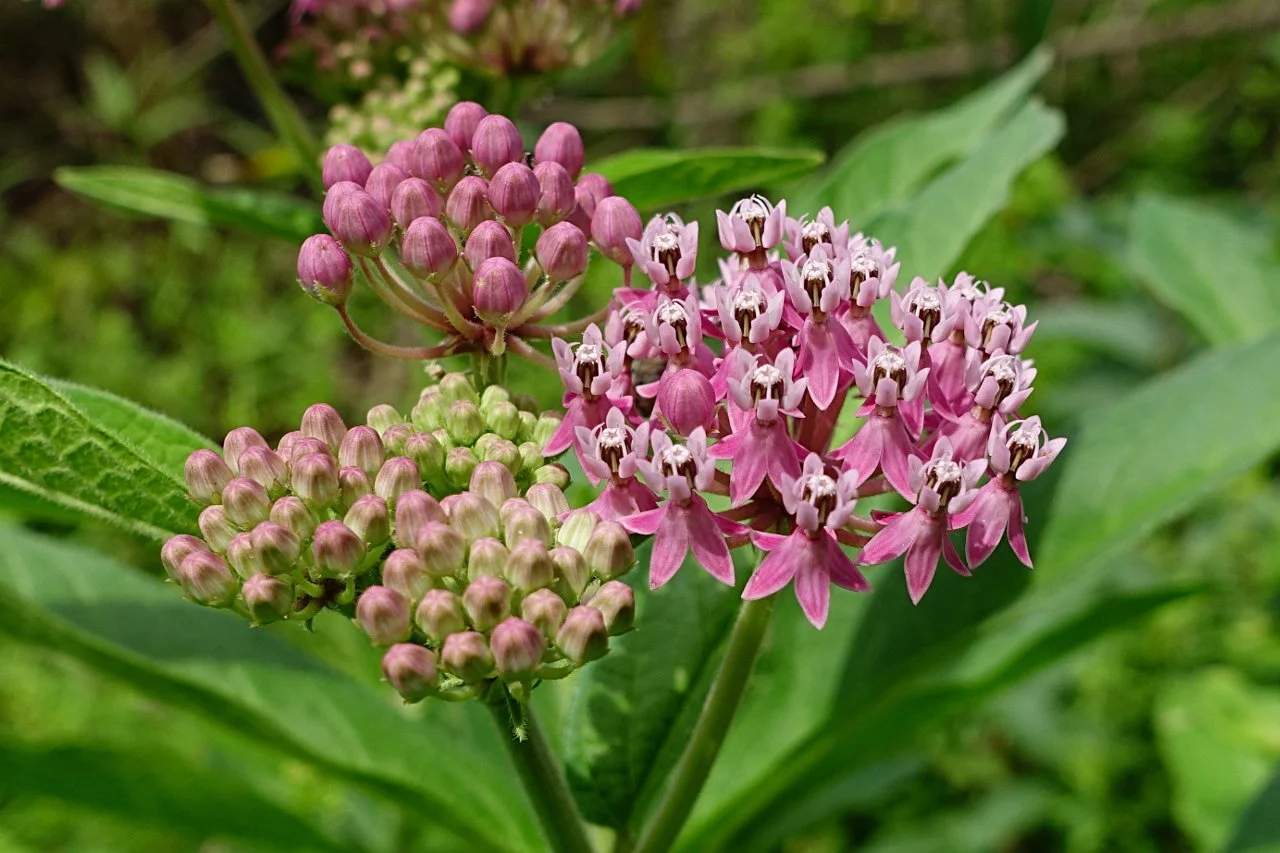
Unlike common milkweed, swamp milkweed usually grows as an upright clump rather than spreading by wide underground colonies. It has narrow, opposite leaves, smooth stems, and clusters of pink to rose colored flowers held at the top of the plant in summer.
It prefers full sun with steady moisture, but it can handle average garden soil if watered during dry periods. It does not need to be planted directly in standing water. The best spot is moist soil with good light, especially where runoff collects or the soil stays cool longer into summer.
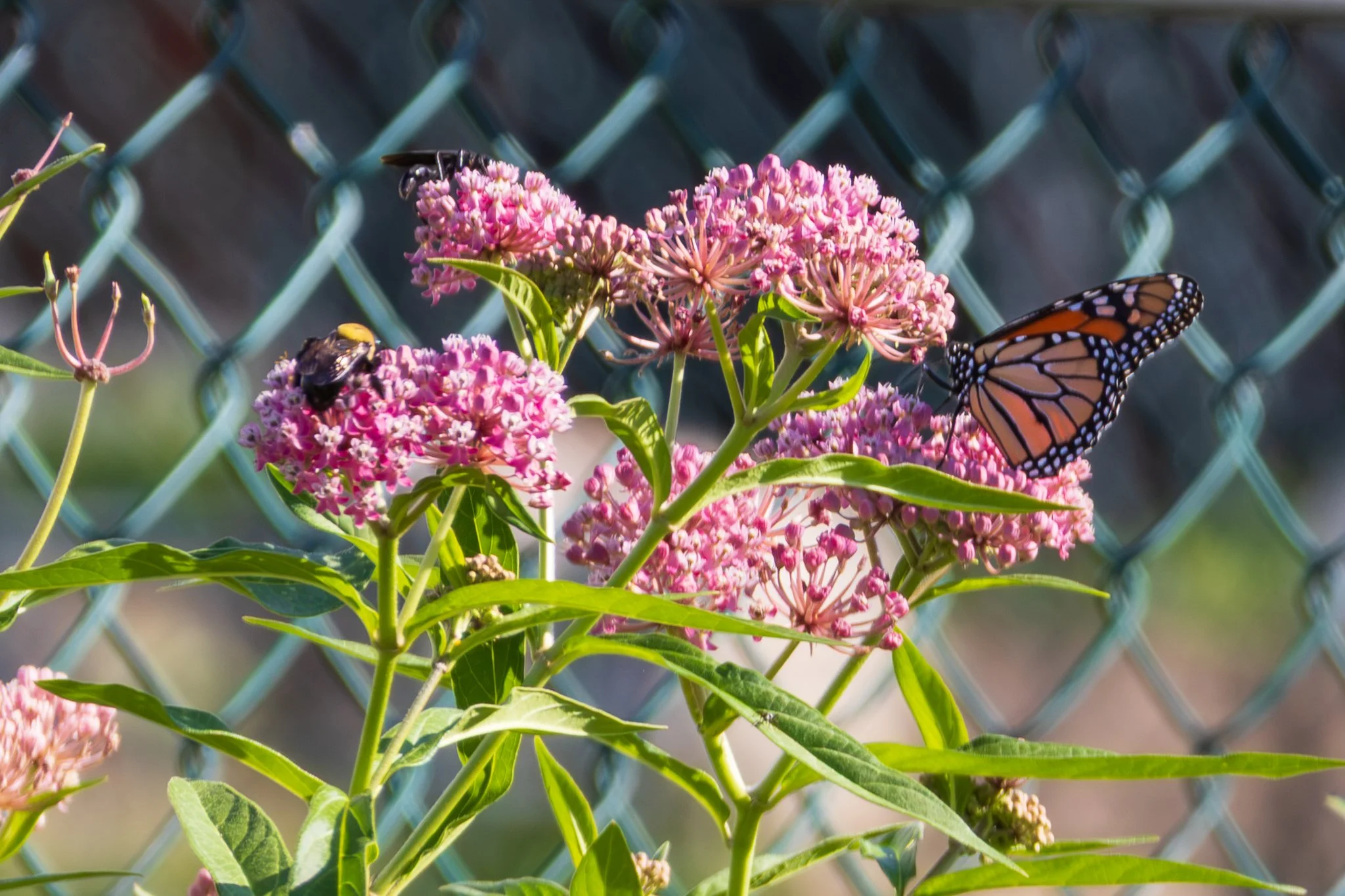
Swamp milkweed is one of the most useful host plants for monarch caterpillars. The flowers also support a wide range of native bees, butterflies, wasps, beetles, and other nectar feeding insects. After flowering, it forms narrow seed pods that split open and release wind carried seeds with silky hairs.
Plants usually reach around 3–5 feet tall. It can self seed in suitable open soil, but it is not usually aggressive. In cleaner garden beds, seedlings can be moved or thinned easily.
This is a strong fit for rain gardens, wet meadow plantings, pond margins, moist pollinator beds, and residential native gardens where you want high ecological value without a plant that runs heavily.
Light: Full sun to part sun
Soil: Medium to wet; tolerates clay and seasonally saturated soil
Height: 3–5 ft
Bloom: Mid summer
Wildlife: Monarch host plant; strong nectar source for butterflies, native bees, wasps, beetles, and other insects
Growth: Upright clump-forming perennial; may self seed in open moist soil, but not aggressively
Swamp milkweed is a native wetland and wet meadow perennial found in marsh edges, floodplains, streambanks, ditches, and low areas where the soil stays consistently moist. In Washington County gardens, it is one of the better milkweeds for rain gardens, pond edges, and heavier soils that do not dry out too quickly.
Unlike common milkweed, swamp milkweed usually grows as an upright clump rather than spreading by wide underground colonies. It has narrow, opposite leaves, smooth stems, and clusters of pink to rose colored flowers held at the top of the plant in summer.
It prefers full sun with steady moisture, but it can handle average garden soil if watered during dry periods. It does not need to be planted directly in standing water. The best spot is moist soil with good light, especially where runoff collects or the soil stays cool longer into summer.
Swamp milkweed is one of the most useful host plants for monarch caterpillars. The flowers also support a wide range of native bees, butterflies, wasps, beetles, and other nectar feeding insects. After flowering, it forms narrow seed pods that split open and release wind carried seeds with silky hairs.
Plants usually reach around 3–5 feet tall. It can self seed in suitable open soil, but it is not usually aggressive. In cleaner garden beds, seedlings can be moved or thinned easily.
This is a strong fit for rain gardens, wet meadow plantings, pond margins, moist pollinator beds, and residential native gardens where you want high ecological value without a plant that runs heavily.
Light: Full sun to part sun
Soil: Medium to wet; tolerates clay and seasonally saturated soil
Height: 3–5 ft
Bloom: Mid summer
Wildlife: Monarch host plant; strong nectar source for butterflies, native bees, wasps, beetles, and other insects
Growth: Upright clump-forming perennial; may self seed in open moist soil, but not aggressively