
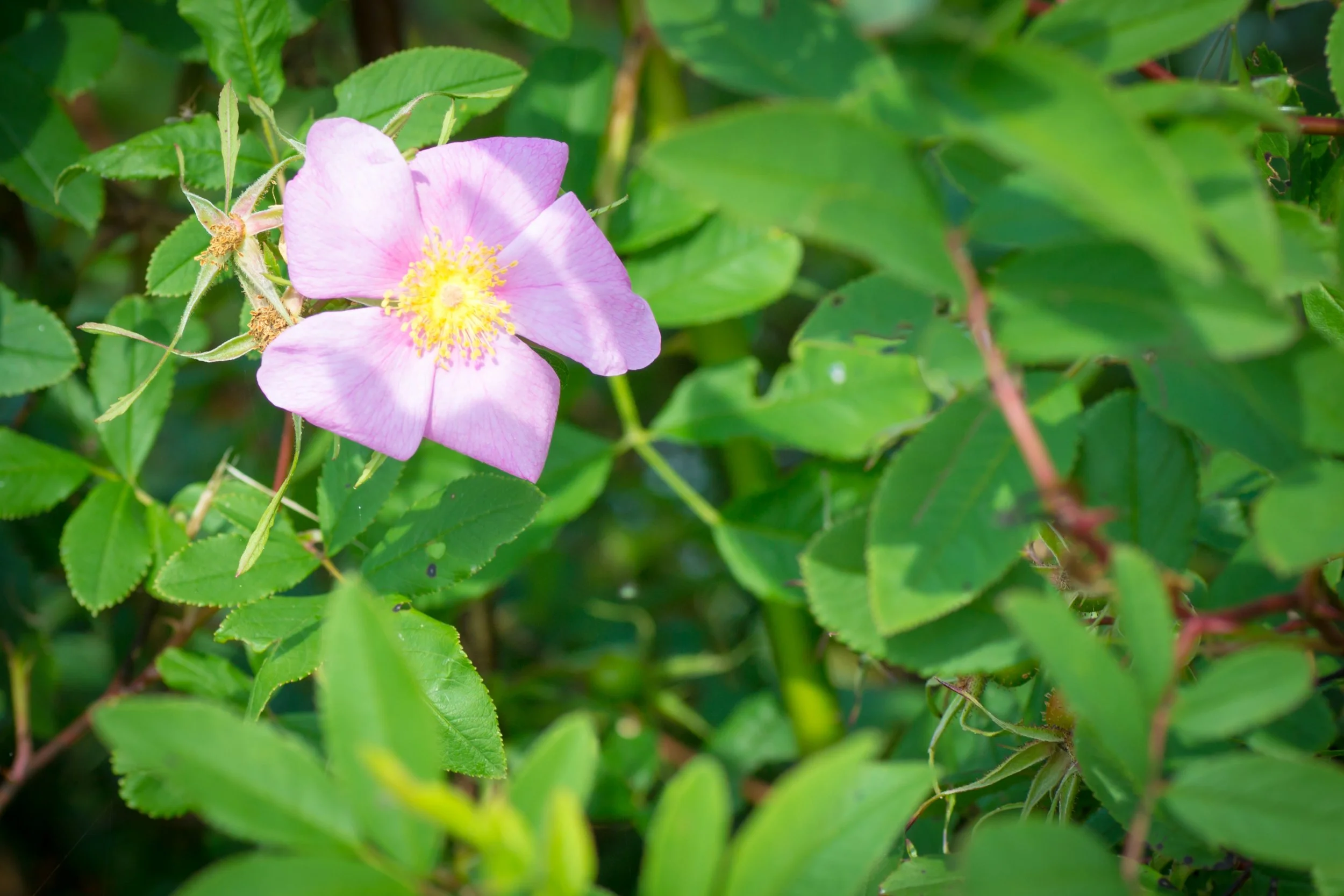
Swamp rose shows up in wet meadows, stream edges, marshes, and low floodplains throughout Washington County. It’s most common in areas where the soil stays consistently wet or periodically flooded during the growing season.
You’ll often find it along ponds, ditches, and slow-moving water where the ground remains saturated but not permanently submerged. It thrives in these conditions and can handle occasional flooding without issue.
The plant grows as an upright, multi-stemmed shrub, typically reaching 3–7 feet tall. In early to mid-summer, it produces clusters of soft pink flowers that attract a steady range of pollinators, including native bees and butterflies.
After blooming, it forms red rose hips that persist into fall and winter, providing an important food source for birds and other wildlife. The foliage is dense and healthy-looking through the growing season, adding structure to wetland plantings.
It spreads gradually by suckering and can form colonies over time, making it useful for stabilizing wet soils and streambanks. It fits well into naturalized plantings where moisture is consistently available.
This is a strong choice for rain gardens, wet meadows, and riparian areas where you want dependable flowering, wildlife value, and soil stabilization in challenging wet conditions.
Light: Full sun to part shade
Soil: Wet to medium-wet; prefers consistently moist or saturated soils
Height: 3–7 ft
Bloom: Early to mid-summer
Wildlife: Native bees, butterflies, birds (hips provide winter food)
Growth: Colony-forming deciduous shrub; spreads by suckers, well-suited to wet soils
Swamp rose shows up in wet meadows, stream edges, marshes, and low floodplains throughout Washington County. It’s most common in areas where the soil stays consistently wet or periodically flooded during the growing season.
You’ll often find it along ponds, ditches, and slow-moving water where the ground remains saturated but not permanently submerged. It thrives in these conditions and can handle occasional flooding without issue.
The plant grows as an upright, multi-stemmed shrub, typically reaching 3–7 feet tall. In early to mid-summer, it produces clusters of soft pink flowers that attract a steady range of pollinators, including native bees and butterflies.
After blooming, it forms red rose hips that persist into fall and winter, providing an important food source for birds and other wildlife. The foliage is dense and healthy-looking through the growing season, adding structure to wetland plantings.
It spreads gradually by suckering and can form colonies over time, making it useful for stabilizing wet soils and streambanks. It fits well into naturalized plantings where moisture is consistently available.
This is a strong choice for rain gardens, wet meadows, and riparian areas where you want dependable flowering, wildlife value, and soil stabilization in challenging wet conditions.
Light: Full sun to part shade
Soil: Wet to medium-wet; prefers consistently moist or saturated soils
Height: 3–7 ft
Bloom: Early to mid-summer
Wildlife: Native bees, butterflies, birds (hips provide winter food)
Growth: Colony-forming deciduous shrub; spreads by suckers, well-suited to wet soils