
Purple lovegrass starts showing up in open, dry ground across Washington County once summer settles in. It’s common in fields, roadsides, and sandy or rocky areas where the soil is thin and doesn’t hold much moisture.
It’s well adapted to those conditions and doesn’t need much to establish. Where other plants struggle, this one holds on and fills space without becoming aggressive.
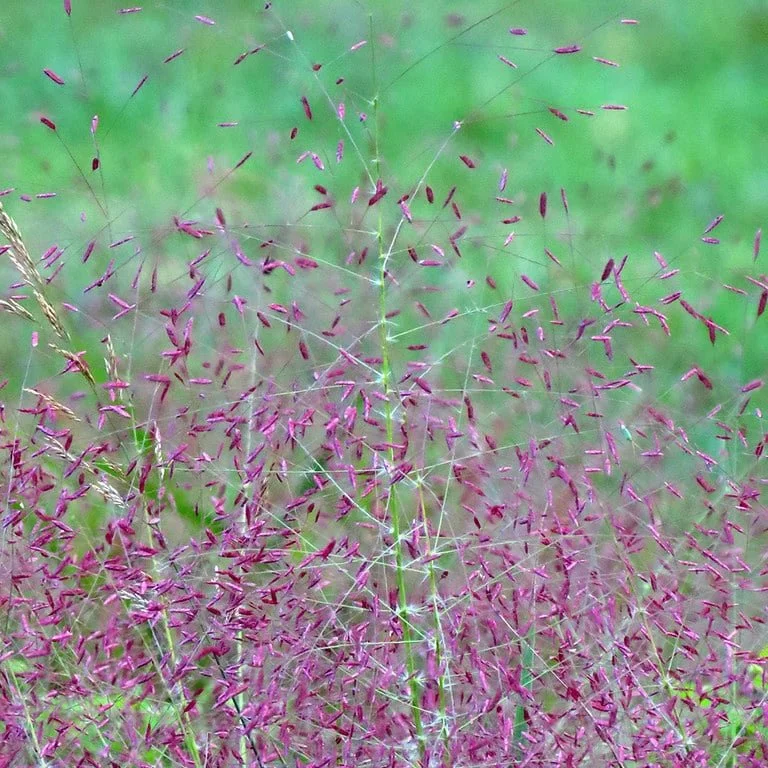
The grass itself stays fairly low, but by late summer it sends up airy, cloud-like seed heads that give it a soft purple haze. It stands out more for that effect than for any bold structure.
It usually stays around 1–2 feet tall at the base, with taller flowering stems rising above. It grows in clumps and slowly expands, helping stabilize soil while still leaving room for other plants.
This is a good fit for dry slopes, open meadows, and areas where you want something light that still holds the ground together. It works especially well when mixed with other sun-loving natives rather than planted alone.
Light: Full sun
Soil: Dry to medium; well-drained, often sandy or rocky soils
Height: 1–3 ft (including flower stalks)
Bloom: Late summer to fall
Wildlife: Seed used by birds; provides cover in open habitats
Growth: Clump-forming grass; non-aggressive, slowly expanding
Purple lovegrass starts showing up in open, dry ground across Washington County once summer settles in. It’s common in fields, roadsides, and sandy or rocky areas where the soil is thin and doesn’t hold much moisture.
It’s well adapted to those conditions and doesn’t need much to establish. Where other plants struggle, this one holds on and fills space without becoming aggressive.
The grass itself stays fairly low, but by late summer it sends up airy, cloud-like seed heads that give it a soft purple haze. It stands out more for that effect than for any bold structure.
It usually stays around 1–2 feet tall at the base, with taller flowering stems rising above. It grows in clumps and slowly expands, helping stabilize soil while still leaving room for other plants.
This is a good fit for dry slopes, open meadows, and areas where you want something light that still holds the ground together. It works especially well when mixed with other sun-loving natives rather than planted alone.
Light: Full sun
Soil: Dry to medium; well-drained, often sandy or rocky soils
Height: 1–3 ft (including flower stalks)
Bloom: Late summer to fall
Wildlife: Seed used by birds; provides cover in open habitats
Growth: Clump-forming grass; non-aggressive, slowly expanding