
This one shows up later, when summer is starting to lean into fall. Around Washington County, Eupatorium fistulosum starts pushing height through June and July, then really comes into its own by mid to late summer when a lot of other plants are tapering off.
You’ll find it naturally in moist meadows, floodplains, stream edges, and low areas where water sticks around. It does best in deeper soils that hold moisture, especially in those richer valley bottoms and along creeks like Antietam and Conococheague where conditions stay consistently damp.
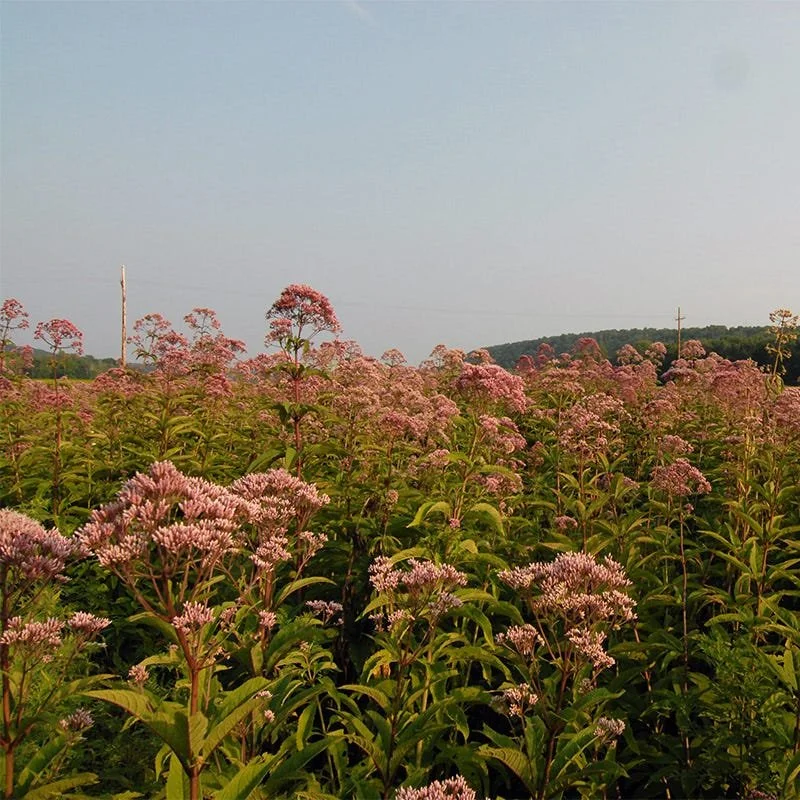
The flower heads form big, soft domes of dusty pink to mauve blooms that sit high above everything else. When it’s in bloom, it’s covered in activity. This is one of the strongest late-season pollinator plants you can put in the ground here.
It usually grows 5–8 feet tall, sometimes pushing higher in good soil. The structure is upright and bold, so it works best toward the back of plantings or in areas where you want height and presence. It spreads slowly over time but doesn’t run aggressively.
This is a go-to for wet areas, rain gardens, drainage zones, and naturalized meadow edges. If you’ve got a spot that stays moist and needs something that actually fills space and supports wildlife, this is one of the best choices you’ve got.
Light: Full sun (6+ hrs) to part sun (3–6 hrs)
Soil: Average to wet; prefers consistently moist, fertile soils
Height: 5–8 ft
Bloom: July to September
Wildlife: High pollinator value, especially butterflies and native bees
Growth: Clump-forming perennial; slowly expanding, not invasive
This one shows up later, when summer is starting to lean into fall. Around Washington County, Eupatorium fistulosum starts pushing height through June and July, then really comes into its own by mid to late summer when a lot of other plants are tapering off.
You’ll find it naturally in moist meadows, floodplains, stream edges, and low areas where water sticks around. It does best in deeper soils that hold moisture, especially in those richer valley bottoms and along creeks like Antietam and Conococheague where conditions stay consistently damp.
The flower heads form big, soft domes of dusty pink to mauve blooms that sit high above everything else. When it’s in bloom, it’s covered in activity. This is one of the strongest late-season pollinator plants you can put in the ground here.
It usually grows 5–8 feet tall, sometimes pushing higher in good soil. The structure is upright and bold, so it works best toward the back of plantings or in areas where you want height and presence. It spreads slowly over time but doesn’t run aggressively.
This is a go-to for wet areas, rain gardens, drainage zones, and naturalized meadow edges. If you’ve got a spot that stays moist and needs something that actually fills space and supports wildlife, this is one of the best choices you’ve got.
Light: Full sun (6+ hrs) to part sun (3–6 hrs)
Soil: Average to wet; prefers consistently moist, fertile soils
Height: 5–8 ft
Bloom: July to September
Wildlife: High pollinator value, especially butterflies and native bees
Growth: Clump-forming perennial; slowly expanding, not invasive