 Image 1 of 1
This one shows up in Washington County in open woods, glades, prairies, and field edges where the soil stays fairly dry and drains well. You'll often find it on rocky hillsides and in limestone-based soils that don't hold much moisture.
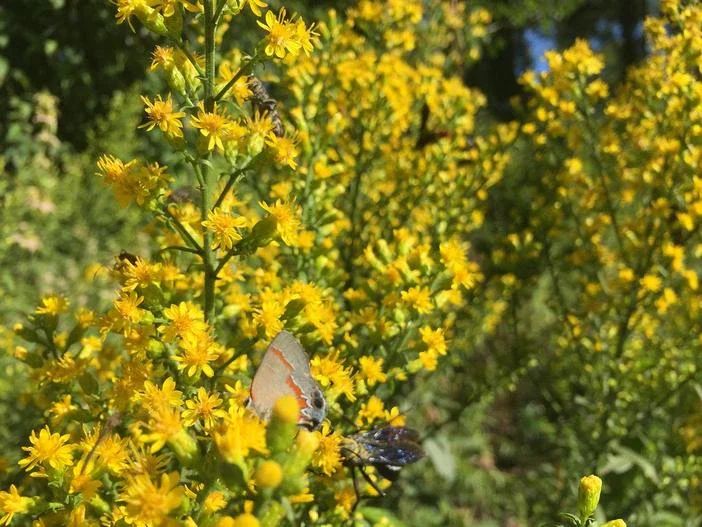
It grows upright, usually reaching 2–5 feet tall, with sturdy stems that rarely need support. By late summer and into fall, it produces dense spikes of bright golden-yellow flowers that stand above the foliage and remain showy for weeks.
It tolerates heat, drought, and lean soils once established, making it a reliable choice for naturalized plantings and native gardens. Unlike some goldenrods, it tends to stay in a defined clump rather than spreading aggressively, allowing it to mix well with neighboring plants.
The flowers attract a wide range of pollinators, including native bees, butterflies, and beneficial insects, providing an important late-season nectar source.
This is one of those plants that brings strong color and structure to a planting just when many summer blooms are fading. Easy to grow, long-lived, and dependable year after year.
Light: Full sun to part shade
Soil: Dry to medium; well-drained, tolerates rocky and limestone soils
Height: 2–5 ft
Bloom: Late summer into fall
Wildlife: Native bees, butterflies, and other pollinators
Growth: Clump-forming perennial; drought tolerant, dies back in winter and returns in spring
This one shows up in Washington County in open woods, glades, prairies, and field edges where the soil stays fairly dry and drains well. You'll often find it on rocky hillsides and in limestone-based soils that don't hold much moisture.
It grows upright, usually reaching 2–5 feet tall, with sturdy stems that rarely need support. By late summer and into fall, it produces dense spikes of bright golden-yellow flowers that stand above the foliage and remain showy for weeks.
It tolerates heat, drought, and lean soils once established, making it a reliable choice for naturalized plantings and native gardens. Unlike some goldenrods, it tends to stay in a defined clump rather than spreading aggressively, allowing it to mix well with neighboring plants.
The flowers attract a wide range of pollinators, including native bees, butterflies, and beneficial insects, providing an important late-season nectar source.
This is one of those plants that brings strong color and structure to a planting just when many summer blooms are fading. Easy to grow, long-lived, and dependable year after year.
Light: Full sun to part shade
Soil: Dry to medium; well-drained, tolerates rocky and limestone soils
Height: 2–5 ft
Bloom: Late summer into fall
Wildlife: Native bees, butterflies, and other pollinators
Growth: Clump-forming perennial; drought tolerant, dies back in winter and returns in spring