
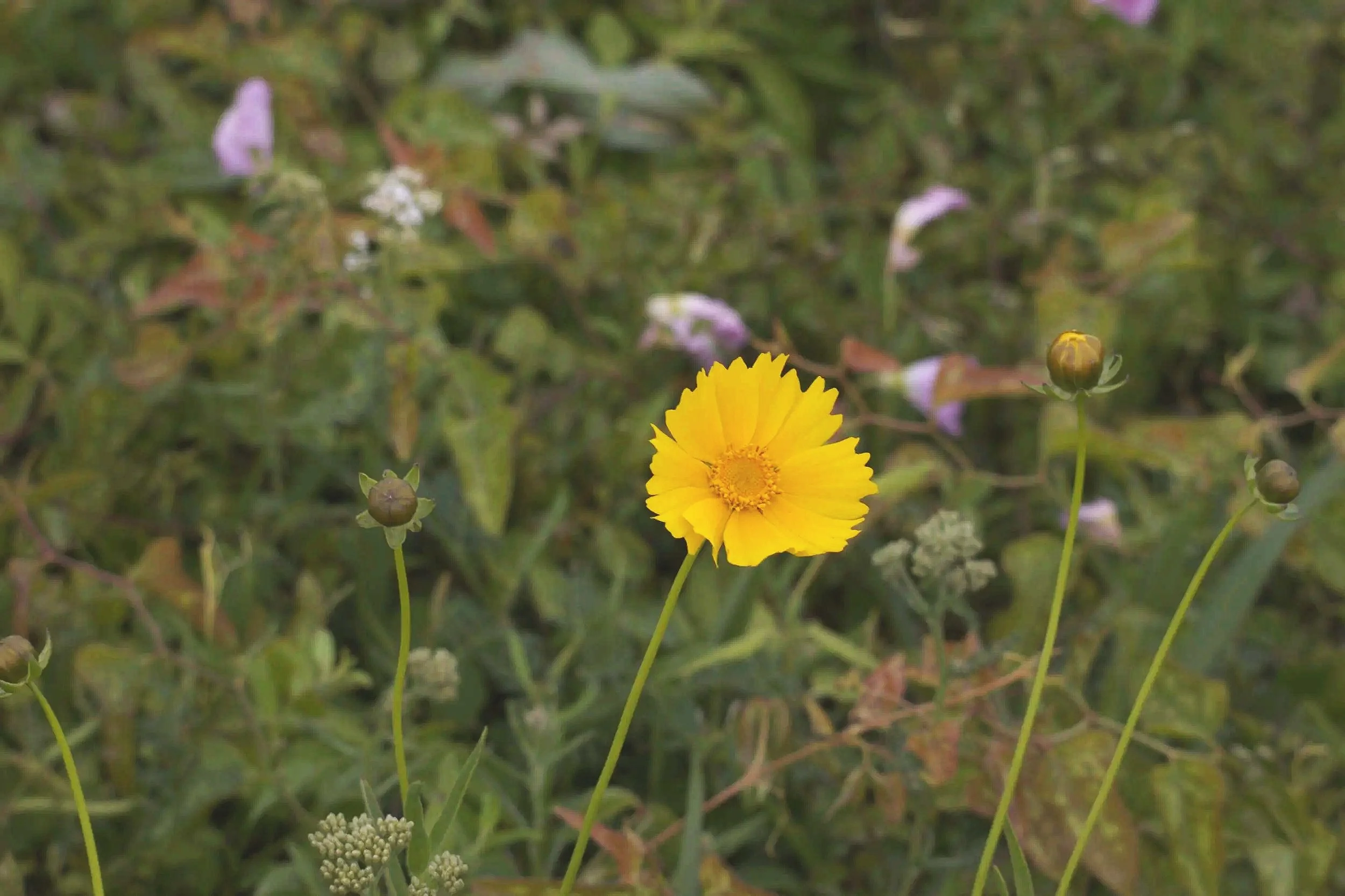
Lanceleaf coreopsis is one of those native wildflowers that looks cheerful, but it is tougher than people expect. Around Washington County, it fits naturally into sunny, open places like dry meadows, roadside edges, slopes, and thinner soils where heavy garden plants might struggle.
This is a strong plant for lean, well-drained ground. It does not need rich soil or constant attention to perform well. In fact, it usually does better when it is not overfed. That makes it a great match for rocky, dry, open areas, especially places where you want quick color without building a high-maintenance flower bed.
When it blooms, the bright yellow flowers bring a clean, classic meadow look. It usually starts flowering in late spring into early summer, which helps bridge the gap before a lot of the mid and late summer native flowers take over. Pollinators use the blooms heavily, especially native bees, small butterflies, and other beneficial insects.
Lanceleaf coreopsis usually stays around 1–2 feet tall, making it easy to work into the front or middle of a planting. It has a looser, natural look, but it can still feel intentional when planted in groups. It also spreads by seed over time, which can be helpful in meadow plantings, slope work, and restoration areas where you want plants to fill in naturally.
This is a great choice for sunny native gardens, dry slopes, meadow edges, and early-season pollinator plantings where you want dependable color and ecological value without needing perfect soil.
Light: Full sun
Soil: Dry to medium; well-drained, rocky, sandy, or lean soils
Height: 1–2 ft
Bloom: Late spring to early summer
Wildlife: Native bees, butterflies, beneficial insects, seed-eating birds
Growth: Short-lived perennial; clump-forming; can self-seed naturally in open soil
Lanceleaf coreopsis is one of those native wildflowers that looks cheerful, but it is tougher than people expect. Around Washington County, it fits naturally into sunny, open places like dry meadows, roadside edges, slopes, and thinner soils where heavy garden plants might struggle.
This is a strong plant for lean, well-drained ground. It does not need rich soil or constant attention to perform well. In fact, it usually does better when it is not overfed. That makes it a great match for rocky, dry, open areas, especially places where you want quick color without building a high-maintenance flower bed.
When it blooms, the bright yellow flowers bring a clean, classic meadow look. It usually starts flowering in late spring into early summer, which helps bridge the gap before a lot of the mid and late summer native flowers take over. Pollinators use the blooms heavily, especially native bees, small butterflies, and other beneficial insects.
Lanceleaf coreopsis usually stays around 1–2 feet tall, making it easy to work into the front or middle of a planting. It has a looser, natural look, but it can still feel intentional when planted in groups. It also spreads by seed over time, which can be helpful in meadow plantings, slope work, and restoration areas where you want plants to fill in naturally.
This is a great choice for sunny native gardens, dry slopes, meadow edges, and early-season pollinator plantings where you want dependable color and ecological value without needing perfect soil.
Light: Full sun
Soil: Dry to medium; well-drained, rocky, sandy, or lean soils
Height: 1–2 ft
Bloom: Late spring to early summer
Wildlife: Native bees, butterflies, beneficial insects, seed-eating birds
Growth: Short-lived perennial; clump-forming; can self-seed naturally in open soil