
Great blue lobelia shows up in moist meadows, stream corridors, woodland edges, and low ground around Washington County. It’s most common in areas where the soil stays consistently moist through the growing season but doesn’t remain flooded for long periods.
You’ll usually find it in rich soils with reliable moisture, often growing alongside other wetland and meadow species. It performs best where it doesn’t dry out completely during the heat of summer.
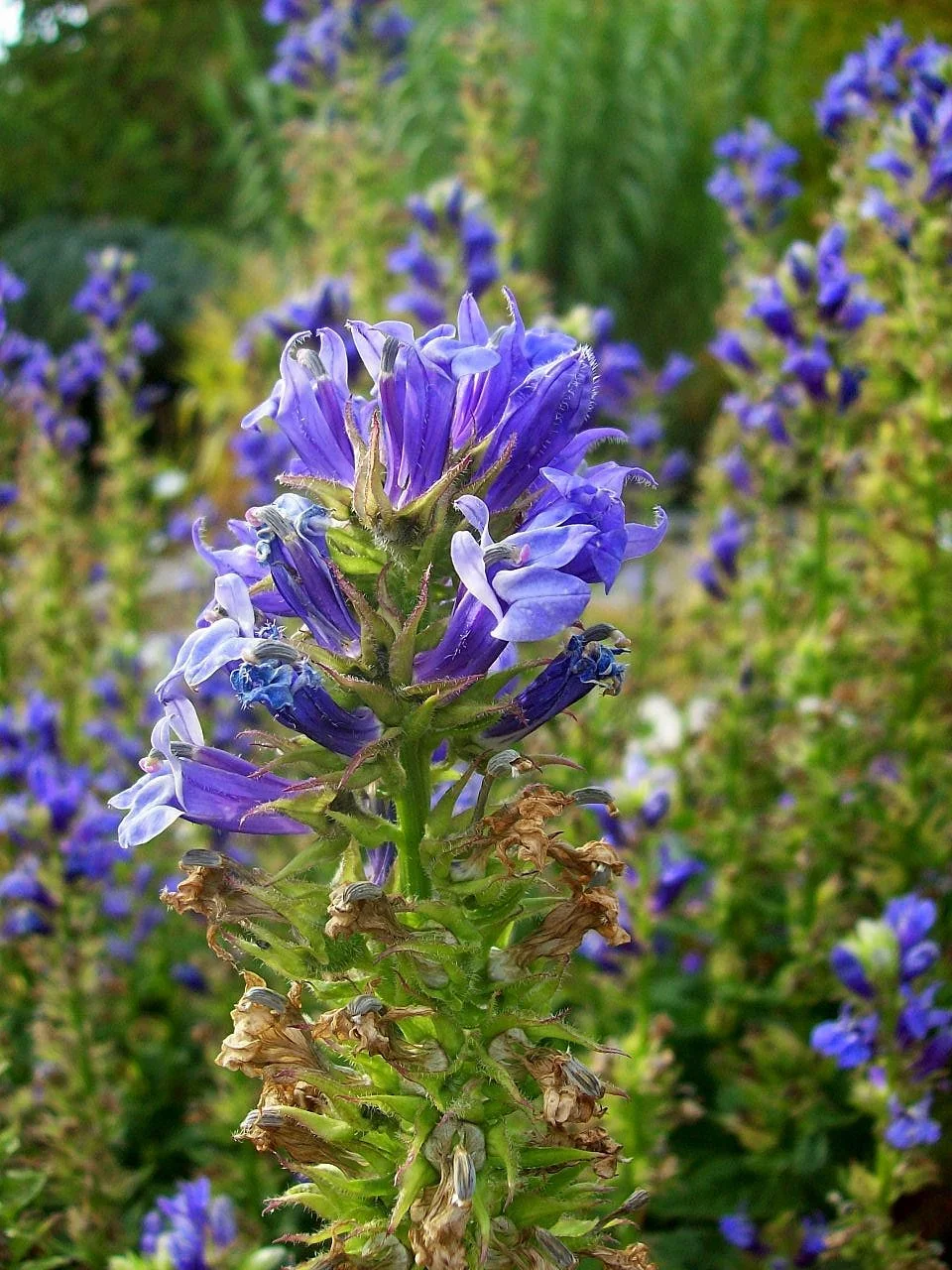
The plant grows upright with sturdy stems topped by spikes of deep blue flowers that bloom from late summer into early fall. The flowers are especially attractive to bumblebees and stand out at a time when many other native plants are beginning to fade.
It typically reaches 2–4 feet tall and forms upright clumps that blend well into rain gardens, meadow plantings, and naturalized landscapes. It may self-seed in favorable conditions but generally stays easy to manage.
The late-season blooms provide an important nectar source for pollinators and add a strong splash of blue to plantings dominated by yellows and purples later in the season.
This is a dependable choice for rain gardens, wet meadow plantings, and other areas with consistent moisture where you want long-lasting color and strong wildlife value.
Light: Full sun to part shade
Soil: Medium to wet; prefers consistent moisture
Height: 2–4 ft
Bloom: Late summer into early fall
Wildlife: Bumblebees, butterflies, and other pollinators
Growth: Clump-forming perennial; may self-seed lightly, dies back in winter and returns in spring
Great blue lobelia shows up in moist meadows, stream corridors, woodland edges, and low ground around Washington County. It’s most common in areas where the soil stays consistently moist through the growing season but doesn’t remain flooded for long periods.
You’ll usually find it in rich soils with reliable moisture, often growing alongside other wetland and meadow species. It performs best where it doesn’t dry out completely during the heat of summer.
The plant grows upright with sturdy stems topped by spikes of deep blue flowers that bloom from late summer into early fall. The flowers are especially attractive to bumblebees and stand out at a time when many other native plants are beginning to fade.
It typically reaches 2–4 feet tall and forms upright clumps that blend well into rain gardens, meadow plantings, and naturalized landscapes. It may self-seed in favorable conditions but generally stays easy to manage.
The late-season blooms provide an important nectar source for pollinators and add a strong splash of blue to plantings dominated by yellows and purples later in the season.
This is a dependable choice for rain gardens, wet meadow plantings, and other areas with consistent moisture where you want long-lasting color and strong wildlife value.
Light: Full sun to part shade
Soil: Medium to wet; prefers consistent moisture
Height: 2–4 ft
Bloom: Late summer into early fall
Wildlife: Bumblebees, butterflies, and other pollinators
Growth: Clump-forming perennial; may self-seed lightly, dies back in winter and returns in spring