
This is one you’ll find in Washington County in woodland settings, especially along edges and under partial canopy. It’s not a plant for open, dry slopes. It does better where there’s some shade, and the soil holds a bit more moisture, even if it’s still tied into limestone.
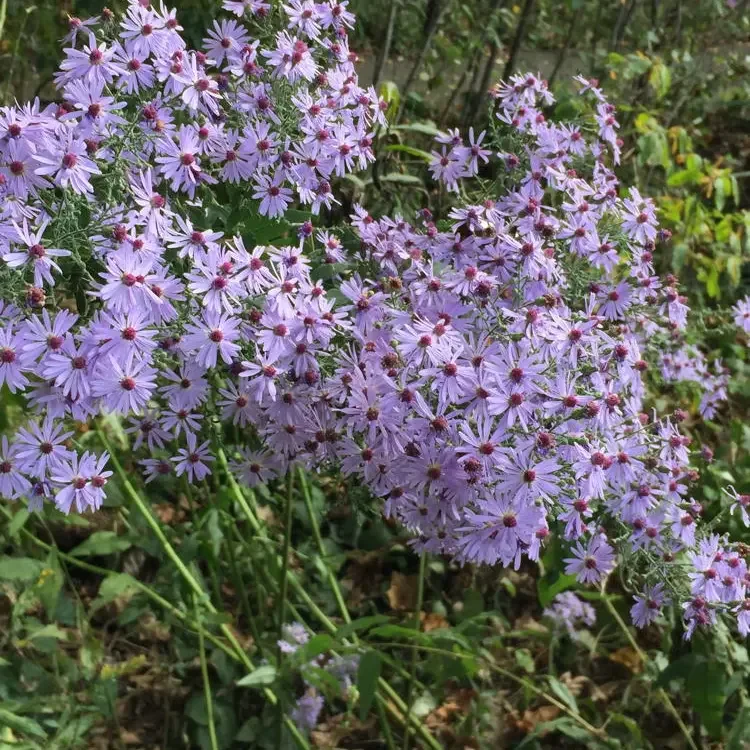
It blooms late, usually in September and into October. The flowers are small, light blue to pale purple, and come in heavy. Once it’s going, the whole plant takes on that haze of color and stays active with pollinators until late in the season.
It usually grows around 2–4 feet and has a looser structure than some of the other asters. It can spread over time, especially in good conditions, and will start to fill in if you give it space.
This is a good fit for woodland edges, light shade plantings, and areas where you’re trying to carry bloom into fall without forcing a dry-site plant into the wrong conditions.
Light: Part shade to light sun
Soil: Medium; well-drained, tolerates limestone soils with some moisture
Height: 2–4 ft
Bloom: September–October
Wildlife: Late-season pollinators
Growth: Spreading perennial; can form patches over time, dies back in winter and returns in spring
This is one you’ll find in Washington County in woodland settings, especially along edges and under partial canopy. It’s not a plant for open, dry slopes. It does better where there’s some shade, and the soil holds a bit more moisture, even if it’s still tied into limestone.
It blooms late, usually in September and into October. The flowers are small, light blue to pale purple, and come in heavy. Once it’s going, the whole plant takes on that haze of color and stays active with pollinators until late in the season.
It usually grows around 2–4 feet and has a looser structure than some of the other asters. It can spread over time, especially in good conditions, and will start to fill in if you give it space.
This is a good fit for woodland edges, light shade plantings, and areas where you’re trying to carry bloom into fall without forcing a dry-site plant into the wrong conditions.
Light: Part shade to light sun
Soil: Medium; well-drained, tolerates limestone soils with some moisture
Height: 2–4 ft
Bloom: September–October
Wildlife: Late-season pollinators
Growth: Spreading perennial; can form patches over time, dies back in winter and returns in spring