
Columbine starts showing up in Washington County right after the true spring ephemerals begin to fade. Once things like bloodroot and trout lily are on their way out, this is one of the plants that carries that early-season transition forward into April and May.
You’ll find it naturally growing along rocky slopes, woodland edges, and especially in those limestone areas where the soil is shallow and drains quickly. It’s well adapted to the kind of ground we have here and doesn’t need rich conditions to establish.
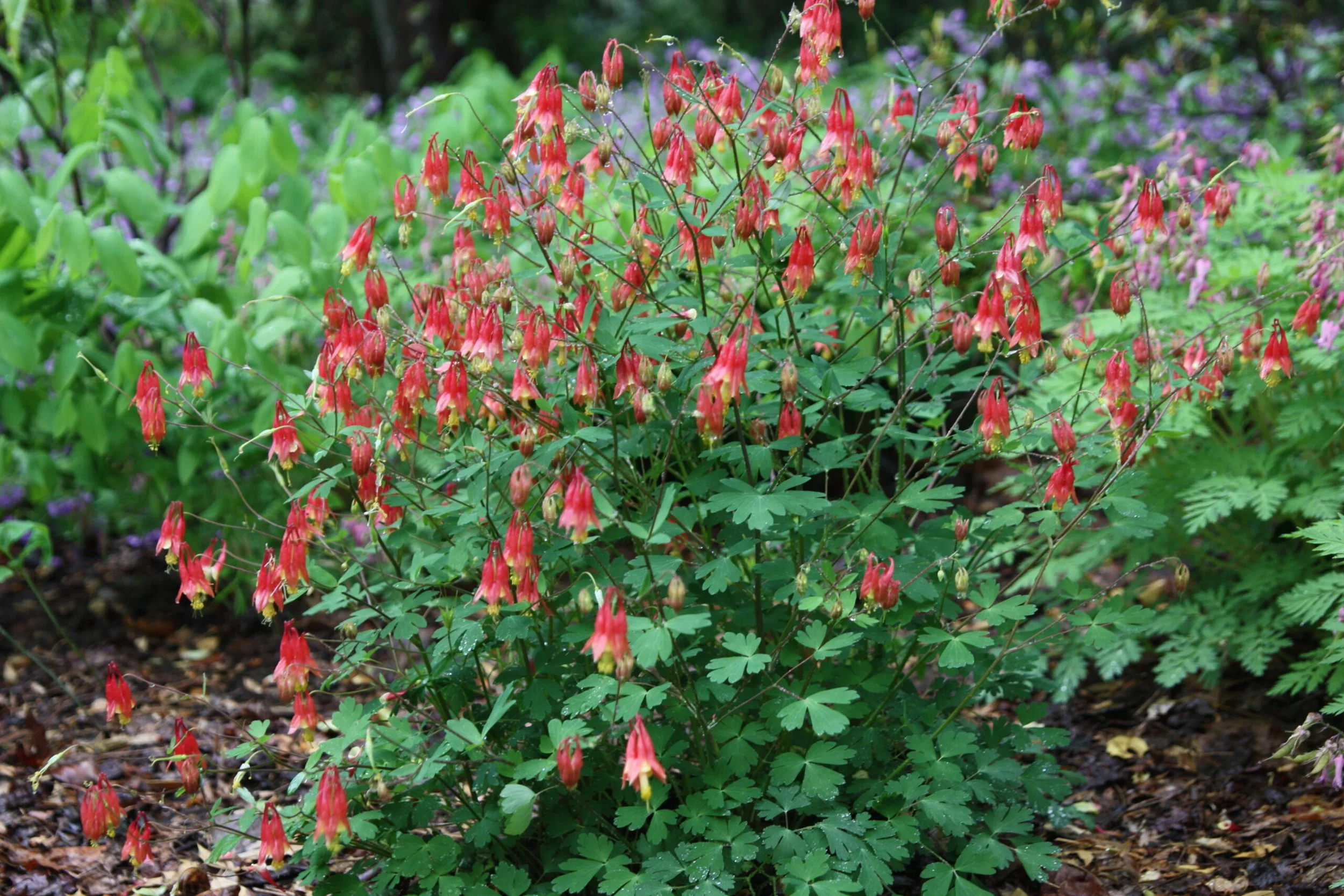
The red and yellow flowers hang down off the stems and are hard to miss once they open. This is one of the key plants for hummingbirds moving through the area, and it lines up well with when they start showing up in the county.
It usually stays around 1–2 feet tall with a light, open structure. It’ll self-seed in the right spots, especially along edges and disturbed pockets in woodland systems, but it never really becomes a problem.
This is a good fit for limestone slopes, woodland borders, and transition zones where sun and shade meet. It works naturally into plantings that are trying to reflect what’s already happening on the ground here.
Light: Part shade to full sun
Soil: Dry to medium; well-drained, often shallow or rocky limestone soils
Height: 1–2 ft
Bloom: April to May
Wildlife: Hummingbirds, early-season pollinators
Growth: Short-lived perennial; self-seeds lightly, persists where conditions are right
Columbine starts showing up in Washington County right after the true spring ephemerals begin to fade. Once things like bloodroot and trout lily are on their way out, this is one of the plants that carries that early-season transition forward into April and May.
You’ll find it naturally growing along rocky slopes, woodland edges, and especially in those limestone areas where the soil is shallow and drains quickly. It’s well adapted to the kind of ground we have here and doesn’t need rich conditions to establish.
The red and yellow flowers hang down off the stems and are hard to miss once they open. This is one of the key plants for hummingbirds moving through the area, and it lines up well with when they start showing up in the county.
It usually stays around 1–2 feet tall with a light, open structure. It’ll self-seed in the right spots, especially along edges and disturbed pockets in woodland systems, but it never really becomes a problem.
This is a good fit for limestone slopes, woodland borders, and transition zones where sun and shade meet. It works naturally into plantings that are trying to reflect what’s already happening on the ground here.
Light: Part shade to full sun
Soil: Dry to medium; well-drained, often shallow or rocky limestone soils
Height: 1–2 ft
Bloom: April to May
Wildlife: Hummingbirds, early-season pollinators
Growth: Short-lived perennial; self-seeds lightly, persists where conditions are right