
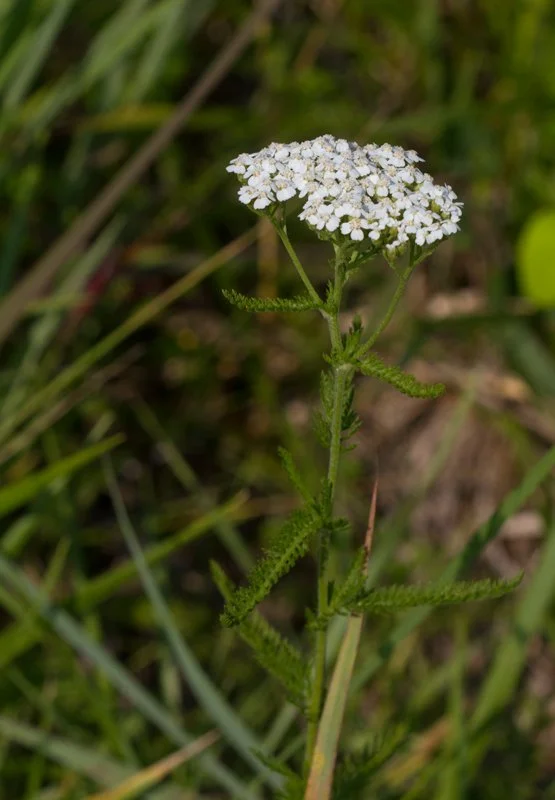
Yarrow is one of those plants you don’t fully appreciate until you see how much life it brings in. It doesn’t have huge flashy blooms, but those flat clusters of small white flowers stay active all summer and constantly have something working them.
This species is native across a huge range, including right here through the Appalachian region. You’ll find it in fields, roadsides, rocky slopes, and anywhere the soil isn’t doing anyone any favors. It thrives in full sun and actually prefers drier, well-drained conditions. If you’ve got a tough spot where other plants struggle to establish, yarrow usually steps in and handles it without much effort.
It grows as a low, spreading perennial with soft, finely divided foliage and usually tops out around 1–3 feet. Over time, it will slowly spread and knit together, making it really useful for filling space and stabilizing soil without becoming aggressive or hard to manage.
Pollinator activity on yarrow is constant. You’ll see native bees, small beneficial wasps, flies, and butterflies working across the flower clusters throughout the day. It’s one of those plants that supports the smaller, often overlooked insects that play a big role in keeping ecosystems balanced.
It’s a tough, dependable native that works well in meadows, dry plantings, and restoration areas where you need something that can hold its own and contribute long-term.
Light: Full sun
Soil: Dry to medium; well-drained, rocky, or poor soils
Height: 1–3 ft
Bloom: Early summer through late summer
Wildlife: Native bees, butterflies, beneficial wasps, flies
Growth: Spreading perennial; forms colonies over time, dies back in winter and returns in spring
Yarrow is one of those plants you don’t fully appreciate until you see how much life it brings in. It doesn’t have huge flashy blooms, but those flat clusters of small white flowers stay active all summer and constantly have something working them.
This species is native across a huge range, including right here through the Appalachian region. You’ll find it in fields, roadsides, rocky slopes, and anywhere the soil isn’t doing anyone any favors. It thrives in full sun and actually prefers drier, well-drained conditions. If you’ve got a tough spot where other plants struggle to establish, yarrow usually steps in and handles it without much effort.
It grows as a low, spreading perennial with soft, finely divided foliage and usually tops out around 1–3 feet. Over time, it will slowly spread and knit together, making it really useful for filling space and stabilizing soil without becoming aggressive or hard to manage.
Pollinator activity on yarrow is constant. You’ll see native bees, small beneficial wasps, flies, and butterflies working across the flower clusters throughout the day. It’s one of those plants that supports the smaller, often overlooked insects that play a big role in keeping ecosystems balanced.
It’s a tough, dependable native that works well in meadows, dry plantings, and restoration areas where you need something that can hold its own and contribute long-term.
Light: Full sun
Soil: Dry to medium; well-drained, rocky, or poor soils
Height: 1–3 ft
Bloom: Early summer through late summer
Wildlife: Native bees, butterflies, beneficial wasps, flies
Growth: Spreading perennial; forms colonies over time, dies back in winter and returns in spring