
Fragrant sumac shows up on dry slopes, woodland edges, limestone outcrops, and open woods throughout Washington County. It’s especially common in well-drained soils where other shrubs struggle, including rocky and shallow limestone areas.
You'll often find it in full sun to partial shade, forming low colonies along hillsides and edges of fields. Once established, it handles drought, heat, and poor soils very well and can persist in tough sites with little care.
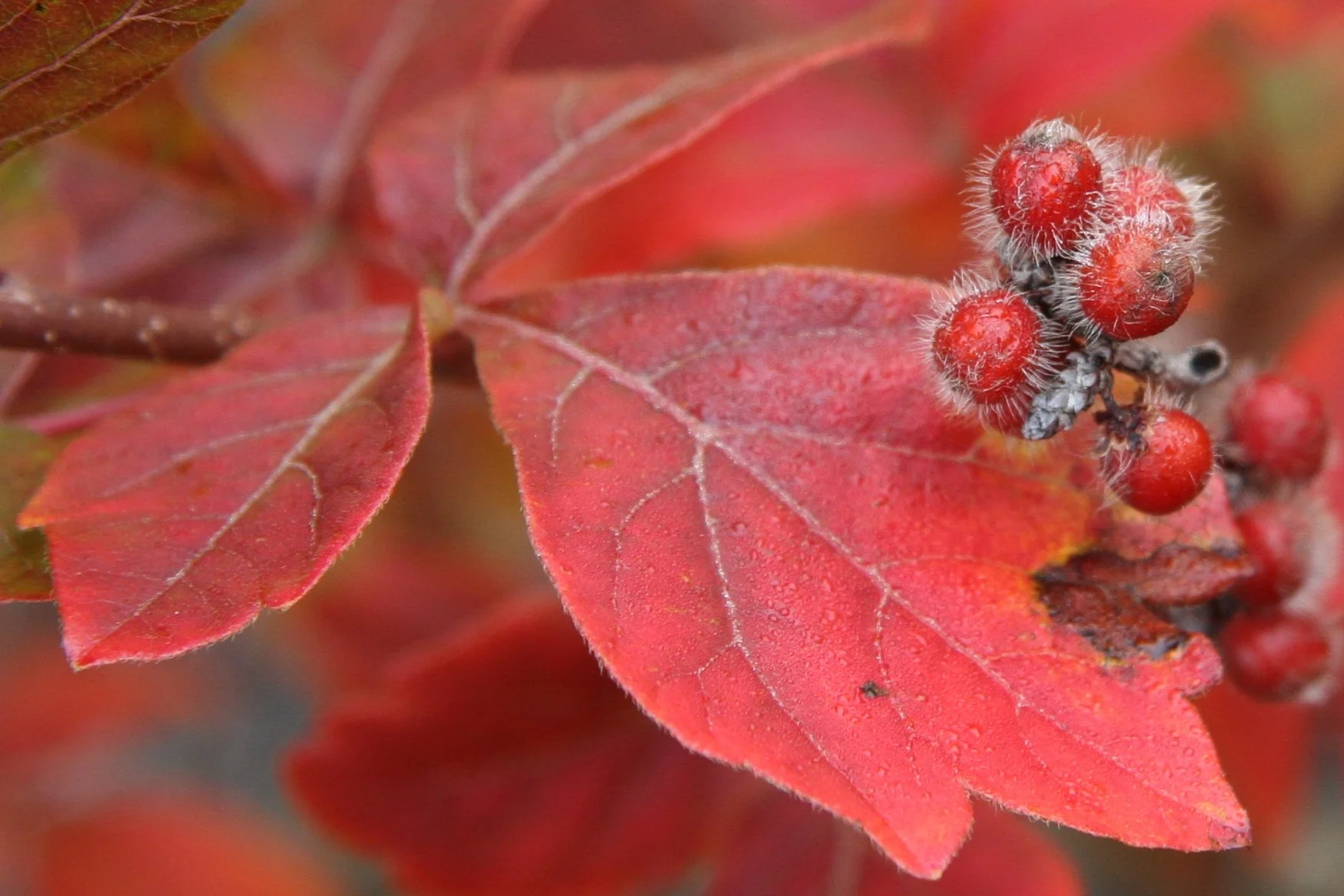
The plant typically grows as a low, spreading shrub, usually reaching 2–6 feet tall but often wider than it is tall. In early spring, before the leaves fully expand, it produces small yellow flower clusters that attract early pollinators. By late summer, it develops red, fuzzy fruit clusters that persist into fall and provide food for wildlife.
Its leaves are strongly aromatic when crushed, often described as citrus-like, which is one of its easiest identifying features. In fall, the foliage turns bright shades of orange, red, and purple, adding strong seasonal color to dry landscapes.
Fragrant sumac spreads by root suckers to form dense colonies, making it useful for stabilizing dry slopes and covering difficult areas where erosion control is needed.
This is a strong choice for native hedgerows, dry slopes, restoration plantings, and naturalized areas where you want toughness, wildlife value, and seasonal color with minimal maintenance.
Light: Full sun to part shade
Soil: Dry to medium; prefers well-drained, rocky, or sandy soils
Height: 2–6 ft
Bloom: Early spring
Wildlife: Native bees, birds, and small mammals
Growth: Colony-forming deciduous shrub; spreads by suckers, forming dense thickets over time
Fragrant sumac shows up on dry slopes, woodland edges, limestone outcrops, and open woods throughout Washington County. It’s especially common in well-drained soils where other shrubs struggle, including rocky and shallow limestone areas.
You'll often find it in full sun to partial shade, forming low colonies along hillsides and edges of fields. Once established, it handles drought, heat, and poor soils very well and can persist in tough sites with little care.
The plant typically grows as a low, spreading shrub, usually reaching 2–6 feet tall but often wider than it is tall. In early spring, before the leaves fully expand, it produces small yellow flower clusters that attract early pollinators. By late summer, it develops red, fuzzy fruit clusters that persist into fall and provide food for wildlife.
Its leaves are strongly aromatic when crushed, often described as citrus-like, which is one of its easiest identifying features. In fall, the foliage turns bright shades of orange, red, and purple, adding strong seasonal color to dry landscapes.
Fragrant sumac spreads by root suckers to form dense colonies, making it useful for stabilizing dry slopes and covering difficult areas where erosion control is needed.
This is a strong choice for native hedgerows, dry slopes, restoration plantings, and naturalized areas where you want toughness, wildlife value, and seasonal color with minimal maintenance.
Light: Full sun to part shade
Soil: Dry to medium; prefers well-drained, rocky, or sandy soils
Height: 2–6 ft
Bloom: Early spring
Wildlife: Native bees, birds, and small mammals
Growth: Colony-forming deciduous shrub; spreads by suckers, forming dense thickets over time