
 Image 1 of 1
This is one you’ll see around Washington County more in woodland edges and lighter shade, not out on dry, exposed slopes. It tends to show up where there’s some cover and the soil holds a bit more moisture, even if it’s still tied into limestone.
It doesn’t need rich soil, but it does better where things aren’t completely dried out. You’ll find it along edges, under scattered trees, and in those transition areas that don’t stay fully open.
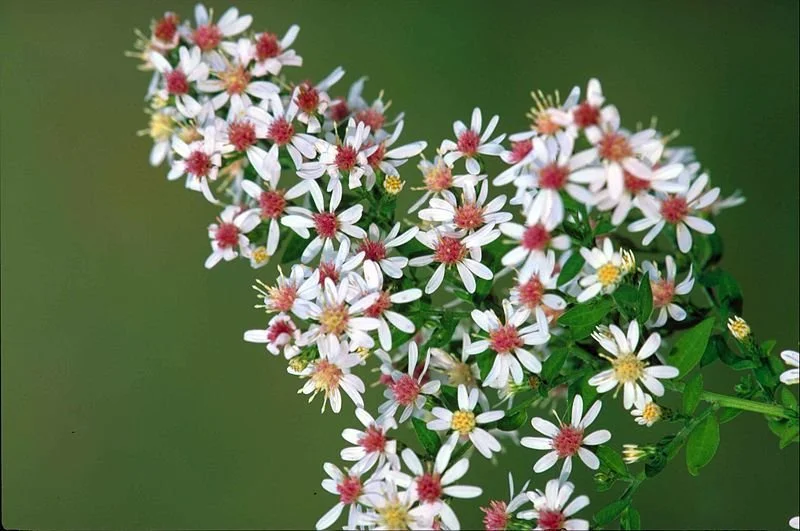
It blooms late, usually September into October. The flowers are small and come in heavy along the stems, so the whole plant ends up covered once it’s going. It’s not bold like some asters, but it carries a lot of activity when everything else is winding down.
It usually grows around 2–3 feet and has a lighter, more open structure. It can spread a bit over time, especially in the right conditions, but it doesn’t get out of control.
This works well for woodland edges, lighter shade plantings, and spots where you need late-season bloom without forcing a dry-site species into the wrong conditions.
Light: Part shade to full sun
Soil: Medium; well-drained, can handle limestone soils with some moisture
Height: 2–3 ft
Bloom: September–October
Wildlife: Late-season pollinators
Growth: Spreading perennial; fills in over time without becoming aggressive
This is one you’ll see around Washington County more in woodland edges and lighter shade, not out on dry, exposed slopes. It tends to show up where there’s some cover and the soil holds a bit more moisture, even if it’s still tied into limestone.
It doesn’t need rich soil, but it does better where things aren’t completely dried out. You’ll find it along edges, under scattered trees, and in those transition areas that don’t stay fully open.
It blooms late, usually September into October. The flowers are small and come in heavy along the stems, so the whole plant ends up covered once it’s going. It’s not bold like some asters, but it carries a lot of activity when everything else is winding down.
It usually grows around 2–3 feet and has a lighter, more open structure. It can spread a bit over time, especially in the right conditions, but it doesn’t get out of control.
This works well for woodland edges, lighter shade plantings, and spots where you need late-season bloom without forcing a dry-site species into the wrong conditions.
Light: Part shade to full sun
Soil: Medium; well-drained, can handle limestone soils with some moisture
Height: 2–3 ft
Bloom: September–October
Wildlife: Late-season pollinators
Growth: Spreading perennial; fills in over time without becoming aggressive