
 Image 1 of 1
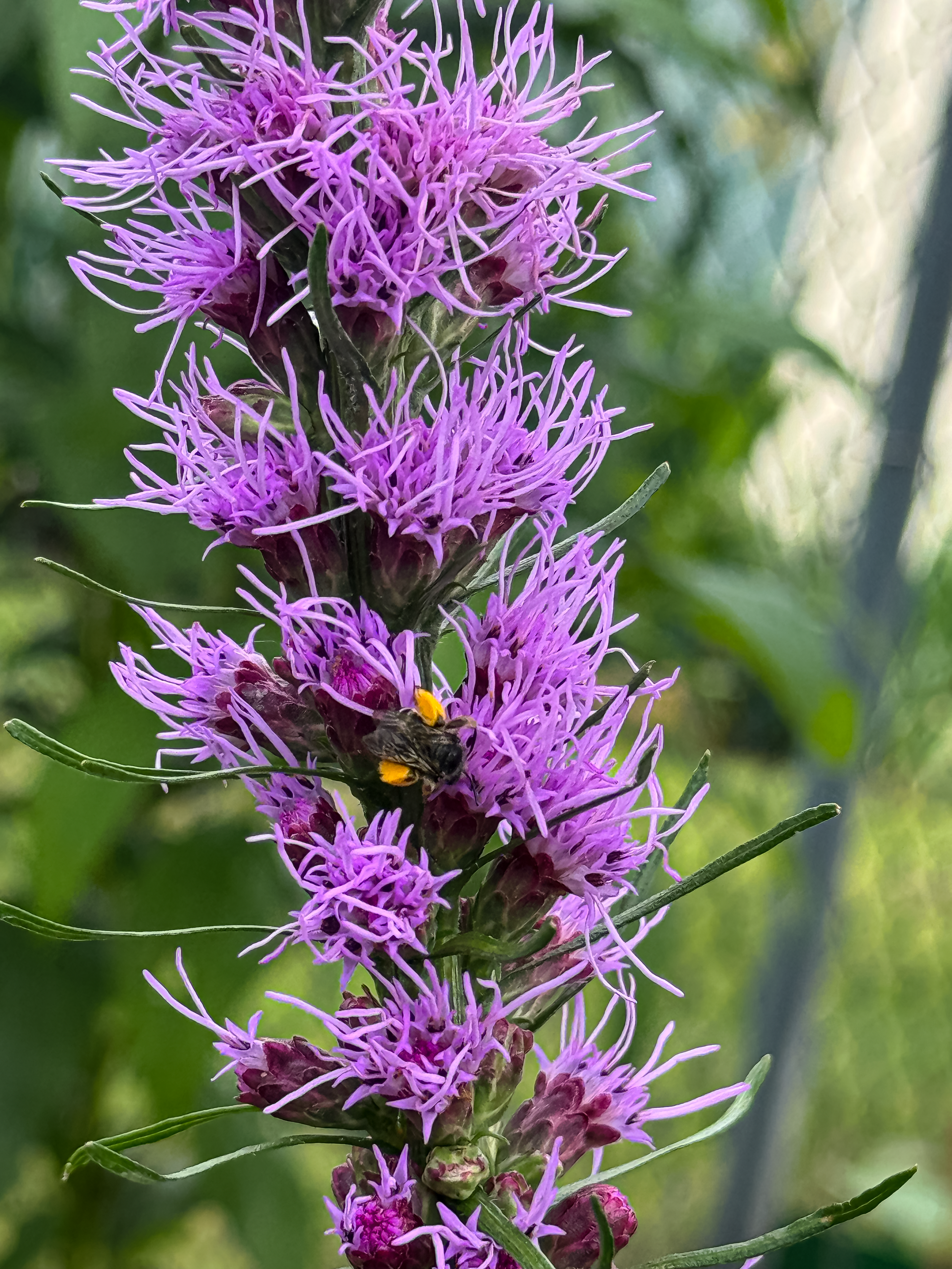
Dense Blazing Star is a vertical powerhouse for any sunny Appalachian garden. This native perennial sends up tall purple flower spikes (2–4 ft) packed tightly with feathery blooms that open from the top downward — a signature look that turns heads and draws pollinators in heavy numbers. The flower wands stand straight even in summer storms, adding strong structure to meadows, borders, and restoration plantings.
This species is native to the Mid-Atlantic and thrives in full sun with moist to average soils. In the Hagerstown Valley and Ridge & Valley province, it performs best in garden loam, clay-loam, or any site that holds a bit of moisture early in the season. Once established, it becomes far more tolerant of dry spells than people expect from a “wet meadow” plant.
Dense Blazing Star is one of the top nectar plants for declining bumblebees, including the American Bumblebee (Bombus pensylvanicus) and Half-black Bumblebee (Bombus vagans). Butterflies — monarchs, swallowtails, hairstreaks, fritillaries, and skippers — swarm the blooms throughout July and August. The thick floral structure offers extended foraging time and abundant pollen, making it a keystone nectar plant in any pollinator-heavy design.
Plant it in groups for maximum impact, mix it into meadow-style combinations, or use it as a vertical accent in native borders. It blends seamlessly with wild bergamot, black-eyed Susan, mountain mint, ironweed, and milkweeds.
Light: Full sun
Soil: Moist to average; clay-loam friendly
Moisture: Medium; more drought-tolerant once established
Height: 2–4 ft
Bloom: Mid to late summer
Wildlife: Bumblebees, monarchs, swallowtails, skippers, native bees
Growth: Clumping perennial; forms tidy crowns that slowly expand
Dense Blazing Star is a vertical powerhouse for any sunny Appalachian garden. This native perennial sends up tall purple flower spikes (2–4 ft) packed tightly with feathery blooms that open from the top downward — a signature look that turns heads and draws pollinators in heavy numbers. The flower wands stand straight even in summer storms, adding strong structure to meadows, borders, and restoration plantings.
This species is native to the Mid-Atlantic and thrives in full sun with moist to average soils. In the Hagerstown Valley and Ridge & Valley province, it performs best in garden loam, clay-loam, or any site that holds a bit of moisture early in the season. Once established, it becomes far more tolerant of dry spells than people expect from a “wet meadow” plant.
Dense Blazing Star is one of the top nectar plants for declining bumblebees, including the American Bumblebee (Bombus pensylvanicus) and Half-black Bumblebee (Bombus vagans). Butterflies — monarchs, swallowtails, hairstreaks, fritillaries, and skippers — swarm the blooms throughout July and August. The thick floral structure offers extended foraging time and abundant pollen, making it a keystone nectar plant in any pollinator-heavy design.
Plant it in groups for maximum impact, mix it into meadow-style combinations, or use it as a vertical accent in native borders. It blends seamlessly with wild bergamot, black-eyed Susan, mountain mint, ironweed, and milkweeds.
Light: Full sun
Soil: Moist to average; clay-loam friendly
Moisture: Medium; more drought-tolerant once established
Height: 2–4 ft
Bloom: Mid to late summer
Wildlife: Bumblebees, monarchs, swallowtails, skippers, native bees
Growth: Clumping perennial; forms tidy crowns that slowly expand