
 Image 1 of 1
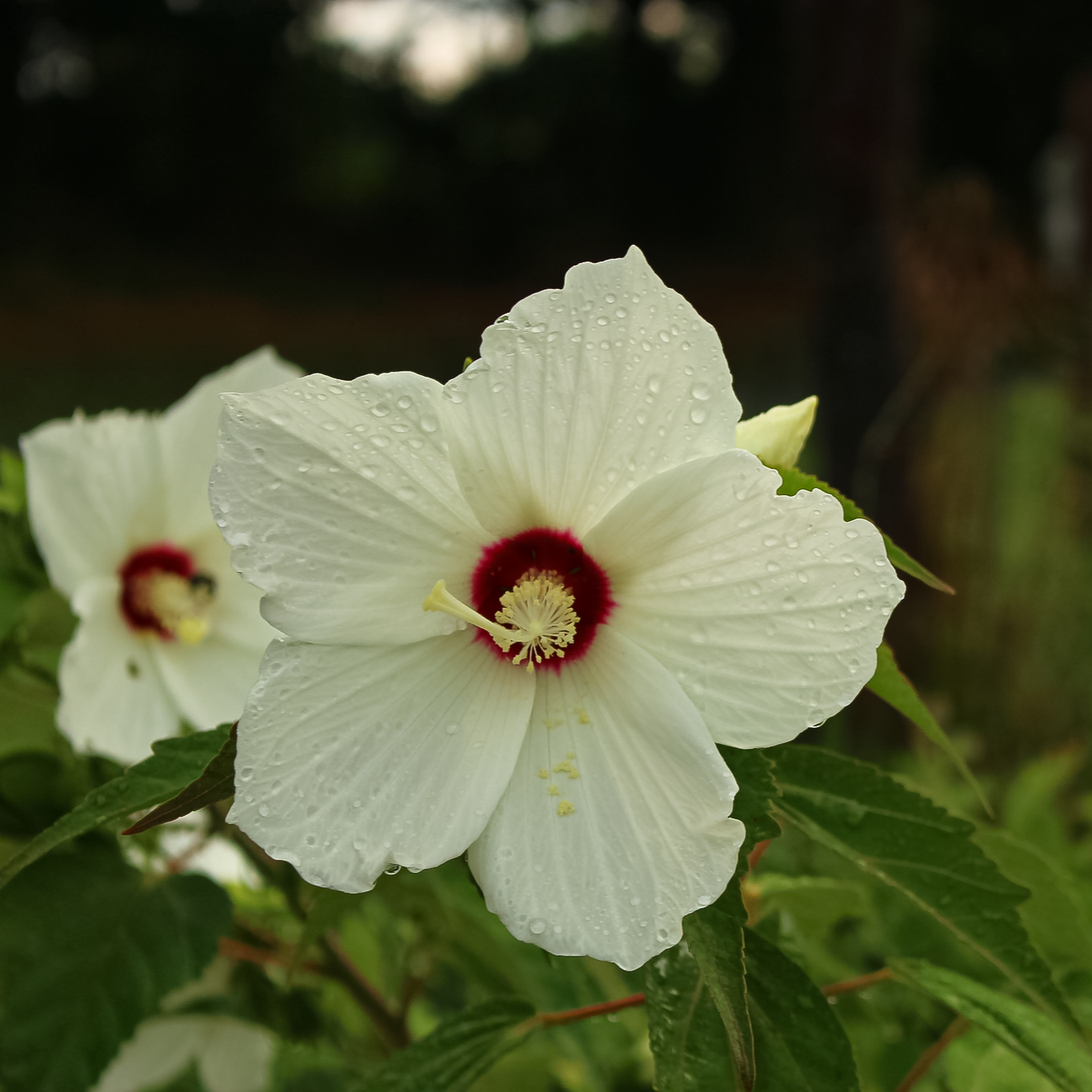
Swamp Rose Mallow is one of those plants that stops you in your tracks in midsummer. Big, open flowers — usually white or soft pink with a deep red center — show up day after day through the hottest part of the season. Each bloom only lasts a day, but the plant makes so many that you hardly ever see it without fresh flowers.
This species is native to the wetlands and river edges of the Central Appalachians. It likes sun, heavy soil, and spots that stay damp longer than everything around them. If you’ve got a low area, a pond edge, a rain garden, or a swale that always collects water, this is a perfect fit. It grows into sturdy clumps around 4–7 feet tall and fills out nicely without getting weedy.
Pollinators absolutely hammer this plant. Bumblebees dive into the flowers as soon as they open, and you’ll often see them covered in the pale yellow hibiscus pollen. It also supports the hibiscus specialist bees that rely on plants like this to raise their young. Hummingbirds perch nearby and sip from it, and later in the season, finches pick at the dry seed heads.
It’s a big, hardworking native perennial that brings structure, color, and a ton of wildlife action to wet areas where very few garden plants thrive.
Light: Full sun
Soil: Moist to wet; heavy clay and slow-draining areas are great
Height: 4–7 ft
Bloom: Mid-summer into early fall
Wildlife: Bumblebees, hibiscus specialist bees, butterflies, hummingbirds, finches
Growth: Upright clumps; dies back in winter and returns strong in spring
Swamp Rose Mallow is one of those plants that stops you in your tracks in midsummer. Big, open flowers — usually white or soft pink with a deep red center — show up day after day through the hottest part of the season. Each bloom only lasts a day, but the plant makes so many that you hardly ever see it without fresh flowers.
This species is native to the wetlands and river edges of the Central Appalachians. It likes sun, heavy soil, and spots that stay damp longer than everything around them. If you’ve got a low area, a pond edge, a rain garden, or a swale that always collects water, this is a perfect fit. It grows into sturdy clumps around 4–7 feet tall and fills out nicely without getting weedy.
Pollinators absolutely hammer this plant. Bumblebees dive into the flowers as soon as they open, and you’ll often see them covered in the pale yellow hibiscus pollen. It also supports the hibiscus specialist bees that rely on plants like this to raise their young. Hummingbirds perch nearby and sip from it, and later in the season, finches pick at the dry seed heads.
It’s a big, hardworking native perennial that brings structure, color, and a ton of wildlife action to wet areas where very few garden plants thrive.
Light: Full sun
Soil: Moist to wet; heavy clay and slow-draining areas are great
Height: 4–7 ft
Bloom: Mid-summer into early fall
Wildlife: Bumblebees, hibiscus specialist bees, butterflies, hummingbirds, finches
Growth: Upright clumps; dies back in winter and returns strong in spring