
 Image 1 of 1
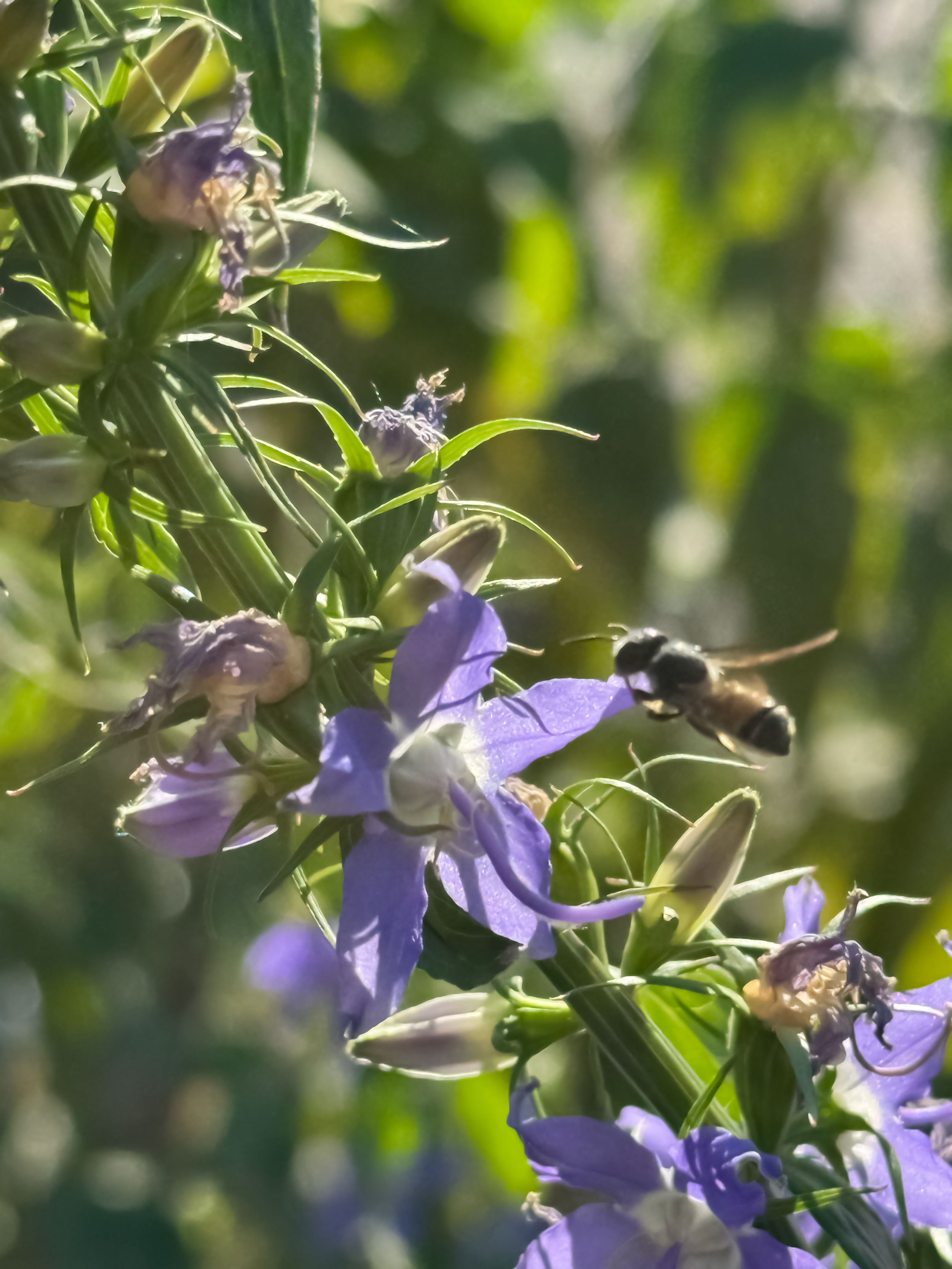
Tall Bellflower is a striking native perennial of the Central Appalachians, well-suited to the limestone-influenced soils and woodland edges of Western Maryland. It forms upright clumps (3–6 ft) with leafy stems and star-shaped blue-violet flowers that open sequentially from midsummer into early fall. The height, color, and long bloom period make it an excellent vertical accent in part-sun plantings.
This species thrives in part sun to bright shade and tolerates clay-loam, rocky, and high-calcium soils common throughout the Hagerstown Valley and Ridge & Valley province. It performs especially well along woodland margins, shaded field edges, north-facing slopes, and any site with morning sun and afternoon shade. Once established, Tall Bellflower is dependable and lightly self-seeding without becoming aggressive.
Tall Bellflower supports several native pollinators, including the bellflower resin bee, a specialist bee that gathers pollen primarily from bellflower species. Small carpenter bees, hoverflies, and long-tongued bees also rely on the sequential blooms for mid- to late-season nectar. Its tall structure provides a valuable nectar source in shaded habitats where few other summer-blooming natives thrive.
Tall Bellflower is ideal for woodland-edge gardens, shade-transition plantings, pollinator habitats needing height and color, and Appalachian-inspired landscapes.
Light: Part sun to bright shade
Soil: Average to rich; clay-loam and limestone soils tolerated
Moisture: Medium
Height: 3–6 ft
Bloom: Midsummer to early fall
Wildlife: Supports bellflower resin bees, small native bees, hoverflies, and woodland butterflies
Growth: Upright perennial; lightly self-seeding; dependable once established
Tall Bellflower is a striking native perennial of the Central Appalachians, well-suited to the limestone-influenced soils and woodland edges of Western Maryland. It forms upright clumps (3–6 ft) with leafy stems and star-shaped blue-violet flowers that open sequentially from midsummer into early fall. The height, color, and long bloom period make it an excellent vertical accent in part-sun plantings.
This species thrives in part sun to bright shade and tolerates clay-loam, rocky, and high-calcium soils common throughout the Hagerstown Valley and Ridge & Valley province. It performs especially well along woodland margins, shaded field edges, north-facing slopes, and any site with morning sun and afternoon shade. Once established, Tall Bellflower is dependable and lightly self-seeding without becoming aggressive.
Tall Bellflower supports several native pollinators, including the bellflower resin bee, a specialist bee that gathers pollen primarily from bellflower species. Small carpenter bees, hoverflies, and long-tongued bees also rely on the sequential blooms for mid- to late-season nectar. Its tall structure provides a valuable nectar source in shaded habitats where few other summer-blooming natives thrive.
Tall Bellflower is ideal for woodland-edge gardens, shade-transition plantings, pollinator habitats needing height and color, and Appalachian-inspired landscapes.
Light: Part sun to bright shade
Soil: Average to rich; clay-loam and limestone soils tolerated
Moisture: Medium
Height: 3–6 ft
Bloom: Midsummer to early fall
Wildlife: Supports bellflower resin bees, small native bees, hoverflies, and woodland butterflies
Growth: Upright perennial; lightly self-seeding; dependable once established